•
•
•
•
•
•
•
•
•
•
•
•
•
•
•
•
•
•
•
•
•
•
•
•
•
•
•
•
•
•
•
•
•
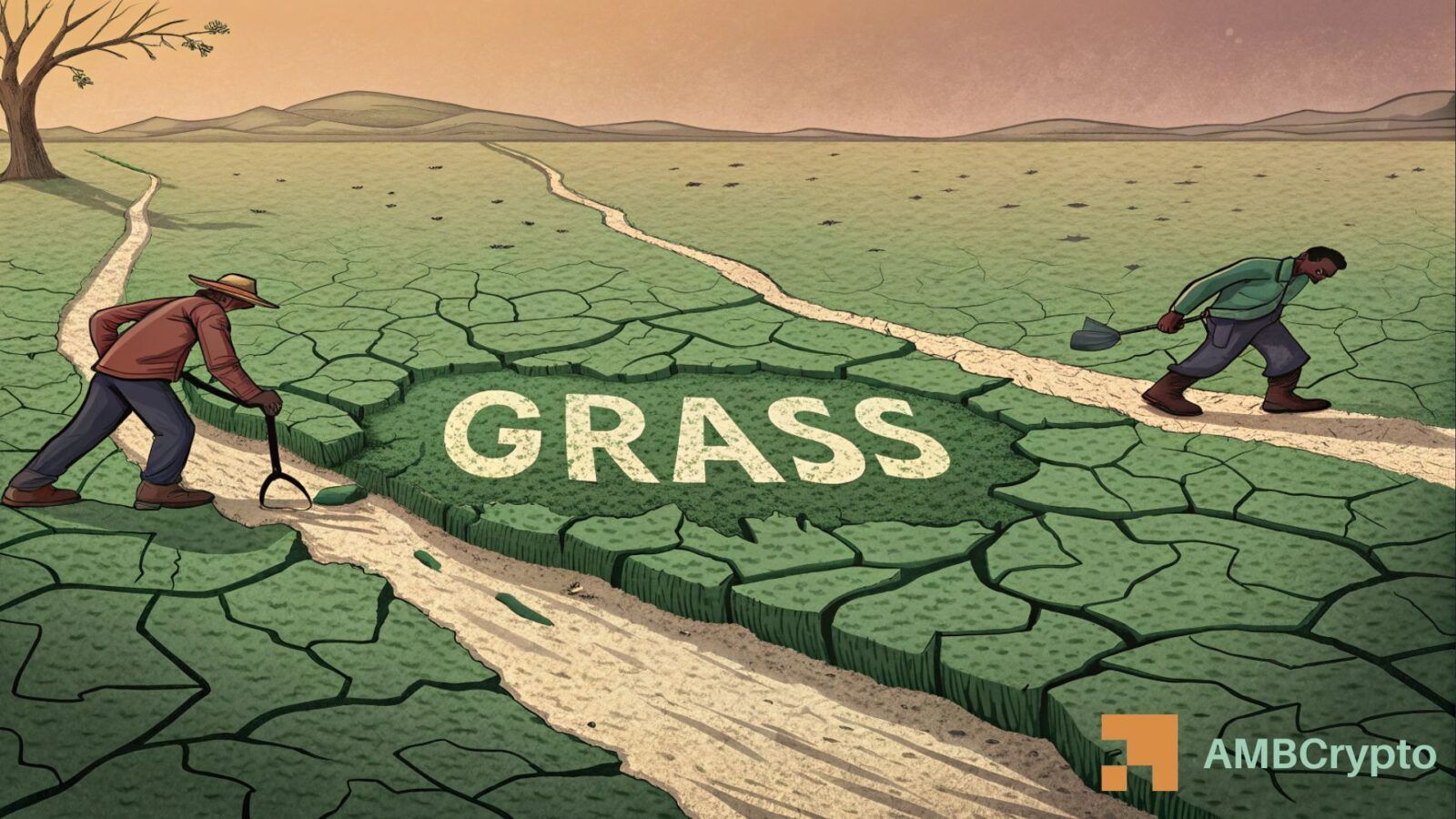
Grass [GRASS] fell 15.81% to $0.3742 as trading volume rose 57.72% to $28.16M, signaling aggressive participation during a sharp sell-off.
Price moved lower even as activity expanded, pointing to an imbalance between demand and supply. Buyers participated, but sellers maintained control and downward pressure persisted across sessions.
The divergence between higher volume and weaker price action suggested distribution behavior, with participants reacting to weakening market structure. As a result, [GRASS](https://ambcrypto.com/predictions/grass-price-prediction/) struggled to stabilize, with sell-side flow continuing to dominate short-term direction despite heightened engagement.
GRASS faced repeated rejection below the $0.40 level while trading within the broader $0.30–$0.50 range. Each push toward the upper boundary met selling pressure, forcing price back toward the middle of the range. This reinforced $0.40 as a key resistance barrier and limited upside continuation.
Meanwhile, the $0.30 region remained a critical support zone, helping prevent deeper breakdowns during prior declines.
However, the latest rejection weakened short-term structure as lower highs began to form. If price revisits the lower boundary, buyers would need to defend that level to avoid range expansion to the downside.
RSI declined toward 53 after reaching higher levels earlier, indicating a gradual loss of bullish strength. The indicator moving away from recent highs aligned with the observed pullback in price action, suggesting buying pressure had slowed and sellers had regained partial control.
Binance top traders increased their long exposure to 60.35%, pushing the Long/Short Ratio to 1.52. This shift reflected a growing preference for long positions despite the ongoing price decline, with traders building exposure on the upside and implying expectations of a potential recovery.
At the same time, the increased long concentration raised risk. If price weakens further, the market could become vulnerable to additional long liquidations, potentially extending the decline. Conversely, a reversal would likely target short positions as the next liquidity zone.
The long/short imbalance indicated confidence among larger participants, but it did not align with the current price direction, creating uncertainty about the durability of the long bias.
GRASS remained under pressure despite rising activity, with price falling below $0.40 while long positioning continued to build. If this divergence persists, further downside could develop before any meaningful recovery attempt emerges.