•
•
•
•
•
•
•
•
•
•
•
•
•
•
•
•
•
•
•
•
•
•
•
•
•
•
•
•
•
•
•
•
•


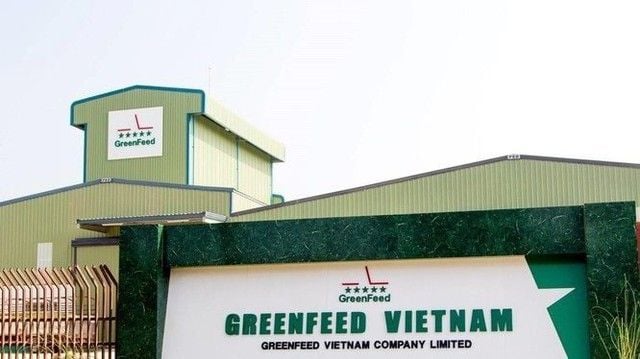
According to GreenFeed Vietnam’s financial report for 2025, the animal-feed producer posted a record net profit of VND 3,656 billion, equivalent to more than VND 10 billion in profit per day. The company’s return on equity (ROE) rose to 39.63%, up from 34.87% in 2024, indicating improved capital efficiency.
GreenFeed Vietnam’s after-tax profit and ROE have shown a clear upward shift over recent years:
On the financial health side, as of December 31, 2025, GreenFeed Vietnam reported equity of VND 9,228 billion, up nearly VND 3,200 billion from the start of the year. Equity components include owner-contributed equity of VND 5,125 billion, retained earnings of VND 4,449 billion, and foreign-exchange differences of VND 57.8 billion.
Total liabilities at end-2025 were VND 6,868 billion, made up of bank debt of VND 1,698 billion, debt from bond issuances of VND 700 billion, and other payables of VND 4,470 billion.
The bond issue GFVCH2128001 has a face value of VND 1,000 billion. It was issued on November 3, 2021, with an 84-month tenor and maturity on June 15, 2028. The bond carries a coupon rate of 6.53% per year, with semiannual interest payments.
According to data from the Hanoi Stock Exchange, on June 17, 2024, GreenFeed conducted an early partial redemption of GFVCH2128001 bonds totaling VND 300 billion. The remaining outstanding amount is VND 700 billion.
GreenFeed Vietnam was established in 2003 by entrepreneur Ly Anh Dung. After more than a decade of growth, it has become one of the region’s leading producers of animal feed, supplying products for cattle, poultry, and aquaculture, and expanding across regional markets.
The company operates 10 modern manufacturing plants in Vietnam, Laos, Cambodia, and Myanmar, with capacity to supply millions of tonnes annually. Its headquarters are in Binh Duc Commune, Tay Ninh Province, and its legal representative is CEO Do Cao Bang.









Premium gym chains are entering a “golden era” that is ending or already in decline, as rising operating costs collide with shifting consumer preferences toward more flexible, community-based ways to exercise. Long-term memberships are shrinking, margins are pressured by higher rents and facility expenses, and competition from smaller, more personalized…


