•
•
•
•
•
•
•
•
•
•
•
•
•
•
•
•
•
•
•
•
•
•
•
•
•
•
•
•
•
•
•
•
•


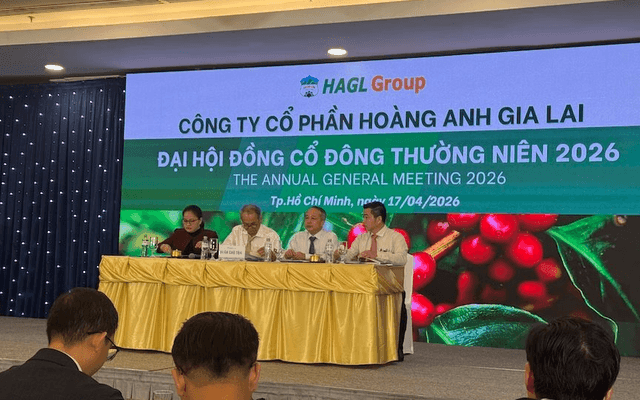
On the morning of April 17, Hoang Anh Gia Lai Joint Stock Company (HAGL, ticker: HAG) held its 2026 annual general meeting in Ho Chi Minh City. At the meeting, shareholders raised questions about leadership’s stock purchases amid volatility in HAG’s share price.
Speaking at the AGM, Mr. Duc said he had bought 4 million shares and may continue purchasing in the near future. “Who knows, next time I might buy another 5 million. This is the most I’ve bought because there aren’t many opportunities left,” he said.
HAGL chairman also said the decline in the stock price has worried many shareholders, but he views it as an accumulation opportunity. “The market is volatile; investors may not trust HAGL yet, but I see a chance, so if I have it, I buy,” he shared.
For small investors in the medium term, Mr. Duc reiterated a consistent view: “If you have money, just buy like me. If in 1–2 years I incur a loss, just tell me to face the criticism. I won’t commit to buying back the stock, but I commit that if there is a loss, just tell me.”
HAGL set 2026 targets of net revenue at 8,624 billion dong and after-tax net profit at 4,202 billion dong, nearly double the previous year.
On profit distribution, the company said it will not pay dividends in 2026 to prioritize investment. Based on the new targets, management will propose at the 2027 AGM a dividend of 500 dong per share. Retained earnings are intended to be reinvested in coffee and mulberry projects.
In 2026, HAGL plans to plant 7,000 hectares of coffee, 1,000 hectares of mulberry, and 700 hectares of durian. The company also plans to invest in four wet processing plants and one extraction plant to complete the value chain.
The investment is expected to be supported by Orient Commercial Bank (OCB) for financing, with technical support from the Tay Nguyen Institute of Agro-Forestry Science and Technology (WASI).
Looking ahead, HAGL said its next-phase strategic highlight is to own more than 30,000 hectares of farmland by 2030. Coffee is identified as the core crop, with plans to plant an additional 7,000 hectares this year and reach a total of 20,000 hectares by 2028.




Premium gym chains are entering a “golden era” that is ending or already in decline, as rising operating costs collide with shifting consumer preferences toward more flexible, community-based ways to exercise. Long-term memberships are shrinking, margins are pressured by higher rents and facility expenses, and competition from smaller, more personalized…