•
•
•
•
•
•
•
•
•
•
•
•
•
•
•
•
•
•
•
•
•
•
•
•
•
•
•
•
•
•
•
•
•


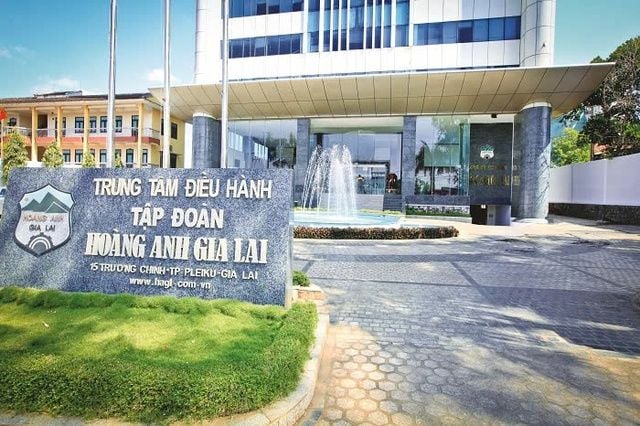
HAGL Joint Stock Company (HAGL) has raised 2,000 billion VND through a domestic bond issuance, issuing 20,000 bonds under code HAG12601. Each bond has a face value of 100 million VND, with a 36-month maturity date expected on 29 April 2029.
The issued bonds are ordinary corporate bonds, non-convertible and without warrants. The bonds are secured by a payment guarantee from Orient Commercial Joint Stock Bank (OCB) for 2,135 billion VND. Of the secured amount, 2,000 billion VND is principal and 135 billion VND is interest due during the term, together with any penalties for late payment.
HAGL said the proceeds will be used to contribute capital to business cooperation with Gia Lai Livestock Joint Stock Company, Gia Suc Lo Pang Joint Stock Company, Stung Treng Agricultural Development Joint Stock Company, and Savannakhet Investment Joint Stock Company.
At the 2026 annual general meeting, HAGL set targets for net revenue of over 8,624 billion VND and after-tax profit of 4,202 billion VND, representing an increase of about 16% and nearly doubling versus 2025.
In 2025, HAGL reported net revenue of 7,440 billion VND and net profit of around 2,100 billion VND, up 2.1 times. The fruit segment contributed approximately 77% of revenue.
For its investment strategy, HAGL plans to continue expanding agricultural land, targeting 7,000 hectares of coffee, 1,000 hectares of mulberry, and 700 hectares of durian in 2026.
For coffee development, the company plans to expand to about 20,000 hectares in the coming years, with a planned mix of 15,000 hectares Arabica, 4,000 hectares Robusta, and 1,000 hectares Liberica. In 2026, 7,000 hectares will be newly planted, while 5,000 additional hectares per year are planned for 2027–2028.
Based on the projected 2026 net profit, HAGL’s board will present for shareholder approval at the 2027 annual general meeting a cash dividend of 5% of par value, equivalent to 500 VND per share.
For 2025 profit distribution, the board proposed retaining earnings for reinvestment in coffee and mulberry projects; accordingly, no dividend will be paid in 2026.







Premium gym chains are entering a “golden era” that is ending or already in decline, as rising operating costs collide with shifting consumer preferences toward more flexible, community-based ways to exercise. Long-term memberships are shrinking, margins are pressured by higher rents and facility expenses, and competition from smaller, more personalized…