•
•
•
•
•
•
•
•
•
•
•
•
•
•
•
•
•
•
•
•
•
•
•
•
•
•
•
•
•
•
•
•
•


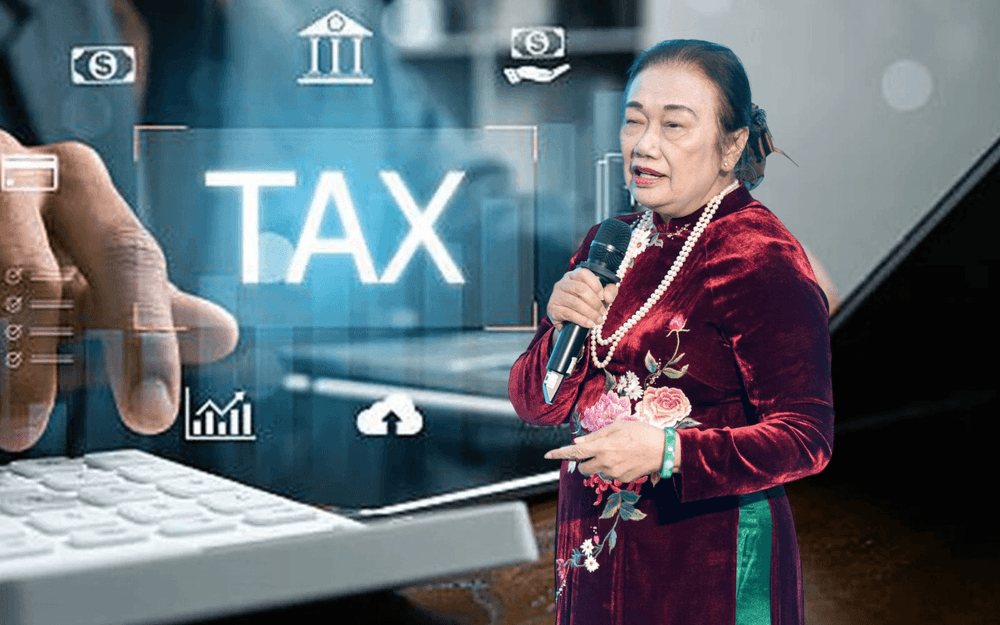
Speaking at the program “From presumptive tax to declared taxation – Hanoi takes the lead in supporting business households” organized by Hanoi’s News and Radio Authority, Ms. Nguyen Thi Cuc, former Deputy General Director of the General Department of Taxation and Chair of the Vietnam Tax Advisory Association, said Hanoi’s transition has been implemented with high intensity and close involvement of tax authorities.
Ms. Cuc noted that while preparations were previously planned as a 60-day peak campaign before 2026, the focus has shifted to the first tax filing by individual business households in April. “Thus only about 15 days of transition will be decisive,” she said, adding that households continue selling at their shops while also visiting local and city tax offices for detailed guidance.
In the transition, Ms. Cuc said initial bottlenecks—such as using electronic invoices and selecting suitable software—have been gradually resolved. She highlighted Hanoi’s encouragement of households to self-declare revenue, saying that declared revenue is “much higher than the previously presumptive revenue.”
“This is a transformation based on analysis, encouragement, and raising compliance with the law among taxpayers,” she emphasized.
Ms. Cuc also said the change in tax administration method has created anxiety among many households, particularly regarding procedures and compliance costs. She explained that the shift from a system where households did not need to keep books to one that classifies revenue changes how tax is calculated: “if revenue is 3 billion VND or more, you no longer pay tax based on a revenue rate; you must take revenue minus the deductible expenses.”
She added that households are surprised by new concepts, including what costs are deductible—such as purchases from farmers without invoices—and how input costs are defined. Questions also remain about whether revenue under 500 million must issue receipts and the potential for penalties.
According to the expert, these concerns are being addressed through concrete tools from the tax sector. She said the Vietnam Tax Advisory Association’s chair noted that tax authorities have issued a handbook for household businesses, which she described as convenient even for those who previously only kept market ledgers.
She also said the accounting regime has been simplified: it no longer requires seven ledgers, now only four.
Ms. Cuc said the supporting ecosystem has expanded through partnerships involving Hanoi tax authorities and the wider tax sector with software companies, tax agents, and credit institutions. “If self-declaration isn’t possible, you can use a tax agent,” she said, adding that these channels offer fee exemptions or reductions in the early period to encourage participation.
Ms. Cuc characterized the shift from presumptive to declared taxation as more than a change in how tax is calculated. It is also a step in how household businesses are managed: when revenue and costs are recorded fully and transparently, households move from manual methods to data-driven governance.
In this process, she said technology—covering electronic invoicing, point-of-sale software, and digital payments—has gradually become a crucial tool to help household businesses adapt to the new operating pace.






Premium gym chains are entering a “golden era” that is ending or already in decline, as rising operating costs collide with shifting consumer preferences toward more flexible, community-based ways to exercise. Long-term memberships are shrinking, margins are pressured by higher rents and facility expenses, and competition from smaller, more personalized…




