•
•
•
•
•
•
•
•
•
•
•
•
•
•
•
•
•
•
•
•
•
•
•
•
•
•
•
•
•
•
•
•
•


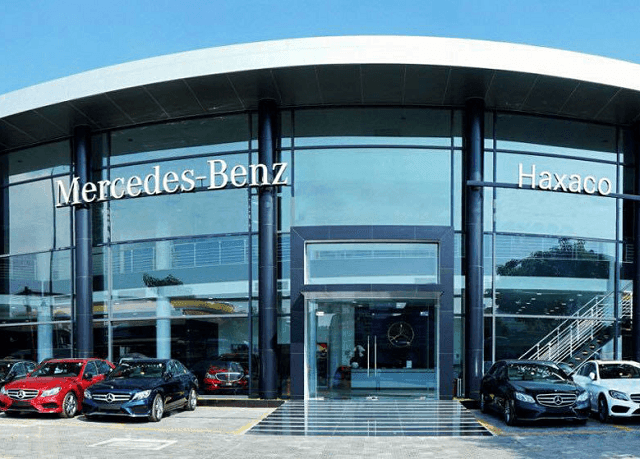
Although Q1 2026 revenue grew by double digits, Haxaco’s after-tax profit remained in the red. The company’s core car sales business posted a loss of 32 billion dong.
By the end of Q1, Haxaco Joint Stock Company, the official Mercedes-Benz distributor in Vietnam (ticker HAX), reported consolidated net revenue of 1,098 billion dong, up 14% year over year from Q1 2025.
However, the cost of goods sold rose faster than revenue. COGS increased to 1,024 billion dong (up 18%), narrowing gross profit from 94 billion dong in Q1 2025 to 73 billion dong.
Within core operations, car sales recorded a loss of 32 billion dong.
Financing pressure intensified as the group’s financing costs more than doubled, rising from 6 billion dong to over 13 billion dong. The report states that 100% of this expense was interest expense.
With gross margin shrinking and interest costs rising, core operating profit was negative 32 billion dong in the first three months of 2026.
At the parent company level, after-tax profit fell 87% year over year. For the group, management said it had to apply flexible sales policies and increase customer support to maintain market share amid intense price competition from other distributors, which required sacrificing part of the margin.
Haxaco avoided a quarterly period of loss thanks to “other income.” In Q1, it recorded other income of 53 billion dong. After deducting other expenses of about 48 million dong, net other income was over 52 billion dong, up sharply from 19 billion in the prior-year period.
Financial statement notes show that under “Other short-term receivables,” bonuses and incentives receivable from Mercedes-Benz Vietnam increased from 152 billion dong at the start of the year to 186 billion dong as of 31 March 2026. These amounts include sales-based bonuses, marketing support, and dealer incentive programs.
That net other income fully offset the 32 billion dong loss from core operations, helping Haxaco report pretax profit of 20 billion dong (down 11% year over year). Net profit after tax was 15.3 billion dong (down 8%).
As of 31 March, total assets reached 2,957 billion dong, up 19% from the start of the year. Cash and cash equivalents increased from 93.4 billion dong to 125.3 billion dong.
Inventory at end-Q1 2026 stood at 1,459 billion dong, nearly 50% of total assets. Short-term receivables rose 45.3% from year-start to 513.7 billion dong.
Total liabilities increased from 1,109 billion dong at the start of the year to 1,510 billion dong. Short-term borrowings and financial lease obligations declined slightly to 877 billion dong, while long-term debt rose to 273 billion dong.
Equity stood at 1,446 billion dong, including owner’s contributed capital of 1,074 billion dong and retained earnings of 30.1 billion dong.
Haxaco is the authorized Mercedes-Benz distributor in Vietnam. In recent years, it has expanded to distribute MG and plans to expand to VinFast distribution.
Historically, Haxaco benefited from Vietnam’s expanding middle class, which supported Mercedes-Benz luxury car sales. At times, it accounted for about 35–40% of Mercedes-Benz’s domestic market share. Beyond car sales, the company also earns from after-sales, maintenance, and repair services, which it said offer higher margins and more stable income.
After the COVID-19 period, Haxaco faced multiple challenges. Starting in 2023, lending rates rose sharply, credit tightened, and demand for luxury cars declined. Brands increased incentives and competition intensified. Despite measures, car sales remained weak.
In 2025, consolidated revenue fell 16% year over year to about 4,650 billion dong. Net profit after tax was 39 billion dong, the second-lowest in a decade, only higher than 2023.







Premium gym chains are entering a “golden era” that is ending or already in decline, as rising operating costs collide with shifting consumer preferences toward more flexible, community-based ways to exercise. Long-term memberships are shrinking, margins are pressured by higher rents and facility expenses, and competition from smaller, more personalized…