•
•
•
•
•
•
•
•
•
•
•
•
•
•
•
•
•
•
•
•
•
•
•
•
•
•
•
•
•
•
•
•
•


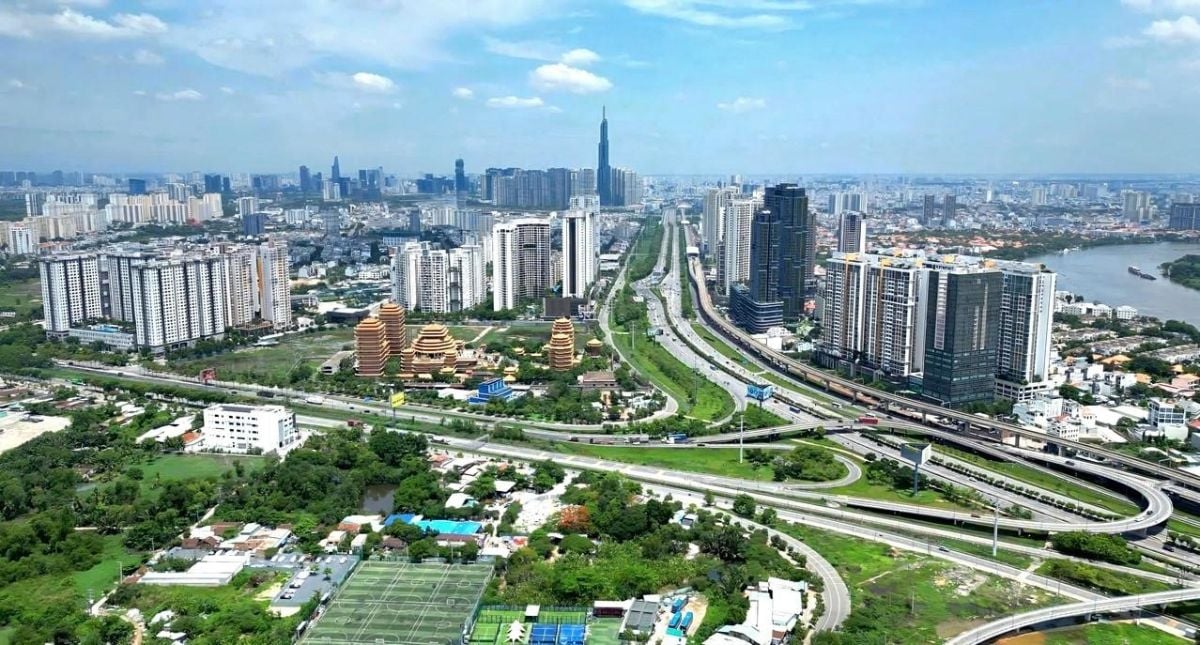
Ho Chi Minh City has approved the investment policy for the City Center Square and Administrative Center project with total investment of nearly VND 29.6 trillion. The project will be implemented under a public-private partnership (PPP) and a build-transfer (BT) contract, covering 46.7 hectares of land. Implementation is scheduled for 2026-2028, and the project is divided into four component projects.
Component 1 focuses on construction of technical infrastructure, ancillary facilities, and an underground parking facility in the park area. Total investment is over VND 3,500 billion. The component is designed to serve 1,000 to 3,000 visitors per day, with around 1,000 workers.
Component 2 is the Ho Chi Minh City Administrative Center, with total investment of nearly VND 18,500 billion. It is intended to accommodate work for about 6,000-8,000 civil servants and to host 1,500 to 2,000 citizens and business representatives daily.
Component 3 is the Conference-Performance Center, with a capacity of 2,000 seats and total investment of VND 6,856 billion.
Component 4 is the City Center Square, with a capacity of about 268,000 people for political events and about 500,000 for cultural festivals. Total investment is more than VND 733 billion.
According to the city’s People’s Committee, implementing the projects through public investment would place significant pressure on the state budget due to high investment demand in 2026-2030, while budgeted resources are limited.
The committee said the projects are public-utility initiatives providing administrative-public services serving national and community interests, and therefore do not have the ability to generate financial returns. It also noted that public investment projects often have long lead times, which can delay use and increase social costs and opportunity costs.
In addition, public investment may not be the optimal choice where private participation can be mobilized. For projects where the private sector can participate, relying on public investment may reduce the efficiency of mobilizing social resources. The People’s Committee concluded that applying the PPP approach is appropriate to reduce budget pressures and leverage private-sector resources, while also enabling the use of technology, management capability, and private-sector experience to improve project quality.
At the meeting, Deputy Chairman of the City People’s Committee Nguyen Cong Vinh presented a proposal on the list of land assets expected to be used to pay investors implementing BT projects in the city.
The list comprises 33 land parcels, including 17 parcels managed by the City’s Land Fund Development Center, with the remainder managed by local authorities.
The report highlighted that some parcels have been vacant for many years, including: 8-12 Le Duan; 2-3-4 Hai Ba Trung; 10 Ham Nghi; 33 Nguyen Du; 34-36-42 Chu Manh Trinh (Saigon Ward); 200 Vo Van Tan (Ban Co Ward); 152 Tran Phu (Cho Quan Ward); 120 Tran Hung Dao (Ben Thanh Ward); 420 No Trang Long (Binh Loi Trung Ward); 129 Dinh Tien Hoang (Gia Dinh Ward); 602 Vo Van Kiet (Cau Kho Ward); 123 Nguyen Khoai (Vinh Hoa Ward); and 462-464 Nguyen Thi Minh Khai...
The city’s People’s Committee said recently the city’s People’s Council approved the investment policy for three major projects—Can Gio Bridge, Phu My 2 Bridge, and the National Sports Complex at Rach Chi—under PPP and BT, with total investment of over VND 182,000 billion.
It also said some investors propose implementing additional projects under PPP and BT, including Metro Line 2 (Ben Thanh to Thu Thiem and Thu Thiem to Long Thanh), road and bridge connections Can Gio – Vung Tau, the Ho Tram – Long Thanh expressway, wastewater treatment plants in Tay Sai Gon and Bac Sai Gon 1 and 2, City Center Square and the new Administrative Center, and Khanh Hoa Park and greenery along the Saigon River system. These projects are expected to apply PPP and BT with total investment of over VND 366,000 billion.
According to the city government, capital demand for these projects is very large and concentrated in a period, while the budget balance remains limited. This requires mobilization mechanisms and flexible, efficient resource use.
The government added that some urgent infrastructure projects planned under BT aim to address environmental issues, wastewater treatment, flooding, and traffic congestion, with large total investment and corresponding counterpart resources.
The city said the land-payment list must not only secure scale but also include land plots with commercial value and high exploitation potential to attract capable investors. It also emphasized ensuring payments are made at equal value and limiting budget obligations.






Premium gym chains are entering a “golden era” that is ending or already in decline, as rising operating costs collide with shifting consumer preferences toward more flexible, community-based ways to exercise. Long-term memberships are shrinking, margins are pressured by higher rents and facility expenses, and competition from smaller, more personalized…




