•
•
•
•
•
•
•
•
•
•
•
•
•
•
•
•
•
•
•
•
•
•
•
•
•
•
•
•
•
•
•
•
•


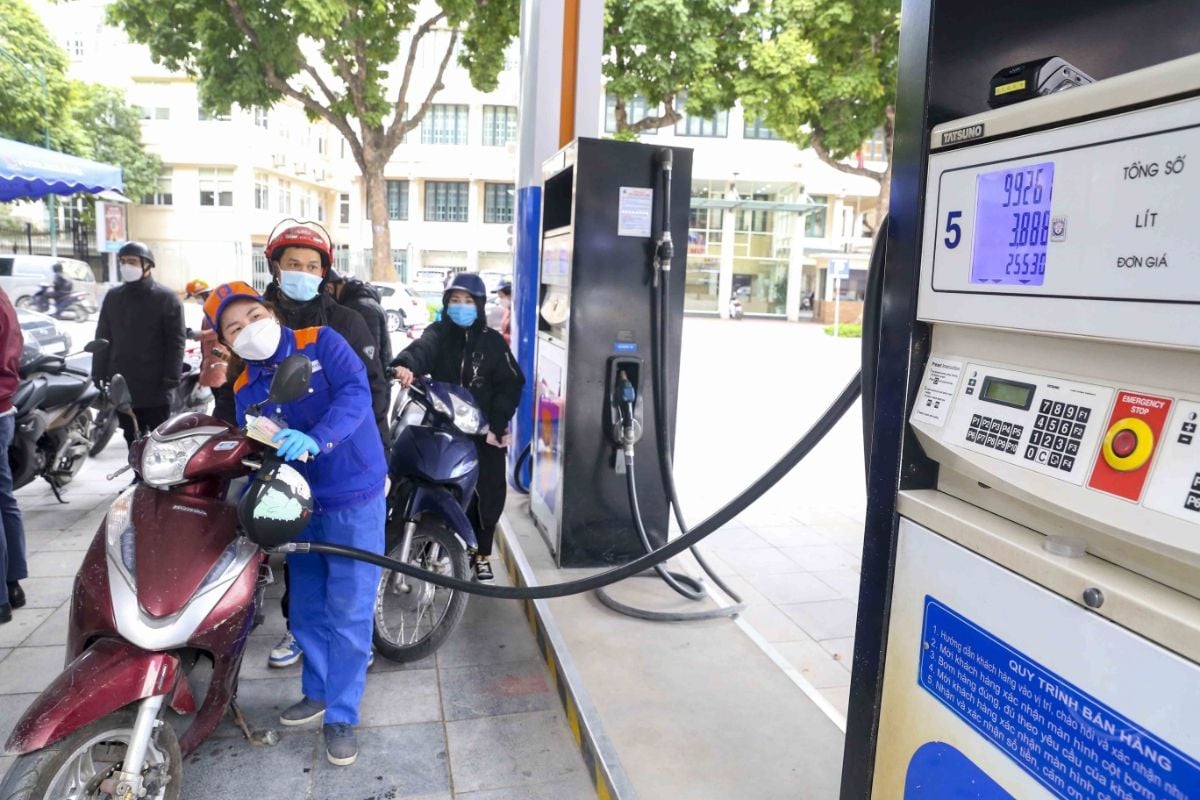
Ho Chi Minh City has intensified monitoring and control of the fuel market to ensure stable supply amid volatility in global energy prices, while preventing speculation and disruptions to retail operations in the locality.
At a working session between the Ho Chi Minh City Department of Industry and Trade and fuel and gas traders on March 10, the department said it is strengthening market oversight to maintain stable supply and prevent speculation and disruption to retail activities given energy price fluctuations.
Mr. Nguyen Khac Hieu, Deputy Head of the Energy Management Division, said gasoline retail business in the city generally remains stable. Retail stores continue operating to meet production and consumer needs.
Representatives also provided comparative data on Vietnam’s RON 95 gasoline price versus several regional countries to give residents additional context on price levels.
Latest price tables cited in the meeting show gasoline in Singapore at about 46,000 dong per liter; Laos about 38,600; Thailand about 32,000; and China and Cambodia around 29,000 dong per liter. Prices are lower in Indonesia and Malaysia, at about 20,000 dong per liter and 17,000 dong per liter, respectively, attributed to government subsidies. The meeting materials said Vietnam’s current gasoline and oil prices remain mid-range relative to neighboring countries.
The Vietnamese government has implemented measures to stabilize the market, including reducing import taxes from 10% to 0% and being ready to activate the Price Stabilization Fund when necessary.
According to the Ho Chi Minh City Market Management Department’s report, after on-site monitoring, authorities recorded 16 stores temporarily out of stock on some gasoline or diesel items. These stores continued selling other goods and replenished stock from supplier companies, with supply expected to return within a short time.
To proactively control the market, the Market Management Department issued directives to market surveillance teams to strengthen monitoring of supply-demand and fuel price movements. Inspections focus on abnormal signs such as shortages, supply disruptions, sharp price increases, or selling goods without a valid reason.
Inspections also target energy companies and retail fuel outlets to promptly detect and address violations including hoarding, creating shortages, selling at prices not listed, or dealing with fuel of unclear origin.
Authorities maintain 24/7 on-call status, with officials assigned to monitor fuel station operations. Hotline numbers are publicly posted at stores to receive feedback from residents and businesses.
Mr. Trinh Quoc Viet, Deputy General Director of Petrolimex Saigon Co., Ltd., said fuel supply for the company’s owned and franchised store system remains fully secured in both quantity and type.
He noted that following surging demand after price adjustments, some stores experienced temporary local shortages at certain times of the day.
Statistics cited show that after two price increases on March 4 and March 7, the Petrolimex system’s sales increased by about 130% year-on-year in March. In Ho Chi Minh City, the increase reached 165%, with the suburban area rising the most at 206%, while the inner city rose about 134%.
To meet demand, the company boosted staffing and organized tanker deliveries around the clock, including deliveries until 4 a.m. and work on Sundays.
To support supply, the Ho Chi Minh City Department of Industry and Trade said it is coordinating with the Department of Construction and the City Police to establish a “green corridor” for fuel tankers, allowing daytime circulation into inner-city areas when necessary.
From March 10, the department also rolled out a daily stock-control plan to closely monitor supply and proactively coordinate when necessary to avoid supply disruption in the area.
Regarding LPG (gas), market control says stores in the area continue normal operation and that authorities have not observed hoarding or price speculation.
However, due to geopolitical tensions in the Middle East affecting import supply, LPG imports show signs of tightening, alongside higher transport costs and currency fluctuations.
Domestic fuel prices on March 10, 2026, are managed by the Ministry of Industry and Trade and the Ministry of Finance based on retail prices in effect during the period from March 7, 2026. The adjustment was described as unusual and implemented when base fuel prices rise more than 7%.
On the afternoon of March 7, the two ministries announced adjustments to domestic retail fuel prices under a new management mechanism, described as unusual when base prices rise more than 7%. From 3 p.m. that day, all fuel items rose sharply.







Premium gym chains are entering a “golden era” that is ending or already in decline, as rising operating costs collide with shifting consumer preferences toward more flexible, community-based ways to exercise. Long-term memberships are shrinking, margins are pressured by higher rents and facility expenses, and competition from smaller, more personalized…




