•
•
•
•
•
•
•
•
•
•
•
•
•
•
•
•
•
•
•
•
•
•
•
•
•
•
•
•
•
•
•
•
•


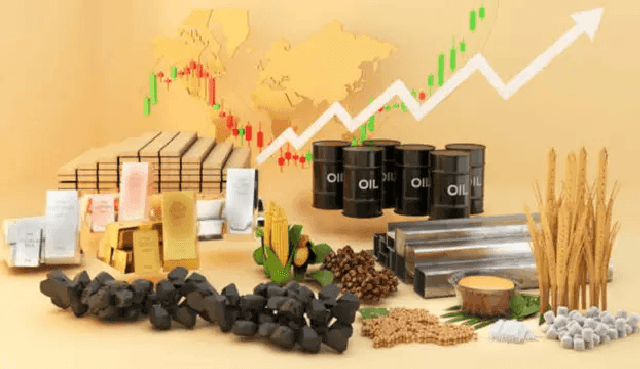
Disruptions in the flow of goods due to the Iran conflict again illustrate the tight linkage of the global economy. About 50% of the world’s sulfur shipments move by sea through the Hormuz Strait. The share also reaches 34% for crude oil, 29% for liquefied petroleum gas, 19% for natural gas liquids, 19% for refined petroleum products, 13% for chemicals (including fertilizers), and nearly 10% for aluminum. The Hormuz Strait is a critical chokepoint, where decisions about objectives, means, and risks should be weighed carefully. That did not happen before the February 28, 2026 attack on Iran, and two months later the world is facing clear consequences.
The World Bank’s Commodity Markets Outlook report published on 28/04 details the largest impact as disruption to the supply of a range of essential commodities listed above.
The crisis also underscores a key reality: the global economy relies on tangible assets behind AI, renewable energy, and digital services. When the flow of essential commodities is disrupted, negative effects spread quickly.
The World Bank estimates that closing the Hormuz Strait reduced global oil supply by roughly 10.1 million barrels per day in March. The report notes this is larger than shocks such as the 1979 Iranian Revolution, the 1973 oil embargo, the Kuwait crisis of 1990, or the Iran–Iraq war of the 1980s. The direct reason is that tanker flow through the strait fell from about 60 per day to nearly zero after March 5.
The consequence has been a sharp rise in energy prices. In March, oil prices rose by about $46 per barrel, the strongest monthly gain in decades. By April 20, jet fuel prices in Singapore had doubled, urea prices were up 85%, LNG prices in Asia were up 46%, and Brent crude was up 32% since the conflict began.
In this context, the key question is how much of the supply shortfall can be offset. The World Bank estimates that out of a total shortfall of roughly 20 million bpd, only part can be substituted: about 1.5 million bpd from other OPEC producers, 5.5 million bpd via alternative pipeline routes, 3.3 million bpd from inventories, 3.9 million bpd from oil currently under sanctions, and about 1 million bpd from other sources (including biofuels and production from high-income economies).
Even with these offsets, the market would still be short about 4.6 million bpd, or over 4% of global demand. Drawing down inventories is only a temporary fix; as stocks deplete, the shortage could rise to nearly 8% of global consumption, further pressuring energy markets.
The second question—and more important—is how long the Hormuz disruption will last and how long it will take for markets to return to normal.
Iran’s leadership remains divided on concessions that could be offered, particularly regarding its nuclear program. Possessing nuclear weapons is viewed as a security enhancement, while former President Donald Trump has shifted targets multiple times. Some ideas, such as forming an “Hormuz Strait Protection Company” that would charge tolls and share proceeds between the U.S. and Iran, have been discussed as political rather than practical options.
Under the baseline scenario, the World Bank assumes the most severe disruption would end in May. After that, traffic through the strait would gradually recover and return to pre-war levels in the fourth quarter.
Under this assumption, the global energy price index could rise by about 24% this year. Fertilizer prices are expected to increase by 31%, with urea rising as much as 60%. Food prices would rise by about 2%, supported by large inventories from 2025. The outlook for next year is described as more challenging, especially if disruption lasts longer.
Risks tilt toward higher prices. The World Bank projects global oil prices averaging around $86 per barrel this year, in line with futures expectations. However, if disruption lasts longer and damage is more severe, prices could rise to around $115 per barrel or higher, with spillovers into the following year.
The article’s conclusion emphasizes that the global economy is highly interconnected and vulnerable to unpredictable shocks. While disruption cannot be fully avoided, it argues there is a need to hedge against fossil-fuel shocks by accelerating the transition to renewable energy and nuclear power.
It also notes that the United States’ role as a reliable partner is being questioned, including potentially as an energy supplier. The shock is described as having the heaviest impact on poor and vulnerable countries, as higher oil and fertilizer prices could worsen economic pressures and increase the need for international support.
Central banks, it says, will face the difficult task of balancing inflation control with growth impacts, while anchoring inflation expectations remains a top priority. The global economy will adjust, but the speed and magnitude of adjustment depend on how quickly disruptions end.
Note: The article reflects the views of Martin Wolf in the Financial Times.






Premium gym chains are entering a “golden era” that is ending or already in decline, as rising operating costs collide with shifting consumer preferences toward more flexible, community-based ways to exercise. Long-term memberships are shrinking, margins are pressured by higher rents and facility expenses, and competition from smaller, more personalized…




