•
•
•
•
•
•
•
•
•
•
•
•
•
•
•
•
•
•
•
•
•
•
•
•
•
•
•
•
•
•
•
•
•
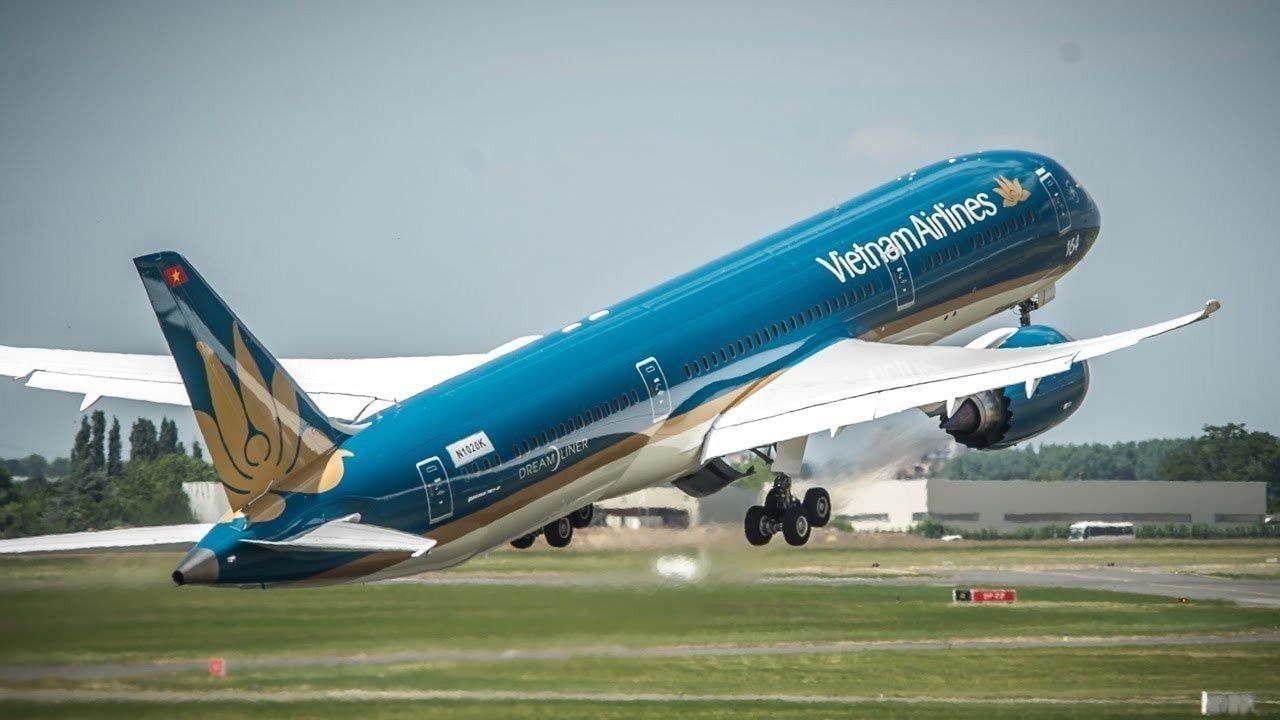
HVN shares surged to the daily limit in the morning session, rising to 22,600 VND per share, up 6.86%, with liquidity approaching 1 million shares. The rally followed news that Vietnam Airlines approved a plan to hold its 2026 annual general meeting (AGM) on June 28 at the company’s headquarters in Hanoi.
Vietnam Airlines’ 2025 annual report stated that by the end of last year the airline had 27,203 shareholders. The approved AGM plan is scheduled for June 28.
In its business performance for Q1 2026, Vietnam Airlines reported total revenue from sales of goods and services of 36,946 billion VND, up 20.7% year-on-year, reaching a new high. Net profit after tax was more than 4,514 billion VND, up nearly 30%.
Operationally, the airline carried out nearly 43,000 flights and served more than 6.9 million passengers, up 11% and nearly 12% respectively versus the same period last year. Management attributed the results to the recovery in international travel demand, along with flexible operations, optimized flight schedules, and cost control.
Despite the strong quarterly performance, the financial picture includes several areas investors are monitoring. As of March 31, 2026, cumulative losses were 22,303 billion VND. Short-term debt stood at 57,946 billion VND, significantly higher than current assets of 35,730 billion VND.
Market attention has also focused on fuel price movements. In an open letter to employees, Chairman Dang Ngoc Hoa said the Middle East conflict since late February 2026 has created a shock to the global aviation industry, pushing Jet A-1 fuel prices from about 85 USD per barrel to a high of 242 USD per barrel.
In response, management emphasized lean operations, efficiency improvements, strict execution discipline, and minimizing delays and waste. The company has activated its highest-level emergency response mechanism to maintain operations.
Overall, HVN’s strong rally occurred ahead of the AGM, supported by positive Q1 results. However, the stock movement also reflects investor awareness of ongoing pressures, including cumulative losses, high short-term debt relative to current assets, and fuel price volatility.
Bitcoin (BTC) investors who use steady dollar-cost averaging (DCA) may be underperforming versus strategies that adjust exposure to the market’s cycle, according to new research arguing that Bitcoin’s behavior differs from traditional long-duration assets.
In a report cited by Markus Thielen of 10x Research, Bitcoin’s market…