•
•
•
•
•
•
•
•
•
•
•
•
•
•
•
•
•
•
•
•
•
•
•
•
•
•
•
•
•
•
•
•
•


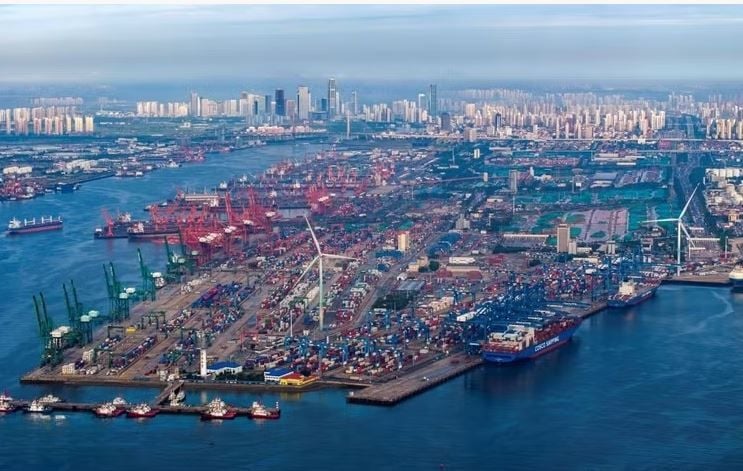
The International Monetary Fund (IMF) on April 16 warned that the conflict in the Middle East and the energy supply shock it may trigger are pushing up inflation, weakening the external balance, and narrowing policy space across Asia. The IMF said the region’s reliance on imported oil and gas leaves many economies particularly exposed.
Despite the risks, the IMF expects Asia to remain the main engine of global growth. It forecast regional growth of 4.4% in 2026, down from 5% in 2025, and 4.2% in 2027 under its World Economic Outlook baseline scenario, which assumes the energy shock is temporary.
The IMF expects China and India to contribute about 70% of Asia’s growth. However, the IMF said the headwinds from the energy shock and weaker conditions will test the region’s resilience.
Inflation is projected to rise to 2.6% in 2026, an increase of 0.4 percentage points from the IMF’s January 2026 projection. The IMF also forecast inflation at 1.4% in 2025, followed by a modest easing to 2.4% in 2027.
In the IMF’s adverse and severely adverse scenarios, if the shock persists or worsens, growth by 2027 could be lower by a total of 1–2 percentage points compared with the baseline.
The IMF said intraregional Asia trade is rebounding. It also noted that diversification into other world markets has helped offset weaker demand from the United States, particularly for non-tech exports.
At the same time, domestic demand remains uneven. Consumption is recovering at different paces across countries, while investment stays weak amid uncertainty and country-specific shocks.
The IMF described the Middle East conflict as a more acute headwind for Asia’s near-term outlook. It said Asia is a net importer of oil and gas equivalent to about 2.5% of regional GDP.
Asia accounts for about 38% of the world’s oil consumption and 24% of global natural gas consumption. The IMF estimated that oil and gas use accounts for about 4% of Asia’s GDP, nearly double Europe’s.
The IMF said limited domestic production capacity underpins the region’s import dependence. It added that Asia is also one of the largest crude refining centers, accounting for about 35% of global refinery capacity, primarily centered in China, India, Korea, and Singapore.
The IMF said economies dependent on imported energy, with limited fiscal space, or those more affected by the Middle East conflict through channels such as remittances, tourism, or fertilizer prices, would face greater pressure. It highlighted that this is particularly relevant for parts of South Asia, Southeast Asia, and Pacific island nations. In agriculture-dependent economies, higher fertilizer costs could reduce incomes and push up food prices.
The IMF said Asian governments are implementing measures to control prices and consumption, including promoting remote work. It noted that some countries have used subsidies, fuel stabilization funds, tax adjustments, or price controls to limit the impact on people and businesses.
The IMF said these measures can be appropriate in emergency situations and may dampen temporary volatility. However, it warned that smoothing price signals will not reduce the underlying shock and may delay demand reduction. It also said a prolonged energy shock could weaken exchange rates and lead to persistent inflation.
The IMF said the shock underscores the need for structural reforms. It argued that stronger social safety nets can protect people without broad subsidies.
It also said policies that support growth by creating jobs and strengthening domestic demand can reduce reliance on external demand. The IMF further called for greater regional integration of trade, services, and investment to improve resilience.
Finally, it said investments in energy efficiency, grids, and alternative energy sources would help mitigate the impact of future imported fuel shocks.





Premium gym chains are entering a “golden era” that is ending or already in decline, as rising operating costs collide with shifting consumer preferences toward more flexible, community-based ways to exercise. Long-term memberships are shrinking, margins are pressured by higher rents and facility expenses, and competition from smaller, more personalized…