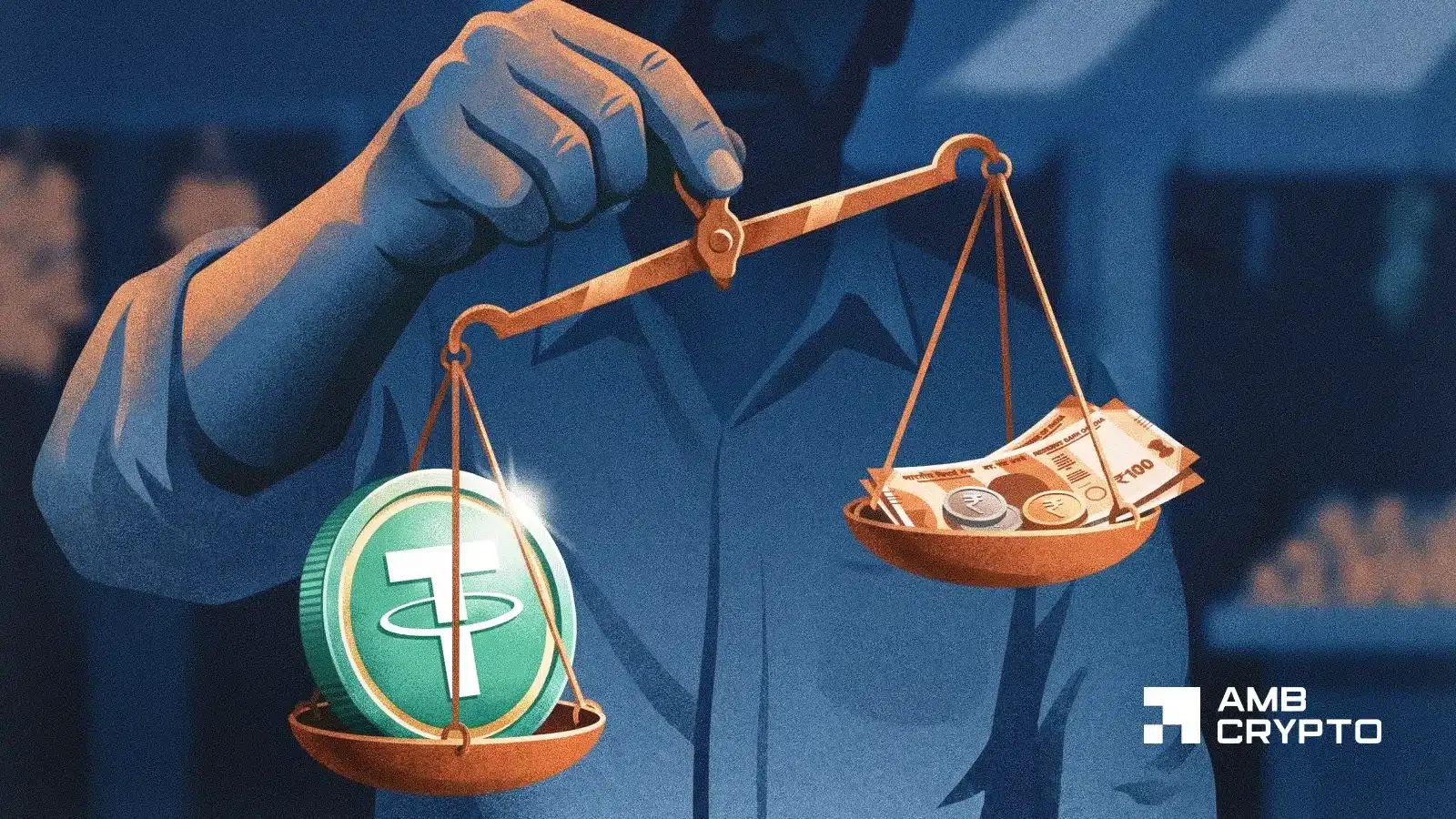
India’s USDT premium is in the news after it climbed above 8.5% due to a contraction in the availability of stablecoins domestically. As it stands, capital flows into the country are being discouraged by regulators through both enforcement actions and greater oversight.
That tightening premium is increasingly reflecting deeper changes in India’s stablecoin market structure rather than temporary pricing disruptions. In recent months, regulatory enforcement has slowed down fresh USDT inflows, reducing liquidity across P2P markets, OTC desks, and exchange order books.
Due to this fall in supply, both exchanges and on-chain flows demonstrated that there were minimal top-ups made to local inventory levels. Nonetheless, the total number of active wallet addresses, along with transaction volume, has remained relatively strong. The resilience of these metrics may be evidence of the demand for using USDT, including sending cross-border payments, settling trade, and storing value backed by dollars, which has not abated together with the decrease in supply.
These divergences mean that regulations have constrained the supply of USDT in India greater than they have the end-use or need for it. Should the availability of compliant inflow channels be limited, then the liquidity shortage could continue. However, regulatory clarity and better market access may gradually restore supply and narrow India’s elevated USDT premium.
By contrast, the tightening premium is reflecting market changes rather than mere price spikes. According to P2P transaction data, the INR/USDT rate was approximately ₹107.21 at press time. The daily transaction count was over 140,000, but the amount of money changing hands was relatively low due to reduced liquidity. Buy volume reached only $1.2 million, compared with sell volume of $17.8 million, highlighting constrained market-making capacity.
This demonstrated an inability for market makers to operate in this environment. Enforcement actions and scrutiny surrounding ₹2,500 crores in VDA transfers have also led to less new USDT inflow into the Indian market, thereby sustaining ongoing supply shortages.
Source: P2P Army
These imbalances might mean that regulatory uncertainty is currently diminishing market efficiency and increasing the cost to acquire dollar liquidity. In the long run, if conditions remain as they are now, traders may seek alternative means or offshore dollar liquidity. Clearer regulations would help restore arbitrage opportunities, increase available dollar liquidity, and eventually reduce India’s USDT premium.