•
•
•
•
•
•
•
•
•
•
•
•
•
•
•
•
•
•
•
•
•
•
•
•
•
•
•
•
•
•
•
•
•


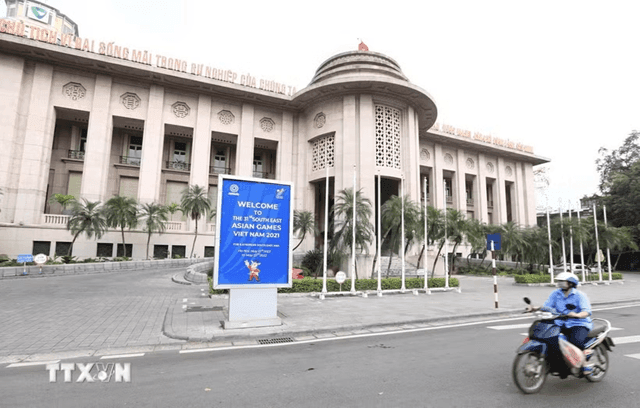
Last week, Vietnam’s money market showed signs of easing pressure as interbank rates declined while deposit rates at many commercial banks began to cool after a period of sustained increases. The shift reflected the State Bank of Vietnam’s (SBV) ongoing efforts to stabilize system liquidity and shaped expectations for how rates may move in the near term.
According to Le Ngoc Lam, CEO of BIDV, interbank rates have been under pressure recently due to tighter system liquidity. He said the main driver is credit growth outpacing deposit mobilization, which raises funding costs and narrows net interest margin (NIM).
Le Thanh Tung, a member of VietinBank’s Board of Directors, said current liquidity pressures are short-term but require flexible policy responses from the SBV. He pointed to the use of interest rates, exchange rates, open market operations (OMO), and refinancing to maintain macroeconomic balance.
SBV data for the week of April 13–17 showed interbank rates in VND declined across most tenors:
This suggests system liquidity has improved somewhat, with easing short-term borrowing demand among credit institutions compared with earlier periods.
In the deposit market, the downtrend has started but is not uniform. VCBNeo, the Vietcombank subsidiary, cut interest rates for tenors from 6–60 months by 0.5 percentage points, bringing the top rate to 6.5% per year. The move was described as the 32nd bank to reduce rates since the SBV Governor’s meeting with banks on April 9, indicating a broad cooling trend.
Vietcombank’s leadership said the SBV is actively guiding to stabilize rate levels and prevent a race to attract deposits. It also noted that state-owned banks continue to lead by keeping rates relatively low to support the economy.
Despite the cooling trend, competition for deposits has not ended. Some banks offer special rate packages ranging from 8% to above 10% per year, typically with large minimum deposit requirements.
From a banking perspective, the interest-rate challenge is becoming more complex. Phan Dinh Tue, a member of Sacombank’s board, said if lending rates rise, it could affect companies’ ability to absorb capital. Meanwhile, deposit rates face downward pressure under the macro policy direction. He said optimizing funding costs and diversifying funding sources, including from abroad, are increasingly important.
Looking ahead, BIDV’s leadership expects rate levels to gradually stabilize and possibly ease modestly from the start of the year, supported by liquidity-boosting measures from the SBV.
VPBank’s Nguyen Duc Vinh said rates may remain high in the near term before fading gradually from the second quarter to early in the third quarter.
Across assessments, the SBV’s policy actions are seen as decisive in guiding the market. However, external factors remain to be monitored. The article noted that geopolitical tensions, particularly in the Middle East, could raise inflation through higher energy prices and logistics costs. If inflation accelerates again, the room for rate cuts could shrink.
Overall, rates are expected to stay relatively high in the near term, then stabilize and gradually ease as liquidity improves sustainably, with the process likely to be cautious and controlled to balance growth with macroeconomic stability.

Premium gym chains are entering a “golden era” that is ending or already in decline, as rising operating costs collide with shifting consumer preferences toward more flexible, community-based ways to exercise. Long-term memberships are shrinking, margins are pressured by higher rents and facility expenses, and competition from smaller, more personalized…