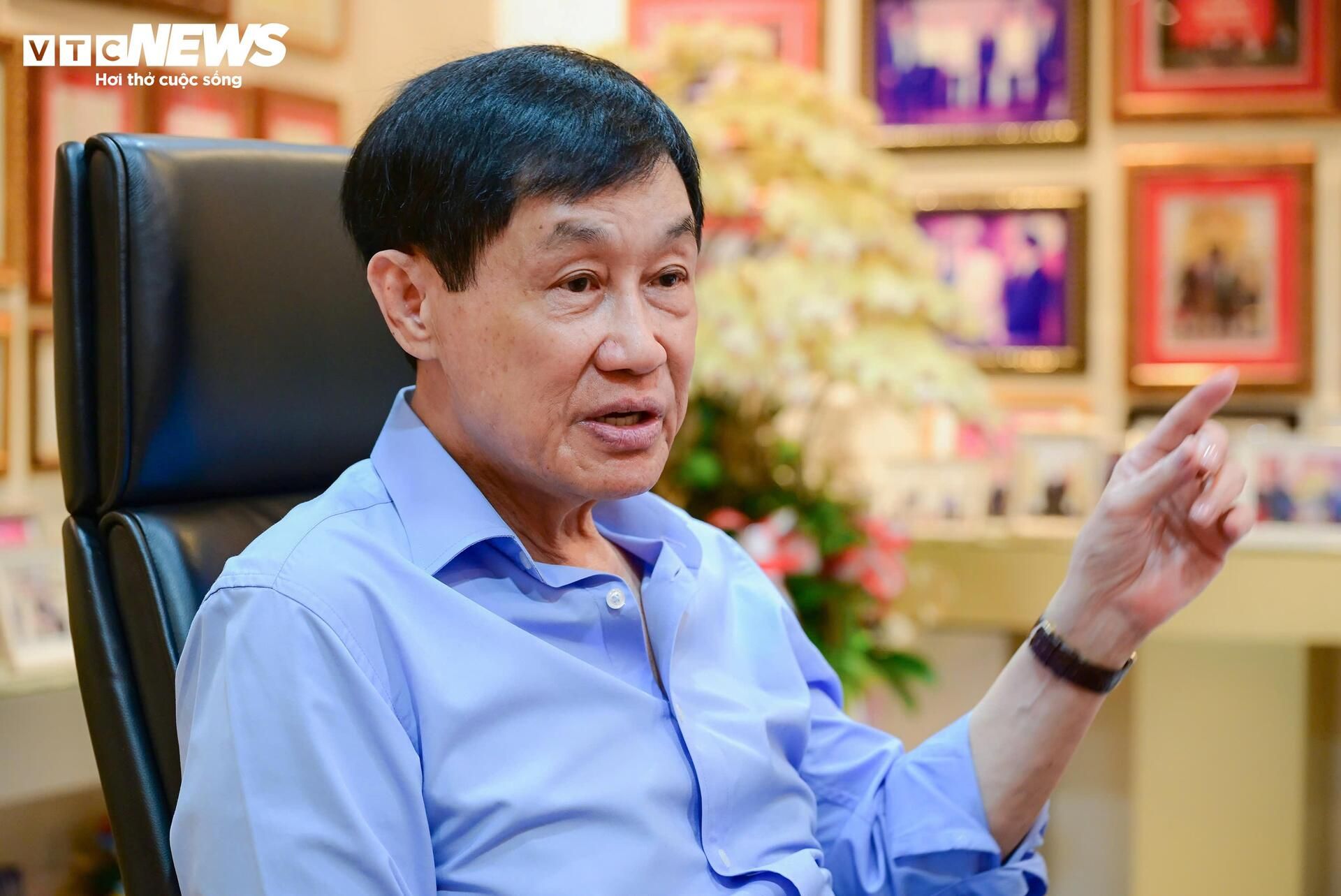
Johnathan Hạnh Nguyễn’s journey began when he returned to Vietnam after more than four decades abroad. At about twenty, he left Vietnam for the Philippines to live, study and work in the United States as his path led him to new opportunities until 1984 when he received a call from Vietnam’s representative office at the United Nations. The invitation was stark: Vietnam needed him. He returned home for Tet, then, at the government’s request, traveled to Hanoi to meet Prime Minister Phạm Văn Đồng. The Prime Minister urged him to help Vietnam open a flight path with the Philippines. He accepted, sensing a mission of great importance. The moment Vietnam Airlines operated the first flight from Ho Chi Minh City to Manila on September 9, 1985, it marked a critical step in Vietnam’s opening up and integration with the world, enabling the movement of goods, remittances, and foreign exchange back home.
After that mission, he faced questions about returning to Vietnam while the country still faced many restrictions. He recalls asking the Prime Minister why he was chosen, given he had been a financial auditor with no airline experience. The answer was that this was a special assignment tied to national interests.
With a sense of duty, he returned and set about creating employment and opportunity in his homeland. He launched a garment and rattan production plant in Nha Trang, supported by a friend in the United States who helped secure materials, buyers, and partners. This early enterprise gave many locals jobs and demonstrated the value of returning to contribute to Vietnam’s development.
He subsequently built the 14-story Nha Trang Lodge hotel, a project started in 1985 and opened in 1996, funded at nearly $10 million, becoming a landmark project in central Vietnam. He emphasizes that all these moves began with a commitment to the country’s reputation and people.
Yet the path was far from smooth. In the early years, from 1985 to 1988, he incurred losses of about $5 million on a total capital of $20 million, largely due to the aviation regime at the time and the costs of charter flights, which often carried cargo but faced little passenger demand. Nonetheless, he persevered, prioritizing imports of essential materials and the inflow of remittances, so that foreign currency could help commerce and local consumption.
He also explored export opportunities, looking for commodities that could move quickly to balance supply. He recalls a tense episode exporting crabs to the Philippines—crabs heated in transit, breaking restraints and causing alarms at the destination. The experience taught him a valuable lesson in logistics and risk, yet he considers it a memorable part of his journey rather than a mistake.
Looking back, he says he does not regret returning. He could have become a billionaire in aviation, but his life’s purpose was to contribute to Vietnam’s development in a way that could create jobs, generate wealth, and share prosperity with the wider community. He has always viewed wealth as a means to support countrymen and create opportunities for young Vietnamese entrepreneurs.
He continues to emphasize the importance of operating within the law and maintaining integrity while pursuing growth. He attributes much of his perseverance to the support and trust of leaders at national and provincial levels, especially in Khánh Hòa and Ho Chi Minh City, and the broader Vietnamese diaspora who believed in his mission to help the country.
Beyond
business, he also notes that his family’s collaboration—his wife as the “general commander” and his children following in business—has been essential. He remains committed to the idea that wealth should be used to advance commerce and services, not merely to accumulate status. He often tells his children to build wealth legally to ensure sustainable development.
As he looks to the future, he still dreams big: investing in a modern shopping center in Ho Chi Minh City, developing an outlet center, and establishing a financial center of international standing. He previously invested about $20 million in early plans for a financial center in Ho Chi Minh City, and today he envisions expanding investments at Long Thành airport near Đồng Nai and other strategic sites. He estimates initial outlays in the tens of millions of dollars, with further brand-building and inventory investments running into hundreds of millions. He remains determined to pursue these projects and to keep contributing for another two decades if health permits.
Ultimately, he expresses deep pride in Vietnam’s postwar trajectory—from devastation to rapid growth and global integration. He credits the leadership’s vision and the trust shown to Vietnamese expats who returned home, highlighting how the country’s reforms and supportive policy environment enabled millions of overseas Vietnamese to participate in the nation’s development. His personal mission aligns with this broader national narrative: building, sharing, and giving back to the country he loves.
In short, his life’s work—combining entrepreneurship with national service—reflects a belief that business success is most meaningful when it helps strengthen the economy, create jobs, support communities, and inspire the next generation of Vietnamese entrepreneurs.