•
•
•
•
•
•
•
•
•
•
•
•
•
•
•
•
•
•
•
•
•
•
•
•
•
•
•
•
•
•
•
•
•


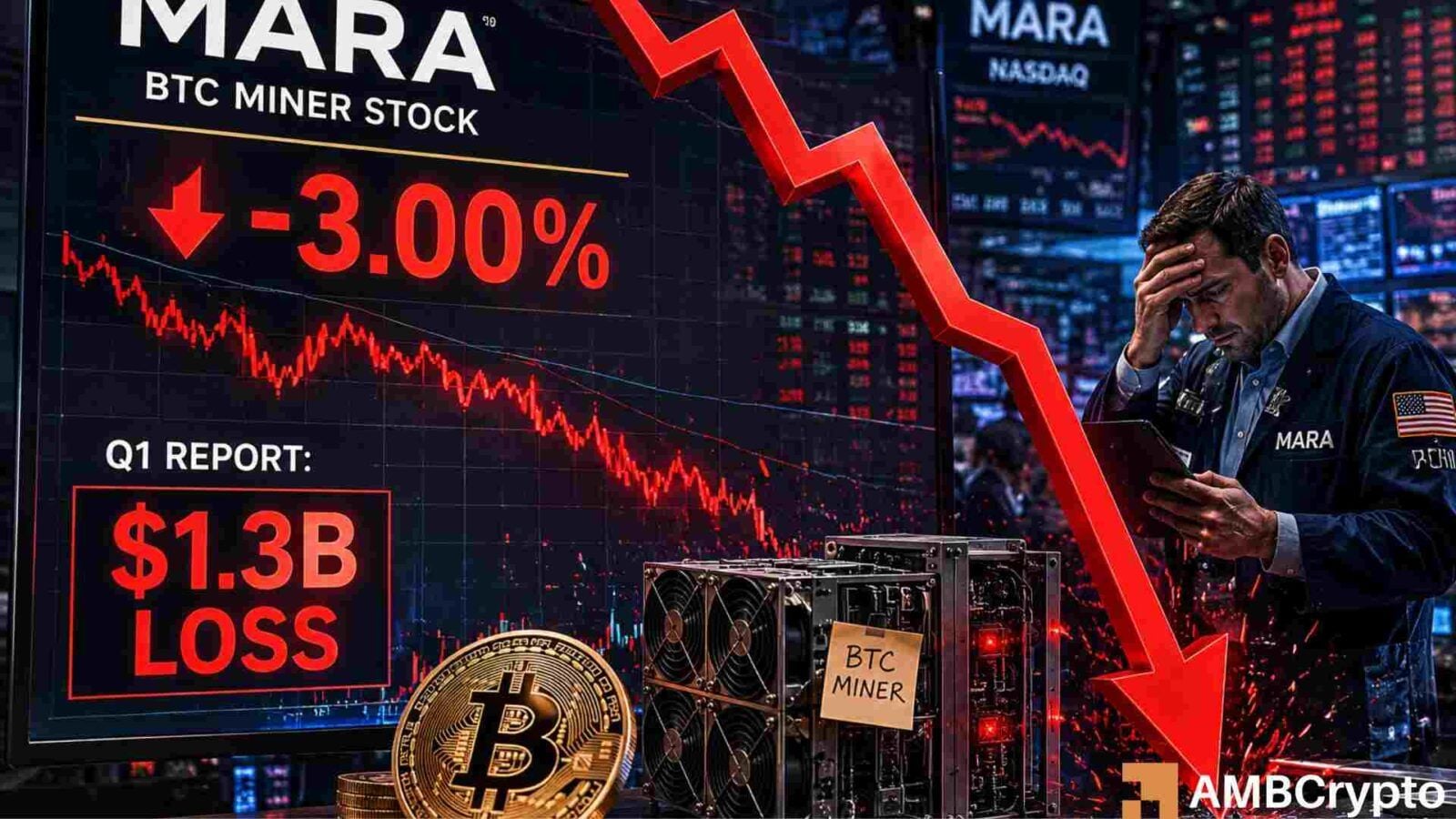
Publicly traded Bitcoin miner MARA saw its stock price dip by 3.4% on Monday, May 11, closing at $12.93, after the company reported a Q1 loss. The shares recovered some ground during Tuesday’s pre-market trading.
In its earnings report, MARA said Q1 revenues fell 18% to $176 million. The company reported a net loss of $1.3 billion, noting that more than 90% of the net loss was tied to the crypto downturn.
MARA reported holding over 53,000 BTC by the end of 2025, but said it held 35,303 BTC as of the end of March. Over the same period, Bitcoin’s price fell from above $98,000 to a low near $60,000, before closing Q1 around $68,000—about a 30% drawdown.
MARA sold 20,880 BTC in Q1 at an average price of $70,137, representing about $1.5 billion worth of Bitcoin. Of the proceeds, $1.1 billion worth of sold BTC was used to finance debt, effectively reducing its overall debt burden by 30%.
The company said part of the $1.1 billion BTC sell-off in Q1 was used for both debt reduction and its AI pivot.
MARA’s approach reflects a broader miner sell-off in Q1, but the company led the activity by selling 20,000 BTC out of the total 32,000 BTC offloaded during the same period.
Robert Samuels, vice president of investor relations at MARA, reiterated that 90% of the firm’s capacity will be converted to AI infrastructure.
The shift also echoed comments from MARA CEO Fred Thiel, who warned that after the 2028 Bitcoin halving, block rewards would be reduced from 3.125 BTC to 1.5625 BTC, leaving miners to either become power generators or partner with entities that control energy.
By 2028, you’ll either be a power generator, be owned by one, or be partnered with one.
This strategy is tied to a Starwood partnership aimed at turning MARA’s existing Bitcoin mining sites into AI data centers and power generators.
Premium gym chains are entering a “golden era” that is ending or already in decline, as rising operating costs collide with shifting consumer preferences toward more flexible, community-based ways to exercise. Long-term memberships are shrinking, margins are pressured by higher rents and facility expenses, and competition from smaller, more personalized…