•
•
•
•
•
•
•
•
•
•
•
•
•
•
•
•
•
•
•
•
•
•
•
•
•
•
•
•
•
•
•
•
•


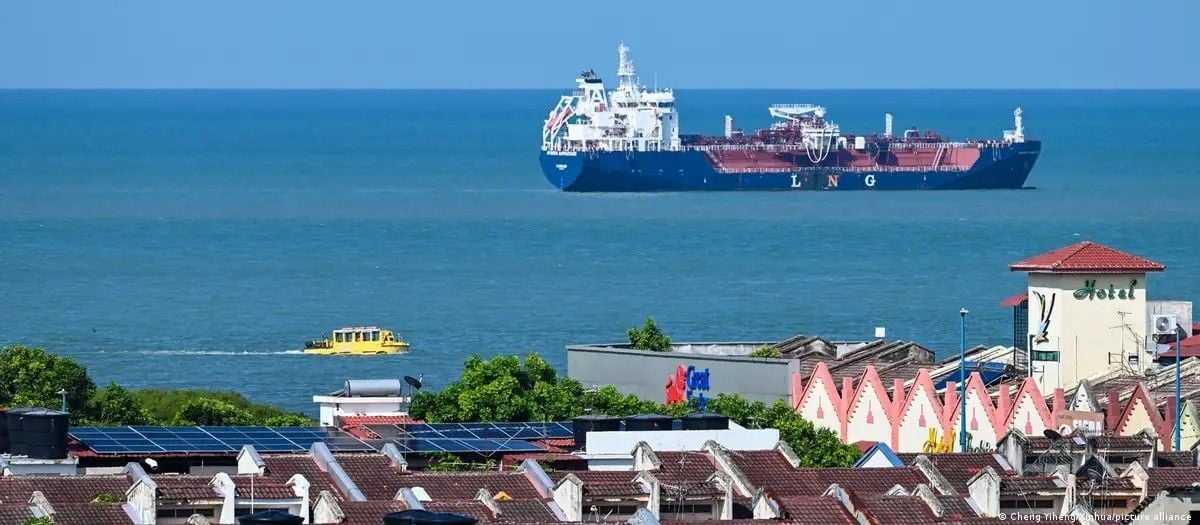
Maritime chokepoints have become geopolitical leverage as global trade increasingly relies on sea transport. Disruptions on these routes can trigger cascading effects across energy, logistics, supply chains and global economic growth. In recent years, maritime geopolitics has expanded beyond naval powers, with chokepoints increasingly used as instruments of economic and strategic pressure—from attacks in the Red Sea to tensions around the Taiwan Strait and debates over transits through the Malacca Strait.
In late April, Indonesian Finance Minister Purbaya Yudhi Sadewa said there was a possibility of imposing fees on ships passing through the Malacca Strait, prompting international debate about whether strategic shipping routes could be used for geopolitical pressure. Jakarta later clarified that there were no plans to restrict freedom of navigation, but the episode highlighted the sensitivity of major trade chokepoints.
The Malacca Strait is described as the world’s most crucial sea route linking Northeast Asia with the Middle East and Europe, handling about 22% of global seaborne trade. It is also a key energy route for China, Japan, Korea and other Asian economies. The text notes that tens of thousands of merchant ships, container ships and tankers pass through the strait each year. For China, most oil imports from the Middle East and Africa must transit Malacca before reaching the South China Sea and eastern Chinese ports, a risk Chinese strategists have long referred to as the “Malacca Dilemma.”
Christian Wirth of the German Institute for International and Security Affairs (SWP) says a strait’s vulnerability depends on three factors: the importance of the shipping route, the existence of alternatives, and the surrounding political environment. “The more critical and less substitutable a route is, the higher its geostrategic value,” he notes.
Malacca’s sensitivity is reinforced by the fact that substitute routes such as the Sunda or Lombok Straits are longer, costlier and less capacity-constrained. As a result, a disruption to Malacca could quickly raise global logistics costs.
While Malacca is characterized as a lifeline for Southeast Asia’s trade, the Taiwan Strait is described as the region’s largest strategic hotspot in the Indo-Pacific. Beyond serving as a vital maritime artery, the strait is positioned at the center of global supply chains for semiconductors, electronics and high-tech industries. With tensions between China and Taiwan rising, experts cited in the text warn that a major crisis could produce a global economic shock more severe than past energy crises.
Nikolaus Scholik, a senior advisor at the Austria Institute for European and Security Policy (AIES), argues that in the event of major conflict in East Asia, the Taiwan Strait could carry even greater strategic significance than Hormuz. He told Deutsche Welle that states increasingly believe they can use maritime chokepoints to exert geopolitical influence, and that much of Asia’s trade depends directly or indirectly on routes passing through Malacca and Taiwan—giving those regions the ability to affect the world economy if disruptions occur.
The International Institute for Strategic Studies (IISS) is also cited as saying the world is seeing a “return of geography” in international power competition, with straits and sea lanes acting as levers for economics, energy and security rather than only trade.
The article also highlights that man-made chokepoints such as the Suez and Panama Canals face growing fragility in a globalized economy.
It states that Suez has long been a vital artery linking Asia and Europe, handling about 12% of global trade. Unrest in the Red Sea has exposed vulnerabilities in international logistics. Attacks by Houthi forces have led many large shipping lines to reroute via the Cape of Good Hope in Africa. The text notes that rerouting lengthens voyages by weeks, raises fuel costs and pushes up freight rates, with spillovers into energy prices, industrial production and inflation across multiple economies.
It also points to the 2021 Ever Given incident, when the Suez Canal was briefly paralyzed, as an example of how a single disruption at a chokepoint can trigger a domino effect across global supply chains.
Panama is presented as illustrating climate-related risk. Prolonged drought in recent years has reduced water levels in reservoirs essential for canal operations, leading authorities to limit the number of ships allowed to pass.
These chokepoints, the text argues, show how geopolitical and security risks are compounded by climate and non-traditional threats. The Center for Strategic and International Studies (CSIS) warns that the modern global economy—reliant on a small number of strategic sea routes—could be affected even by a brief disruption. It adds that the just-in-time supply chain model, which encourages lean inventories to optimize costs, can amplify vulnerability to short-lived logistics disruptions.
Under UNCLOS, freedom of navigation in international straits is protected, and commercial and military vessels have the right to peaceful passage without obstruction. Christian Wirth argues that fully blocking an international strait would violate international law, but he says the larger challenge is the gap between law and reality in geopolitics.
Scholik is cited saying international law only has effect when states are willing to comply. He also argues that the world no longer needs enormous fleets to disrupt global trade, noting that drones, missiles, fast boats and non-state actors can exert substantial pressure on shipping.
The Red Sea developments are described as the clearest example: with relatively modest-scale attacks, the Houthis have forced many major shipping groups to alter routes and unsettled the logistics market.
At the same time, experts warn that using chokepoints as leverage is a double-edged sword. In a crisis around the Taiwan Strait or Malacca, China—described as heavily dependent on sea-borne imports and exports—could also face sizable losses.
Overall, the article concludes that the world is entering a phase in which maritime chokepoints are increasingly viewed as tools of strategic influence. In a hyper-globalized economy dependent on maritime transport, disturbances at Malacca, Taiwan, Suez or Panama can quickly become a global issue.

Premium gym chains are entering a “golden era” that is ending or already in decline, as rising operating costs collide with shifting consumer preferences toward more flexible, community-based ways to exercise. Long-term memberships are shrinking, margins are pressured by higher rents and facility expenses, and competition from smaller, more personalized…