•
•
•
•
•
•
•
•
•
•
•
•
•
•
•
•
•
•
•
•
•
•
•
•
•
•
•
•
•
•
•
•
•


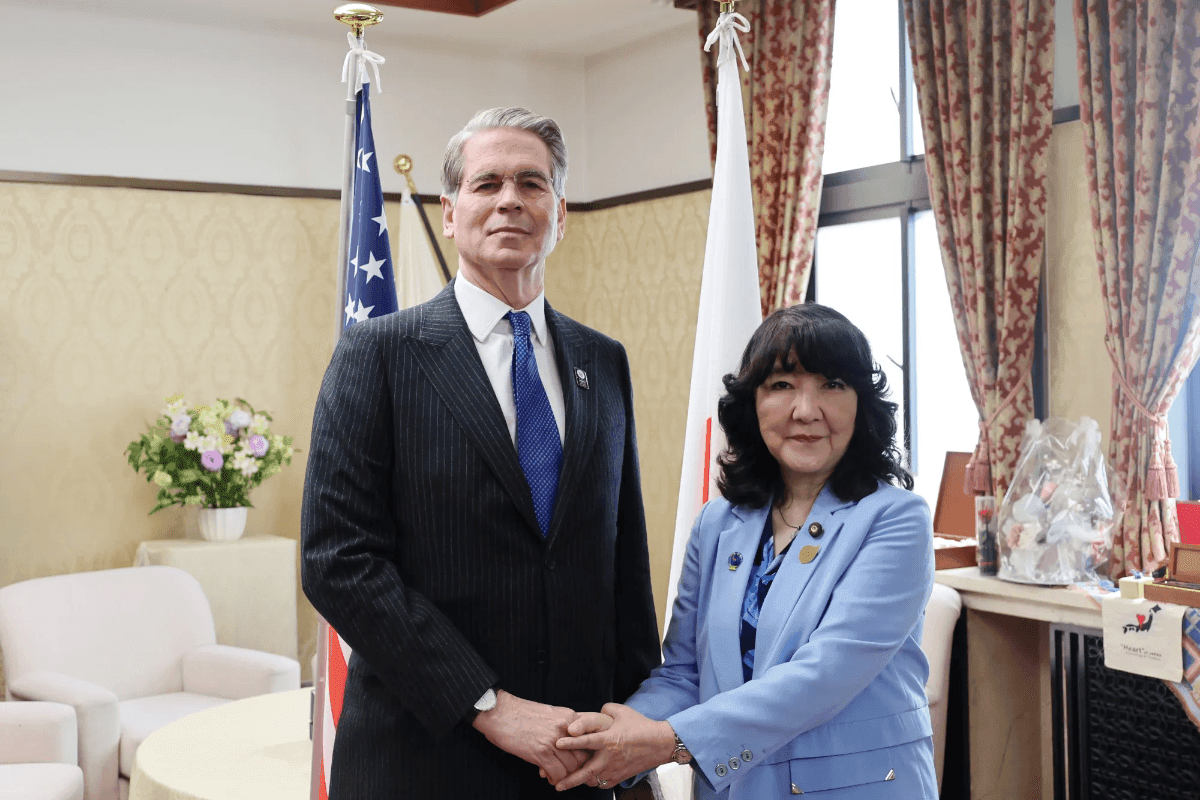
US Treasury Secretary Scott Bessent said on May 12 during his visit to Japan that excessive volatility in foreign exchange markets is undesirable, a remark widely interpreted as support for Tokyo’s recent currency intervention to defend the yen.
After meeting Japanese Prime Minister Sanae Takaichi, Bessent told reporters that he believed Bank of Japan Governor Kazuo Ueda would steer monetary policy to avoid the risk of being “behind the curve” in the inflation fight. He also said Japan and the United States would continue close coordination with Japan’s Ministry of Finance regarding FX market moves.
Bessent said: “Both sides believe that excessive volatility is undesirable, and we have kept close contact with the Japanese Ministry of Finance, and such communication will continue.” He added that he believes Japan’s economic fundamentals are “strong and resilient,” and that this would be reflected in the exchange rate.
Reuters reported that analysts viewed the comments as a signal that Washington generally supports Tokyo’s recent currency intervention. In recent weeks, yen depreciation has weighed on Japan’s economy by pushing up import prices.
Earlier, Japanese Finance Minister Satsuki Katayama said she and Bessent reaffirmed close coordination to respond to currency volatility, including intervention.
After meeting Katayama, Bessent posted on X that “the level of exchange and coordination of action between our teams to handle excessive and undesirable movements in the currency market will continue to be strong.” Reuters noted that the post did not fully match traders’ expectations, who had hoped for a stronger warning from the United States about yen weakness.
Following Bessent’s remarks, the dollar rose to 157.72 yen per USD. The yen then strengthened unexpectedly to 156.75 yen per USD, prompting speculation of a “rate check,” which is often seen as a precursor to intervention.
By the morning after the comments, the USD/yen pair was largely unchanged, trading around 157.6 yen per USD.
Officials said support from Bessent could reinforce the impact of Japan’s FX intervention and help curb yen depreciation pressures. Katayama added that Japan is responding to yen volatility in line with a joint statement signed with the United States in September last year, which allows intervention to address excessive movements.
“Given the current situation, we strongly reaffirm the need to continue close coordination in facing these market movements,” Katayama said.
Many analysts said that to better curb yen weakness, the BOJ may need to raise interest rates. The BOJ’s April meeting minutes, released on May 12, showed some policymakers favor raising rates soon, including one member proposing a rate increase as early as June to address inflation pressures from higher oil prices.
Japan has also considered intervening in crude oil futures, arguing that speculation-driven price increases contribute to yen weakness against the USD. However, Katayama said on May 12 that such measures have not been implemented.
Markets are testing Japan’s resolve to defend the yen.

Premium gym chains are entering a “golden era” that is ending or already in decline, as rising operating costs collide with shifting consumer preferences toward more flexible, community-based ways to exercise. Long-term memberships are shrinking, margins are pressured by higher rents and facility expenses, and competition from smaller, more personalized…