•
•
•
•
•
•
•
•
•
•
•
•
•
•
•
•
•
•
•
•
•
•
•
•
•
•
•
•
•
•
•
•
•


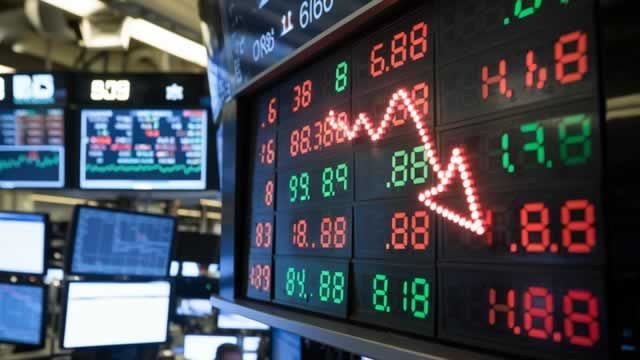
Major U.S. stock indexes fell last week to cap a rocky month of trading, as markets digested a fresh escalation in the Middle East and its potential economic fallout.
A shaky start to the week is in store for financial markets after the U.S. and Israel attacked Iran over the weekend. Oil prices surged when trading got underway Sunday evening on concerns that supplies from the Middle East could be disrupted, while stock futures slid as investors reduced exposure to risk amid renewed geopolitical and economic uncertainty. Gold, which has hit a series of record highs in recent months, rose as some investors shifted toward safe-haven assets.
The bombing of Iran early Saturday killed Iran’s Supreme Leader, Ali Khamenei, and caused damage throughout the country. It prompted retaliatory strikes by Iran against Israel and U.S. interests in several countries across the region over the weekend. President Donald Trump said Sunday that the U.S. plans to continue combat operations in Iran for several more weeks.
The escalation is expected to add geopolitical and economic uncertainty that could increase market volatility. A surge in oil prices would likely affect what consumers pay for gasoline and could weigh on broader economic activity.
“The initial market reaction for this type of event would typically see Treasury yields move lower and equities lower—mostly a risk premium repricing,” Franklin Templeton Institute analysts led by Chief Investment Strategist Stephen Dover said in a report Saturday.
Oil and natural gas prices are viewed as especially vulnerable to sharp moves higher, not only because the Middle East is a major producer, but also due to rising shipping costs.
“Oil prices are likely to gap higher, and the move may not fade quickly because the market is not only pricing barrels, but also the cost of moving barrels,” said Charu Chanana, Chief Investment Strategist at Saxo. “Even without a full shutdown, higher war-risk premia, rerouting and insurance repricing can keep crude and freight costs elevated.”
Even before the Iran attack, oil prices had been rising amid concerns about potential military action in the Middle East, increasing about 20% since the start of the year. Brent crude oil futures were up more than 6% recently at around $77.50 per barrel, trading at their highest levels since June. WTI futures rose about 6% to $71 per barrel.
Futures tied to the Dow Jones Industrial Average, S&P 500 and the Nasdaq 100 were each down about 1% in recent trading. Gold futures were up nearly 2% at $5,350 an ounce, at their highest level in more than a month.
Bitcoin, which trades continuously seven days a week, dropped as low as $63,000 early Saturday after the strikes, down from a Friday high around $68,000. By Sunday evening, it had rebounded to about $67,000.
Major U.S. stock indexes also lost ground last week to finish a month dominated by investor concerns about AI-related disruptions, fresh uncertainty about tariffs, and the outlook for the economy and interest rates. The yield on the 10-year Treasury notes, which influences interest rates across consumer loans, closed Friday at its lowest level since October 2024.
“Historically, geopolitics often produce an initial jump in risk premia before investors conclude the aggregate earnings hit is modest,” Franklin Templeton Institute said. “We would not yet label this a clean buy-the-dip setup—duration, shipping/insurance mechanics, and the endgame matter more than the first headline.”
Chanana said airlines and other travel and leisure companies could face pressure from higher fuel costs and weaker demand. Shipping companies and firms exposed to global trade are also vulnerable. Energy stocks, by contrast, could benefit from higher oil prices.
He also pointed to defense, security and critical infrastructure providers as potentially better positioned.
“Gold, defense and other security-linked enablers are increasingly becoming core building blocks as geopolitical risk becomes more frequent rather than exceptional,” Chanana said. “In that environment, active risk management matters, because leadership can rotate quickly as the map changes.”
Update: The article was updated after initial publication to include information about futures market trading activity.








Premium gym chains are entering a “golden era” that is ending or already in decline, as rising operating costs collide with shifting consumer preferences toward more flexible, community-based ways to exercise. Long-term memberships are shrinking, margins are pressured by higher rents and facility expenses, and competition from smaller, more personalized…



