•
•
•
•
•
•
•
•
•
•
•
•
•
•
•
•
•
•
•
•
•
•
•
•
•
•
•
•
•
•
•
•
•


The energy shock from the Middle East conflict has prompted some Asian and African countries to restart or build new nuclear power plants, as disruptions to oil and gas supply raise short-term electricity demand.
With about 20% of global oil and gas supply disrupted due to chokepoints in the Hormuz Strait, countries with existing nuclear capacity are increasing output to help manage energy shortages.
In East Asia, South Korea is increasing output at operating nuclear plants. The country is also accelerating maintenance on five reactors that have been shut down, with plans to restart them next month.
Japan is reversing its policy of closing nuclear facilities after the Fukushima disaster in 2011. The country is restarting Kashiwazaki-Kariwa, described as the world’s largest nuclear plant, earlier this year. Prime Minister Takaichi Sanae signed agreements with the United States for a 40 billion USD reactor purchase and with France on nuclear-fuel reprocessing.
In Taiwan, authorities are considering restarting two reactors, a process that requires stringent safety checks.
In South and Southeast Asia, Bangladesh is rushing to bring new reactors online built by Rosatom. Dhaka expects the reactors to provide 300 MW this summer, easing pressure on the electricity system amid gas shortages.
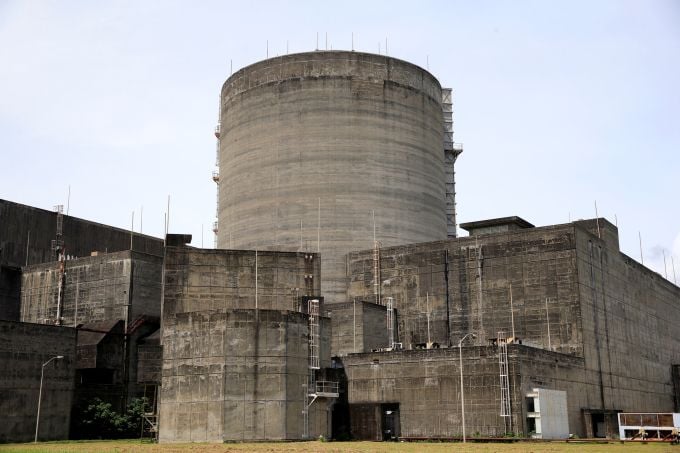
The Philippines has declared a national energy emergency and is considering reviving a nuclear power plant built after the 1973 oil crisis, but it has not yet been brought online.
“The Middle East conflict is a necessary push for nuclear energy. I hope we have learned our lessons,” said Alvie Asuncion-Astronomo, a researcher at the Philippines Nuclear Research Institute.
Experts say the energy crisis is also shifting public opinion. Michiyo Miyamoto, an expert at the US Energy Economics Institute and Financial Analysis, said record-high electricity prices and the energy crisis are pushing public opinion in Japan toward accepting nuclear power.
Energy prices rising and power shortages linked to tensions in the Middle East are also prompting African countries to consider nuclear power. South Africa, the continent’s only country with a functioning plant, is seeking to raise its share of energy from about 5% today to 16% by 2040.
At a March UN summit, Rwanda President Paul Kagame said Africa would be one of the world’s most important markets for small modular reactors (SMRs) in the coming years. Providers including the US, Russia, China, France and Korea see potential for SMR markets in the region.
Rosatom is building Egypt’s first reactor, and the company has cooperation agreements with Ethiopia, Burkina Faso, Ghana, Tanzania and Niger.
Kenya and Ghana are also joining a US-led SMR initiative. Kenya plans to put a reactor into operation by 2034. Ghana plans to build a nuclear power plant in 2027 and is seeking specific suppliers.
There are currently 31 countries using nuclear power, providing about 10% of global electricity. About 40 more countries are considering or preparing to build plants, according to the IAEA.
Nuclear energy releases energy when atomic nuclei (such as uranium) are split in a fission process. Unlike fossil fuels, the process does not emit CO2, but it produces radioactive waste, which makes many countries cautious.
Ayumi Fukakusa, a member of Friends of the Earth Japan, said nuclear energy is risky and would make countries more dependent on imported fuel such as uranium.
Rachel Bronson, a US nuclear-science expert, said nuclear power plants are also vulnerable, noting that reactors have been targeted in recent conflicts.
Joshua Kurlantzick of the Council on Foreign Relations argued that nuclear energy is not a quick fix for the current energy crisis, because developing projects can take decades, especially for countries starting out.
Rex Amancio, an expert at the Global Renewable Energy Alliance, said nuclear projects require many years to implement and that governments should continue focusing on renewable energy to ensure long-term energy security.






Premium gym chains are entering a “golden era” that is ending or already in decline, as rising operating costs collide with shifting consumer preferences toward more flexible, community-based ways to exercise. Long-term memberships are shrinking, margins are pressured by higher rents and facility expenses, and competition from smaller, more personalized…




