•
•
•
•
•
•
•
•
•
•
•
•
•
•
•
•
•
•
•
•
•
•
•
•
•
•
•
•
•
•
•
•
•


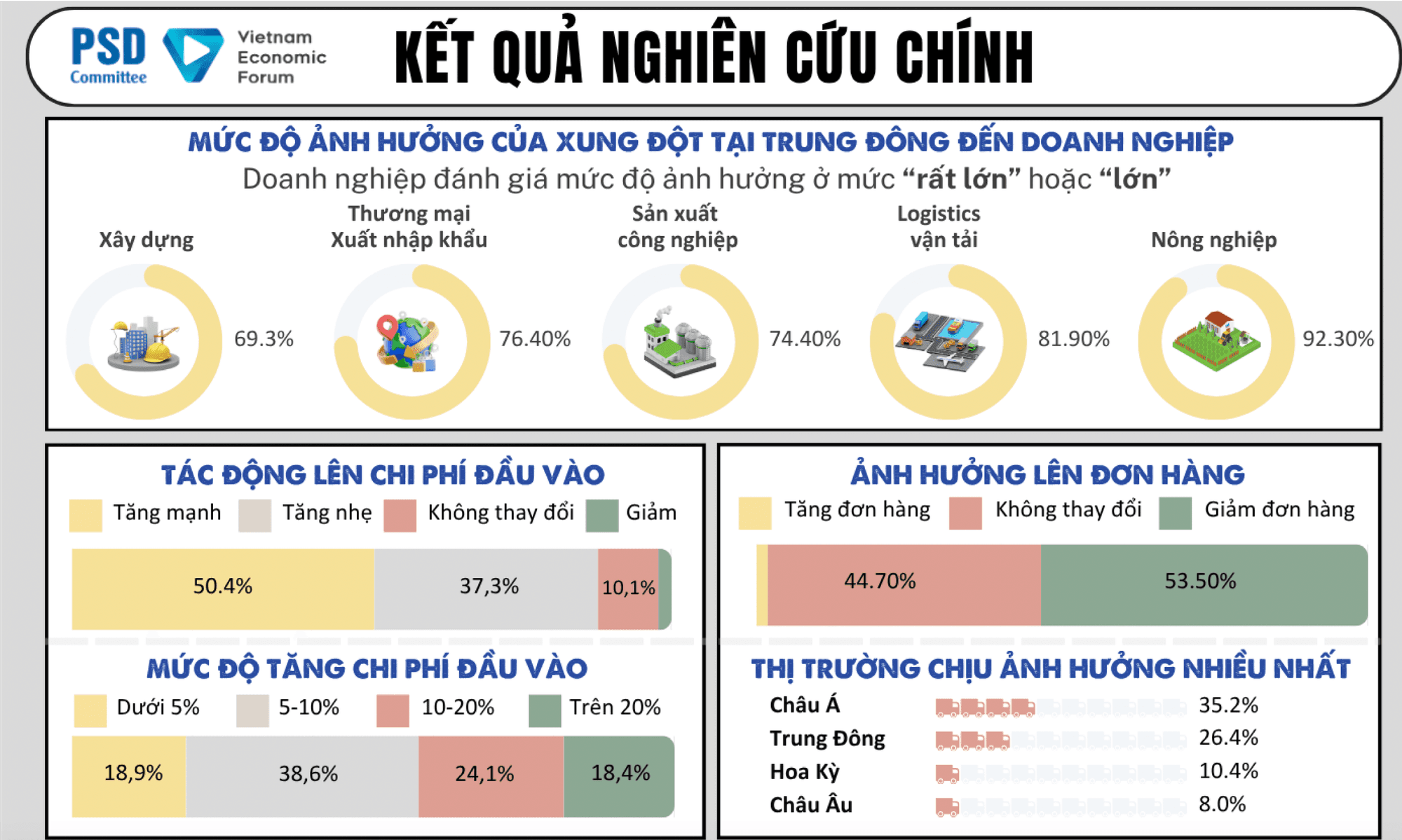
The impact of the Middle East conflict is increasingly affecting firms’ access to capital, contributing to higher borrowing costs and mounting exchange-rate pressures, according to a survey released March 28 by the IV Research and Development Board for Private Sector Economic Reform under the Prime Minister’s Advisory Council on Administrative Procedures Reform.
The survey, conducted in collaboration with the Private Enterprise Development and Cooperative Economy Department of the Ministry of Finance, examines how the conflict is influencing enterprise operations. It notes that hostilities in the Middle East have entered their fourth week and are continuing to unfold, generating negative global effects, disrupting energy-supply chains, and directly affecting economies and enterprises’ production and business activities.
A rapid survey conducted from March 16 to March 22 among 228 enterprises found that the conflict’s impact has moved beyond potential risk to real pressures on production and business activities.
The report says the intensity of impact is higher in sectors directly linked to fuels, transportation, import-export activities, industrial production, agriculture, and international supply chains. It also highlights that external geopolitical shocks are propagating quickly into the domestic economy through multiple channels.
According to the report, the conflict has begun affecting investor sentiment, access to capital, and financing conditions for enterprises.
Enterprises also reported growing financial pressures, including rising borrowing costs, difficulties in accessing capital, exchange-rate fluctuations, and pressure on international settlements.
In the survey results, most firms rated their resilience as only average, while a substantial share viewed resilience as low. The report interprets these figures as indicating that the corporate sector—especially small and medium-sized enterprises—has limited capacity to respond to simultaneous shocks affecting costs, logistics, orders, and capital.
To help firms overcome difficulties, the IV Board recommends that the Prime Minister promptly implement measures to support credit, debt restructuring, lower interest rates, and improve cash flow for enterprises.
The report adds that, with rising input costs and constrained access to capital, market access and forecasts remain challenging. It calls for studying solutions to support enterprises in maintaining liquidity and working capital, particularly for sectors most affected such as manufacturing, exporters, and agriculture, with emphasis on SMEs.
At the Vietnam Economic Forum 2026 (first edition), participants also noted that current interest rates are very high. Lending rates have risen from about 6–7% to 11–13%, and even 15% for real estate, creating substantial pressure on enterprises.
Against this backdrop, there is strong expectation that financial institutions will consider facilitating access to capital to help firms sustain production and stable development.






Premium gym chains are entering a “golden era” that is ending or already in decline, as rising operating costs collide with shifting consumer preferences toward more flexible, community-based ways to exercise. Long-term memberships are shrinking, margins are pressured by higher rents and facility expenses, and competition from smaller, more personalized…




