•
•
•
•
•
•
•
•
•
•
•
•
•
•
•
•
•
•
•
•
•
•
•
•
•
•
•
•
•
•
•
•
•


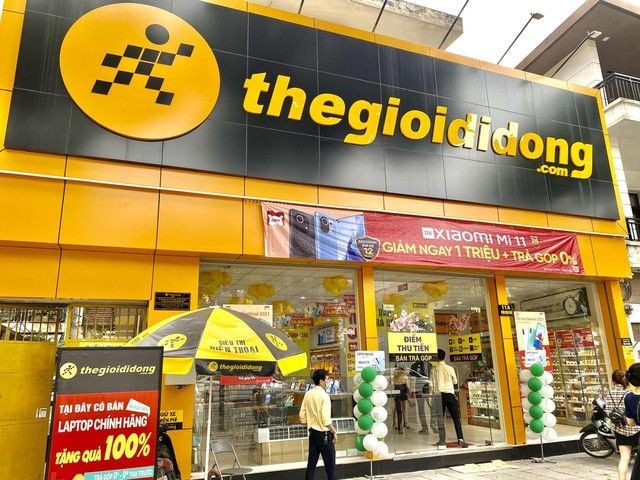
According to MWG’s Q1 2026 financial statements, MWG Investment Joint Stock Company (MWG) continued to maintain its financial investment activities in the early months of 2026. As of March 31, the balance of cash and cash equivalents, deposits, bond investments, and lending stood at more than 48,000 billion VND, slightly down from the record level at the end of last year.
In particular, the total value of bonds and receivables from lending as of the end of Q1 was over 21,800 billion VND, down about 700 billion VND from the start of the year. By contrast, the balance of cash, cash equivalents, and short-term deposits rose by about 300 billion VND to nearly 26,300 billion VND.
MWG’s financial investment strategy involves allocating cash into financial instruments with higher risk and return to optimize cash flow. The retailer has explored this approach since late 2022 and began emphasizing it more in 2024. Returns from financial investments have improved significantly over time.
In Q1 2026, MWG recorded interest income from deposits, loans, and bonds of more than 800 billion VND, up more than 26% year-on-year. Meanwhile, costs related to interest and debt arrangements increased 28% versus Q1 2025 to 420 billion VND, largely due to higher interest rates.
As a result, the “money-making” activity generated nearly 380 billion VND in net profit for MWG in Q1 2026, up 23% year-on-year. The company also estimated that the average daily net profit from financial investments in the quarter was more than 4 billion VND.
This figure does not fully reflect the overall benefits of the investment activity, as some interest costs are used to support core business activities. Effective financial investments also contributed to MWG’s strong overall business performance.
Net profit after tax in Q1 2026 reached 2,758 billion VND, up 78% year-on-year.
For 2026, MWG plans to pursue record-high revenue of 185,000 billion VND and consolidated net profit of 9,200 billion VND, representing increases of 18% and 30% respectively from last year. With the Q1 results, the company has achieved 25% of its annual revenue plan and 30% of its annual profit target.






Premium gym chains are entering a “golden era” that is ending or already in decline, as rising operating costs collide with shifting consumer preferences toward more flexible, community-based ways to exercise. Long-term memberships are shrinking, margins are pressured by higher rents and facility expenses, and competition from smaller, more personalized…




