•
•
•
•
•
•
•
•
•
•
•
•
•
•
•
•
•
•
•
•
•
•
•
•
•
•
•
•
•
•
•
•
•


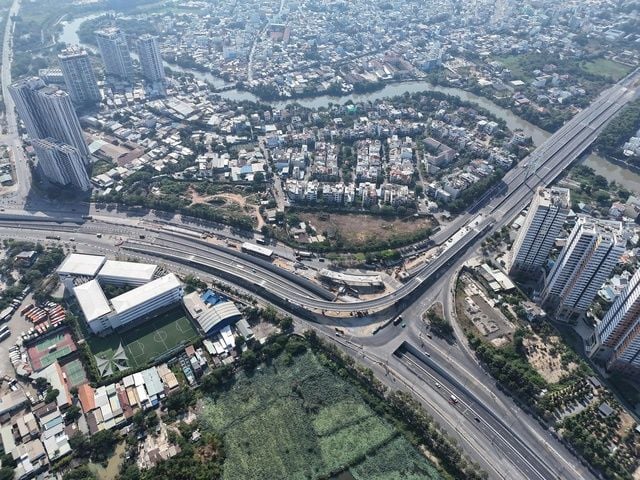
At 11:00 on May 1, the N3 overpass at An Phú junction in Ho Chi Minh City opened to traffic, enabling a direct left turn from Mai Chí Thọ Boulevard to Đồng Văn Cống. The move is intended to ease congestion at the city’s eastern gateway.
A representative of the Ho Chi Minh City Project Management Board for Transport Infrastructure projects said the overpass design separates the left-turning traffic flow. This allows vehicles—especially containers—to move continuously without stopping at signals as before, reducing conflicts and bottlenecks at the junction.
The N3 overpass is nearly 500 meters long and 9 meters wide, with two one-way lanes. It forms part of Construction Package No. 10, with a total cost of about 236 billion VND. The bridge also connects directly to the new Giồng Ông Tố Bridge, creating a smoother corridor from Mai Chí Thọ Boulevard to Cat Lai port.
From now on, vehicles traveling from the Võ Nguyên Giáp direction along Mai Chí Thọ Boulevard can turn left directly onto Đồng Văn Cống to reach Cat Lai port without waiting at signals. This is expected to reduce travel time and ease traffic pressure in the area.
The N3 overpass is the fourth component completed in the An Phú junction project, following the HC1-01 tunnel, the N2 overpass, and the HC1-02 tunnel, all of which have already been put into use. The phased completion of these components supports the gradual completion of Ho Chi Minh City’s eastern transportation system, particularly the corridor linking Cat Lai port with the Ho Chi Minh City–Long Thành–Dầu Giây expressway.






Premium gym chains are entering a “golden era” that is ending or already in decline, as rising operating costs collide with shifting consumer preferences toward more flexible, community-based ways to exercise. Long-term memberships are shrinking, margins are pressured by higher rents and facility expenses, and competition from smaller, more personalized…




