•
•
•
•
•
•
•
•
•
•
•
•
•
•
•
•
•
•
•
•
•
•
•
•
•
•
•
•
•
•
•
•
•


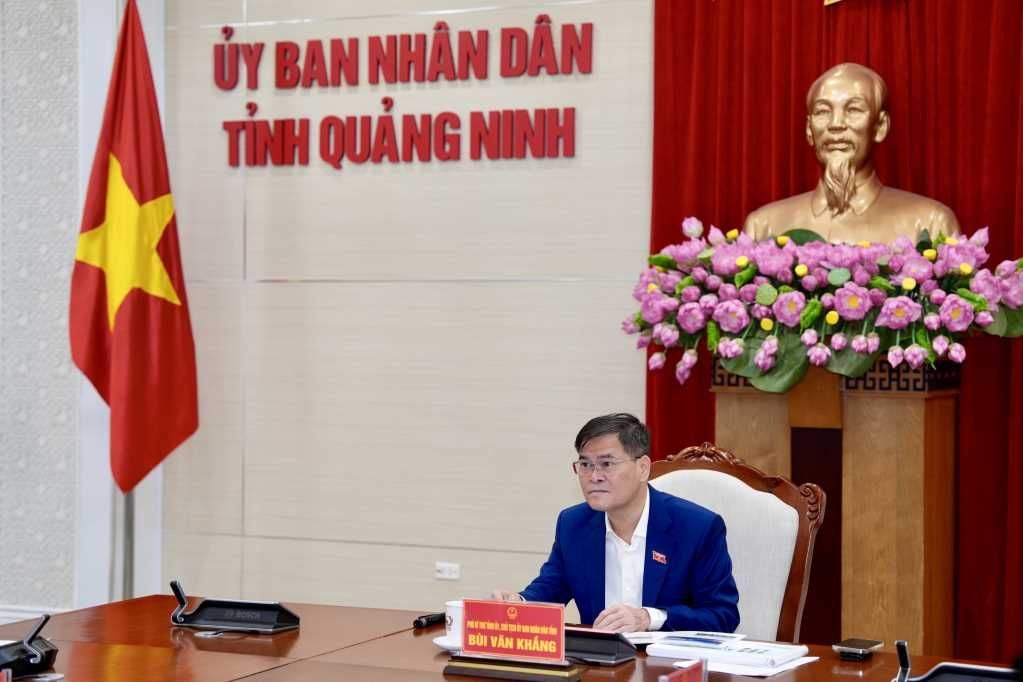
On April 29, Mr. Bùi Văn Khắng, Chairman of the Quảng Ninh provincial People’s Committee, chaired a meeting to hear and collect opinions on an investment proposal to build the Cửa Lục 2 Bridge, proposed by the Pacific Construction Group (China) as the investor.
At the meeting, representatives of the investor presented three bridge design options, aligned with the province’s spatial development orientation linked to transportation functions and tourism and services development:
The proposal estimates the bridge at about 9.6 km in length, with the main span nearly 1.3 km, and the remainder comprising approaches. The starting point would connect to National Highway 18, while the ending point would connect to the Ha Long – Van Don Expressway.
The concept emphasizes elevated amenities, including a 360-degree rotating restaurant, a Sky Bar, a glass observation deck, and an elevator for viewing at the top of the bridge tower. It also includes a glass hanging walkway at height integrated with augmented reality effects.
The project is also intended to create an observation axis with functional zones such as experience, landscape art, cultural space, and bay entertainment. Access facilities—such as parking lots and connections to other technical infrastructure in the area—are proposed to support traffic safety during operation.
The ideas draw on local culture and landscape as the core, aiming for modernization and distinctiveness while maximizing the scenery of Cửa Lục Bay.
Mr. Bùi Văn Khắng praised the thorough preparation and creativity of the consulting unit and the investor. He emphasized that the Cửa Lục 2 Bridge should be positioned as a symbolic project, creating a distinctive architectural focal point in the central area of Cửa Lục Bay.
He noted that the architectural design should reflect the uniqueness of Quảng Ninh as a tourism highlight and incorporate Vietnamese cultural identity. He also stressed that technical solutions must be advanced, feasible, and sustainable, with resilience against environmental, natural, and disaster impacts.
According to the guidance, the project’s functions should be diverse, combining transportation with culture and tourism services, while the financial plan, total investment, and suitable investment form must be carefully calculated.
Following the ideas presented, the consulting unit will incorporate feedback from representatives of relevant departments to further supplement and finalize the plans, then report to the provincial People’s Committee. Quảng Ninh will continue to study and select the optimal plan to meet long-term development requirements, improve infrastructure, upgrade the urban image, and promote sustainable tourism development.
The article also references Quảng Ninh’s broader development goals, describing the province as a “miniature Vietnam” with sea and islands, plains, midlands, and hills. By 2030, Quảng Ninh aims to become a sustainable coastal economic center of the country, supported by tourism-service connectivity, investment in deep-water ports and international-class cruise terminals linked to economic zones, coastal urban areas near the coast, and its role as a key logistics center.
It further states that Quảng Ninh will be developed as a gateway for maritime transit in the region, strengthen linkage between coastal economic space and sea and islands, and create momentum for development for the Northeast and the country.

Premium gym chains are entering a “golden era” that is ending or already in decline, as rising operating costs collide with shifting consumer preferences toward more flexible, community-based ways to exercise. Long-term memberships are shrinking, margins are pressured by higher rents and facility expenses, and competition from smaller, more personalized…