•
•
•
•
•
•
•
•
•
•
•
•
•
•
•
•
•
•
•
•
•
•
•
•
•
•
•
•
•
•
•
•
•


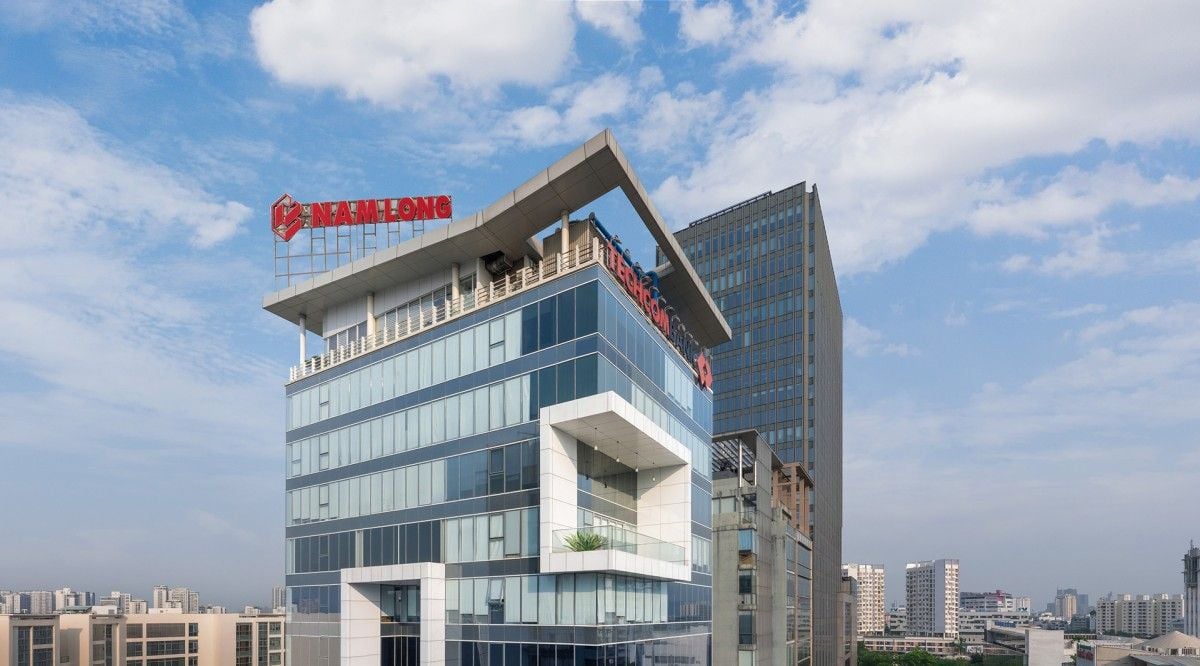
Nam Long Investment Joint Stock Company (MCK: NLG) has disclosed insider transaction results involving members of the Cao family, along with updates on the company’s upcoming 2026 ordinary general meeting of shareholders.
Mr. Cao Tấn Thạch, a member of the Board of Directors and a related party, reported purchasing 470,000 of the 500,000 NLG shares registered for purchase. The transactions were carried out from March 17 to April 15, 2026.
Nam Long noted that Mr. Cao Tấn Thạch did not complete the acquisition because market conditions were not favorable.
After the transaction, his holding increased from 4.38 million shares (0.9%) to 4.84 million shares, representing 1% of Nam Long’s capital.
Mr. Cao Duy Thong, the younger brother of Mr. Cao Tấn Thạch, reported purchasing 85,000 of the 200,000 NLG shares registered. The trades were conducted from March 16 to April 14, 2026.
The reason provided for not completing the trades was that market conditions were not suitable.
Following the transaction, Cao Duy Thong’s holding rose from 1.82 million shares (0.38%) to 1.9 million shares, representing 0.39% of Nam Long’s capital.
Separately, Nam Long will hold its 2026 ordinary general meeting of shareholders on April 25. At the meeting, the company will present its 2026 business plan with targets including net revenue of 7,630 billion dong, up 35% year-on-year.
Nam Long also expects parent company net profit after tax of 720 billion dong, up 3%.
The company said its 2026 priorities include accelerating pre-development work at integrated urban areas, specifically Waterpoint P2, Izumi, and Paragon.
Nam Long also plans to accelerate the development of affordable housing and social housing under the Ehome/EhomeS brands.
Nam Long will propose issuing up to 386,919 shares under the long-term incentive plan for senior management (ESS) for 2026 at a price of 0 dong per share, with a one-year transfer restriction.
Conditions for the incentive fund require achieving 100% of the profit target, at least 70% of the revenue target, and no ROE growth criteria.




Premium gym chains are entering a “golden era” that is ending or already in decline, as rising operating costs collide with shifting consumer preferences toward more flexible, community-based ways to exercise. Long-term memberships are shrinking, margins are pressured by higher rents and facility expenses, and competition from smaller, more personalized…