•
•
•
•
•
•
•
•
•
•
•
•
•
•
•
•
•
•
•
•
•
•
•
•
•
•
•
•
•
•
•
•
•


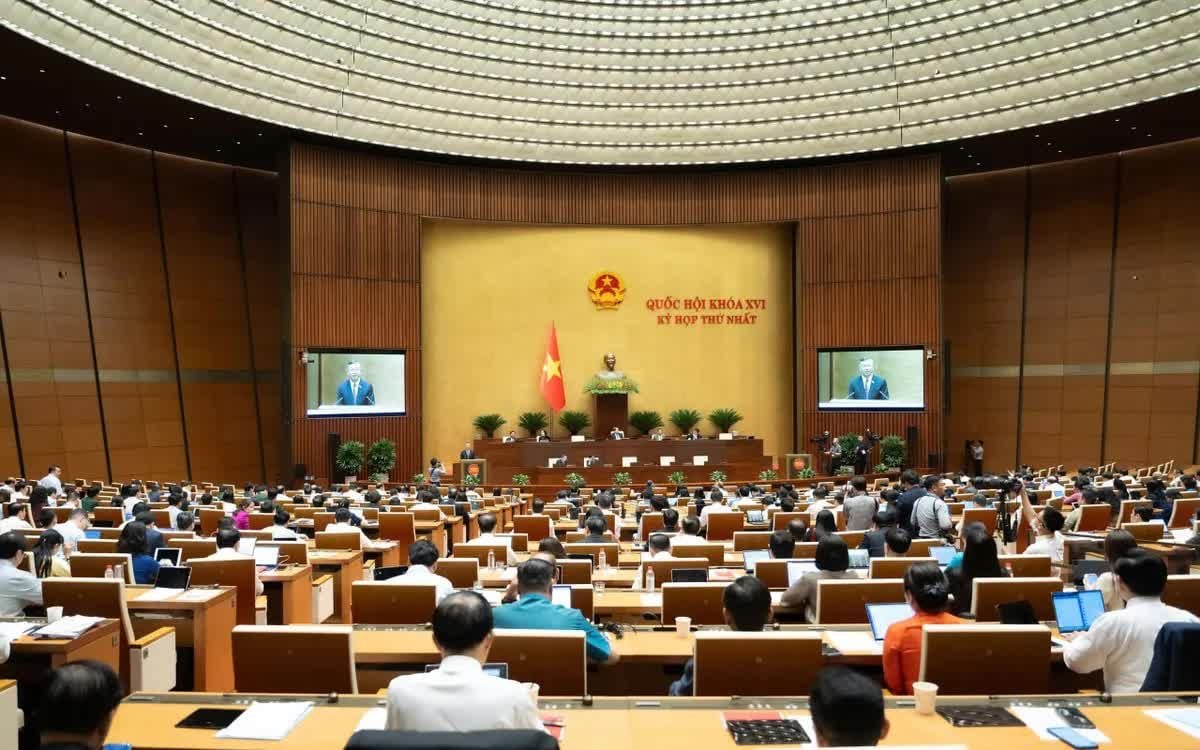
On the morning of April 22, the National Assembly discussed in the chamber the draft Resolution on breakthrough mechanisms and policies for developing Vietnamese culture, as well as the draft Resolution on establishing Đồng Nai city under central government.
In the afternoon, lawmakers continued the session in the chamber with the draft Resolution on implementing a pilot regime for the public attorney framework.
After that, the National Assembly held a closed-door meeting in the chamber to discuss the draft Resolution on mechanisms and policies to address land-law violations by organizations and individuals occurring before the 2024 Land Law took effect. The meeting also covered solutions to remove obstacles and bottlenecks for ongoing or delayed projects, along with a plan for funds to implement international arbitration decisions.
Earlier, on April 20, the National Assembly heard the proposal and the appraisal report on the Đề án thành lập thành phố Đồng Nai trực thuộc Trung ương. The Minister of Internal Affairs, Đỗ Thanh Bình, authorized by the Prime Minister, presented the proposal for establishing Đồng Nai city under central government.
The proposal describes Đồng Nai as a hub linking development corridors and the country’s largest economic center, Ho Chi Minh City, with the Tây Nguyên, Duyên hải Nam Trung Bộ, and the Mekong Delta. It also cites progressively integrated infrastructure, industry, services, and logistics, alongside Long Thành International Airport under construction and nearing completion.
“Đồng Nai hội tụ đầy đủ yếu tố của một đô thị có tiềm năng phát triển lớn.”
The establishment of Đồng Nai city is presented as a move to create new development momentum for both Đồng Nai and the southern region, and for the country as a whole. The proposal frames the change as a fundamental shift in the development model and local governance.
The intended direction is for Đồng Nai to become a large city that shares, links, and supports development with Ho Chi Minh City, aiming to achieve the status of a national growth pole. It is also positioned as a regional economic connector and an international integration gateway, with a dynamic, modern, and civilized development model to support new spatial development for the Southeast region in line with Politburo conclusions.
According to the Ministry of Interior’s representative, Đồng Nai’s establishment as a central-government city is based on its current natural area of 12,737.18 km2 and a population of 4,491,408. After establishment, the city will retain its area and population.
The city is planned to comprise 95 administrative units, including 33 wards and 62 communes. The proposal also notes that Vietnam has 34 provincial-level units, consisting of 7 cities and 27 provinces (one province fewer and one city more).
The seat of Đồng Nai city under central government will remain as is. The organizational structure is planned to remain essentially the same within the existing political system, with new agencies created as required by law and regulations.
On staffing, the proposal states that initially the existing cadre and civil servants in the province’s system will be retained. Đồng Nai has prepared a plan and timeline to rearrange personnel to fit the urban governance model.
According to the Minister of Interior, Đồng Nai meets 5/5 conditions for city establishment under Article 8, Clause 2 of the Law on Local Government Organization No. 72/2025/UBTVQH15, and meets all 7 standards for a city under Article 4 of Resolution No. 112/2025/UBTVQH15.





Premium gym chains are entering a “golden era” that is ending or already in decline, as rising operating costs collide with shifting consumer preferences toward more flexible, community-based ways to exercise. Long-term memberships are shrinking, margins are pressured by higher rents and facility expenses, and competition from smaller, more personalized…