•
•
•
•
•
•
•
•
•
•
•
•
•
•
•
•
•
•
•
•
•
•
•
•
•
•
•
•
•
•
•
•
•


Vietnam’s Road Administration has submitted a preliminary report to the Ministry of Construction proposing adjustments to the 2021–2030 road network plan, with a vision to 2050. The agency recommends accelerating the investment schedule for four expressways to be implemented before 2030.
The Road Administration’s proposal covers the following projects:
For the Ngọc Hồi–Gia Nghĩa expressway, the Road Administration said the route is included in the priority list for investment in the 2026–2030 period under the Action Program of the Central Committee of the Communist Party implementing the 14th National Congress. The agency also noted that several east–west expressways are being studied to accelerate progress, including Phú Yên–Đắk Lắk and Nha Trang–Liên Khương, alongside others such as Khánh Hòa–Buôn Ma Thuột, Quy Nhơn–Pleiku, and Quảng Ngãi–Kon Tum.
The report further states that the Phan Thiết–Bình Thuận–Gia Nghĩa corridor is also being proposed for inclusion in the planning. Against this backdrop, the Road Administration argues that forming the western connection from Ngọc Hồi to Gia Nghĩa early is necessary to maximize the effectiveness of related segments.
The Ngọc Hồi–Gia Nghĩa expressway is expected to strengthen connectivity among the North Tây Nguyên, South Tây Nguyên, and the Southeast region. It is also intended to support the transport of goods, agricultural products, and minerals, while fostering socio-economic development, attracting investment, and contributing to regional defense and security.
The Bảo Hà–Lai Châu expressway is also listed for priority investment in 2026–2030 under the Party Central Committee Action Program. The Road Administration said early investment would strengthen the connection between Tây Bắc and the Noi Bài–Lào Cai expressway, improving transport capacity and regional linkage.
In addition, the report links the project to economic development and the exploitation of agricultural, tourism, and border potentials, while also supporting defense and security objectives.
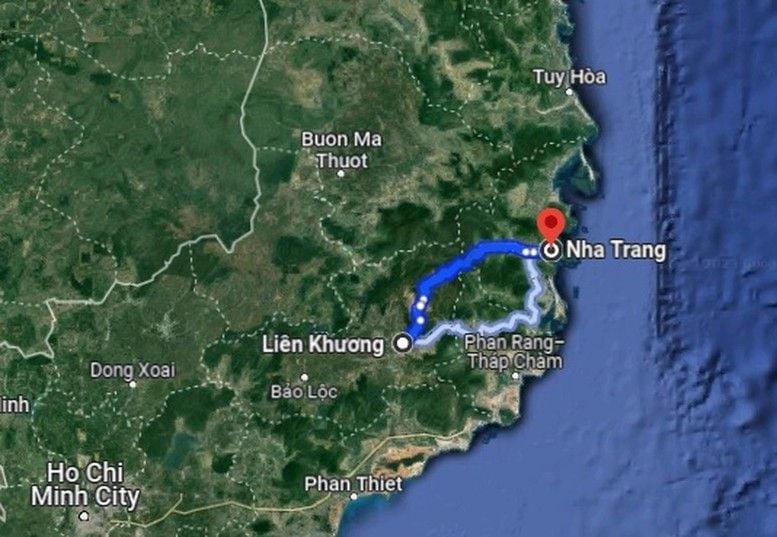
The Road Administration said early development of the Nha Trang–Liên Khương expressway would help break the “monopoly” of National Highway 27C. It noted that NH 27C is currently the only route connecting two major tourist hubs: Nha Trang (Khánh Hòa) and Đà Lạt (Lâm Đồng).
The report highlights that the Khánh Lê Pass, at 33 km, is among the longest and most winding passes in Vietnam, creating difficulties for large vehicles. It also states that NH 27C is prone to landslides during the rainy season and is associated with road accidents.
According to the Road Administration, the Nha Trang–Liên Khương project would ease traffic pressure, act as an economic development driver, and strengthen connectivity between the coastal port system of the South Central Coast and Lam Đồng’s tourism hub.
For the Hà Tiên–Rạch Giá–Bạc Liêu expressway, the Road Administration said early construction—specifically including the Rạch Giá–Bạc Liêu segment—would improve exploitation efficiency and connect with the Bắc-Nam phía Đông expressway (Can Tho–Ca Mau segment).
The report states that this would promote socio-economic development along the Western Mekong Delta and across the wider region. It also said the expressway would form a highway axis linking directly to the Hon Khoai combined-use port and a land-to-port connection, enhancing exploitation efficiency and national defense security.
Based on these assessments, the Road Administration believes adjusting the investment timetable for the four expressways is appropriate.






Premium gym chains are entering a “golden era” that is ending or already in decline, as rising operating costs collide with shifting consumer preferences toward more flexible, community-based ways to exercise. Long-term memberships are shrinking, margins are pressured by higher rents and facility expenses, and competition from smaller, more personalized…




