•
•
•
•
•
•
•
•
•
•
•
•
•
•
•
•
•
•
•
•
•
•
•
•
•
•
•
•
•
•
•
•
•
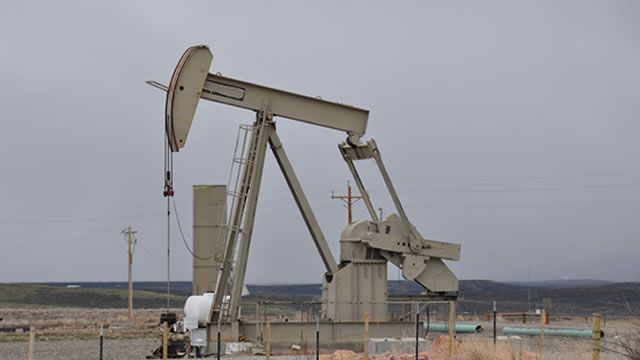
Oil prices fell about 10% this week to their lowest level since the Iran war began, after President Trump signed a deal to reopen the Strait of Hormuz. However, analysts said it could take months for gasoline prices to return to pre-war levels.
Brent crude futures fell 0.1% to $77.18 a barrel on Thursday, after trading as low as $75 earlier in the day. That was just above the roughly $72.50 level that was typical before hostilities began.
West Texas Intermediate (WTI) crude slid 0.3% on Thursday to $75.78 a barrel.
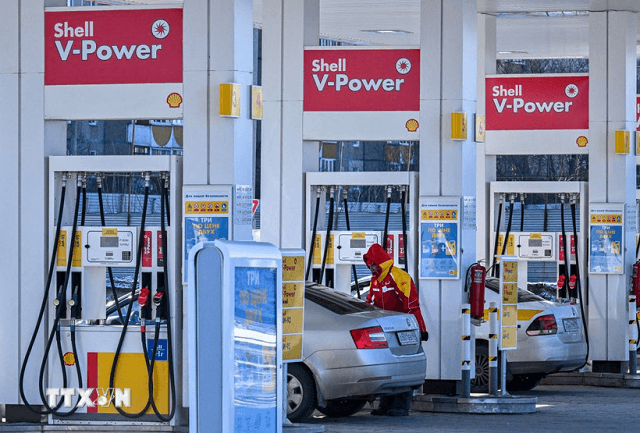
National average gasoline prices fell to $3.999 a gallon, according to AAA—marking the first time below $4 in more than five months. During the conflict, oil benchmarks had surged as high as $126 a barrel.
Even with the decline, analysts warned gasoline prices may take months to settle into the mid-$3 range. They also said the US is unlikely to see gas below $3 a gallon until this winter, and only if the US-Iran peace agreement holds.
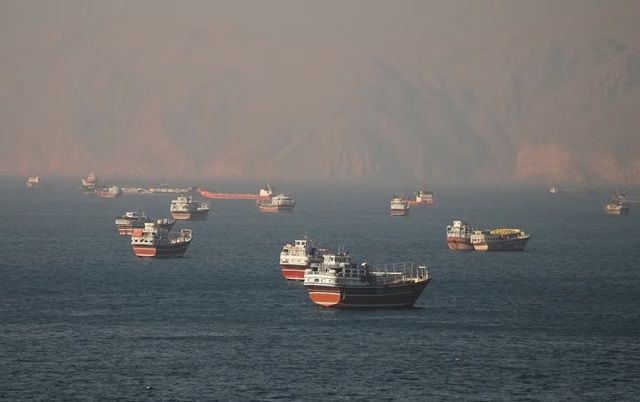
Krimmel said there is a time lag in normalizing vessel flows even after a diplomatic agreement. Several oil vessels have been trapped in the Persian Gulf for months, leaving them months behind on deliveries.
For those ships, the first step is completing deliveries, which can take weeks, followed by unloading, turning around, and repeating the process.
In addition, some Middle Eastern facilities have “effectively topped out” their storage tanks, forcing production to pause. Restarting production can also take time, with ramp-up to full output taking days or even weeks.
Beyond logistical delays, safety concerns could complicate shipping. After months of reports that Iran has been laying mines throughout the strait, vessel operators may struggle to secure marine insurance.
By Thursday, data showed at least 12 major energy vessels had sailed through the strait. Krimmel said shippers will need time to build confidence to sail freely, adding: “I don’t think that is a switch that flips.”
The deal also begins a 60-day negotiation period for Washington and Tehran to finalize details about defanging Iran’s nuclear program, with the talks potentially extendable under the memorandum.
Analysts noted that oil inventories were nearing all-time lows before the agreement. If fighting resumes, oil and gasoline prices could quickly reverse course and rise again.
Bitcoin (BTC) investors who use steady dollar-cost averaging (DCA) may be underperforming versus strategies that adjust exposure to the market’s cycle, according to new research arguing that Bitcoin’s behavior differs from traditional long-duration assets.
In a report cited by Markus Thielen of 10x Research, Bitcoin’s market…