•
•
•
•
•
•
•
•
•
•
•
•
•
•
•
•
•
•
•
•
•
•
•
•
•
•
•
•
•
•
•
•
•


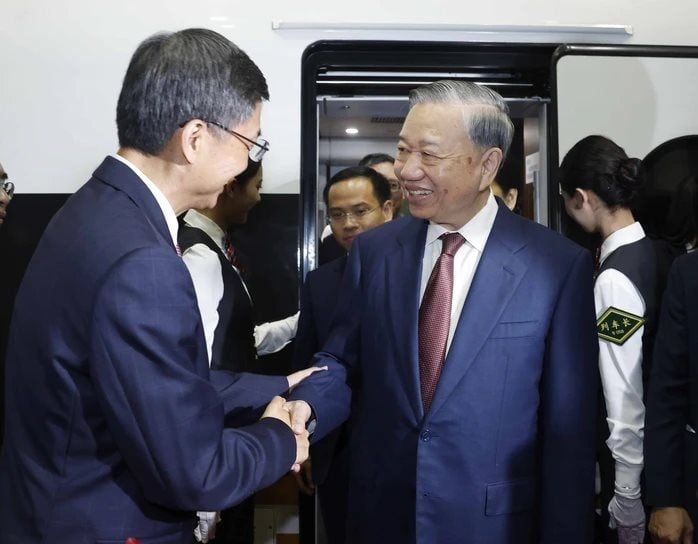
On the morning of April 16, General Secretary and State President To Lam and the accompanying delegation left Beijing for Nam Ninh by high-speed train following activities in the Chinese capital. On board, Chinese railway industry leaders briefed To Lam on the development of China’s railway sector.
Chinese railway leaders said that by early 2026, China’s operating railway network reached a total length of 165,000 km. High-speed rail accounted for about 54,000 km, leading the world and representing more than 70% of global high-speed rail length.
They also cited the impact of China’s “Medium- and long-term railway network plan,” promulgated in 2004. Over the past two decades, China has rapidly built a railway network connecting major urban areas, with 99% of counties connected to cities with populations of 200,000 or more. More than 130 prefectures nationwide have railways.
According to the briefing, total operating rail length increased from 68,700 km in 2000 to 165,000 km today, about 2.4 times longer. Looking ahead to 2035, railway leaders said China will form a modern, high-quality transport network with a total length of about 700,000 km, with railways reaching about 200,000 km and playing a leading role in the overall transport system. They added that railways are expected to connect all county-level administrative units, border gates, and key infrastructure zones.
On the train to Nam Ninh, To Lam expressed admiration for China’s rapid high-speed rail development, describing it as the longest and most widely used in the world, and projected continued expansion in the near future.
He said the two countries should strengthen cooperation to connect transport infrastructure, including rail, for green development and national growth. He also urged Chinese rail leadership and enterprises to share experience and support Vietnam’s participation in the construction process and in technology transfer for key rail projects in Vietnam.
Earlier, on April 15, To Lam held talks with Chinese General Secretary Xi Jinping. To Lam proposed that both sides focus resources on raising the level of strategic connectivity, with rail cooperation given the highest priority, and expanding connections with Central Asia and Europe.
For China, Xi Jinping proposed implementing Belt and Road connectivity within the framework of “Two Corridors, One Belt” and accelerating connectivity of strategic infrastructure, including actively advancing three standard-gauge rail projects connecting the two countries.
During the same visit, the two leaders witnessed the signing of a Memorandum of Understanding between Vietnam’s Ministry of Construction and China’s National Development and Reform Commission on cooperation to train Vietnam’s railway personnel to strengthen the country’s rail workforce.
On April 15, in a meeting with Premier Li Qiang, To Lam reiterated proposals to achieve breakthroughs in strategic infrastructure connectivity, prioritizing rail cooperation and expanding connections with Central Asia and Europe.
He also requested that China provide loans, train human resources, and transfer technology so Vietnam can master the operation, maintenance, and repair of electrified railways.
On March 19, 2026, during a field visit to Lang Son to review Vietnam–China railway cooperation, To Lam said rail cooperation is both a demand and an opportunity. He noted that if implemented well and well-governed, it would be one of the most practical areas for cooperation.
He said it could help reduce logistics costs, shorten transport times, boost trade and border economic development, improve customs clearance, and connect Vietnam to the Eurasian railway network—thereby diversifying international transport routes and strengthening regional economic connectivity, especially in northern Vietnam. He added that it would also enhance the region’s economic position and Vietnam’s standing in the Asia supply chain.








Premium gym chains are entering a “golden era” that is ending or already in decline, as rising operating costs collide with shifting consumer preferences toward more flexible, community-based ways to exercise. Long-term memberships are shrinking, margins are pressured by higher rents and facility expenses, and competition from smaller, more personalized…


