•
•
•
•
•
•
•
•
•
•
•
•
•
•
•
•
•
•
•
•
•
•
•
•
•
•
•
•
•
•
•
•
•


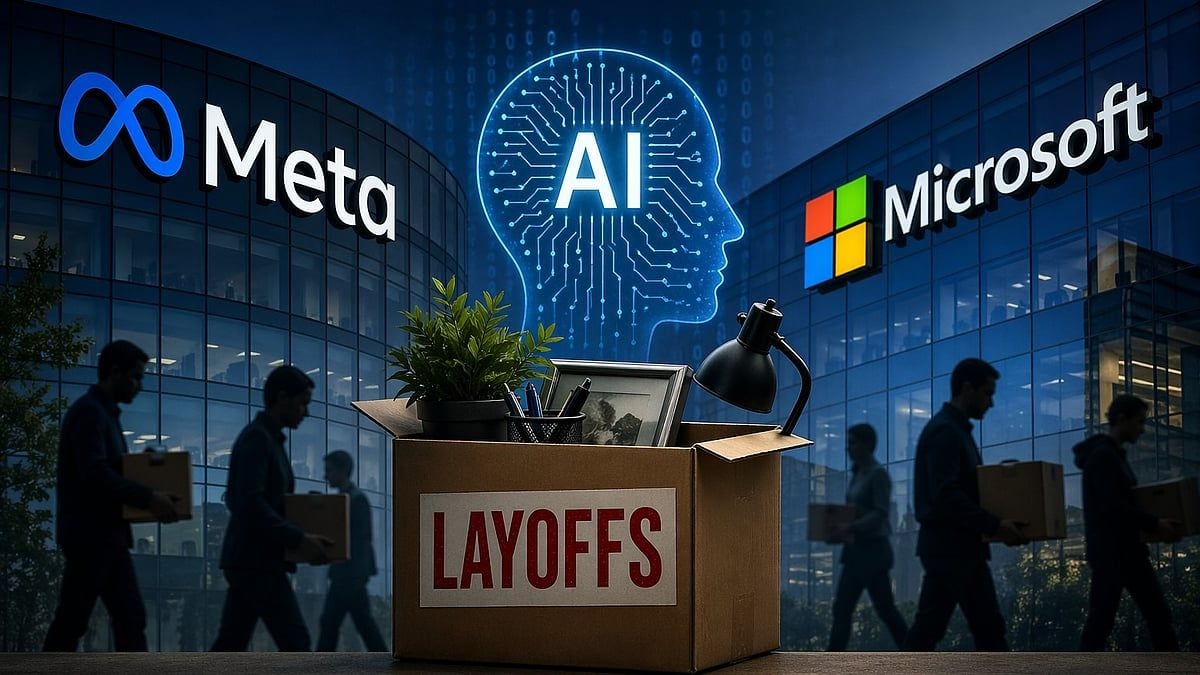
The debate is shifting from whether artificial intelligence can replace humans to whether humans are becoming a less efficient investment than AI. In the first four months of 2026, more than 96,000 tech workers were laid off, up 40% from a year earlier, as companies pivot from staffing costs toward AI investment.
On April 23, Meta and Microsoft announced combined cuts totaling about 23,000 positions. Meta said it would cut 8,000 jobs, roughly 10% of its global workforce, effective May 20, and would also shutter 6,000 open roles. Meta’s chief HR officer, Janelle Gale, said the reductions are intended to improve efficiency and offset investments in data centers, NVIDIA GPUs, and AI infrastructure.
Meta expects to spend 115-135 billion USD in 2026, nearly double 2025’s 72 billion USD. The company’s spending focus is on data centers, GPUs, and AI infrastructure. Meta reported 2025 revenue of 201 billion USD, and Q4 net income of 22.8 billion USD.
Meta is not described as facing a cash crunch. Bank of America estimated annual savings of 7-8 billion USD.
Just hours before the layoff news leaked, Meta granted stock options worth up to 921 million USD to six senior directors.
Other tech companies have also pursued workforce reductions. Reports cited the following cuts: Oracle reduced 30,000 workers, Amazon restructured 16,000 roles, Dell cut 11,000, and Snap reduced 1,000.
Analysts have described an “AI labor paradox”: firms cut staff while increasing spending on AI, raising total investment but reducing total employment. Economists characterize this as an AI-driven labor shock already underway rather than a future development.
Surveys indicate that 57% of Americans think AI is advancing too fast, while 79% worry the government has no plan to protect workers. Some critics argue that companies use “AI whitening” claims to reassure investors, even though AI systems are not yet mature enough to replace human work.
Since 2020, nearly 900,000 tech workers have lost jobs globally, according to Layoffs.fyi. The waves were described as occurring in 2022-23 (pandemic hiring pullback), 2024-25 (AI restructuring), and 2026 (major cuts by Oracle, Meta, and Microsoft).
Market reaction to Meta’s April 23 announcement was modest: Meta stock fell about 2.3%.

Premium gym chains are entering a “golden era” that is ending or already in decline, as rising operating costs collide with shifting consumer preferences toward more flexible, community-based ways to exercise. Long-term memberships are shrinking, margins are pressured by higher rents and facility expenses, and competition from smaller, more personalized…