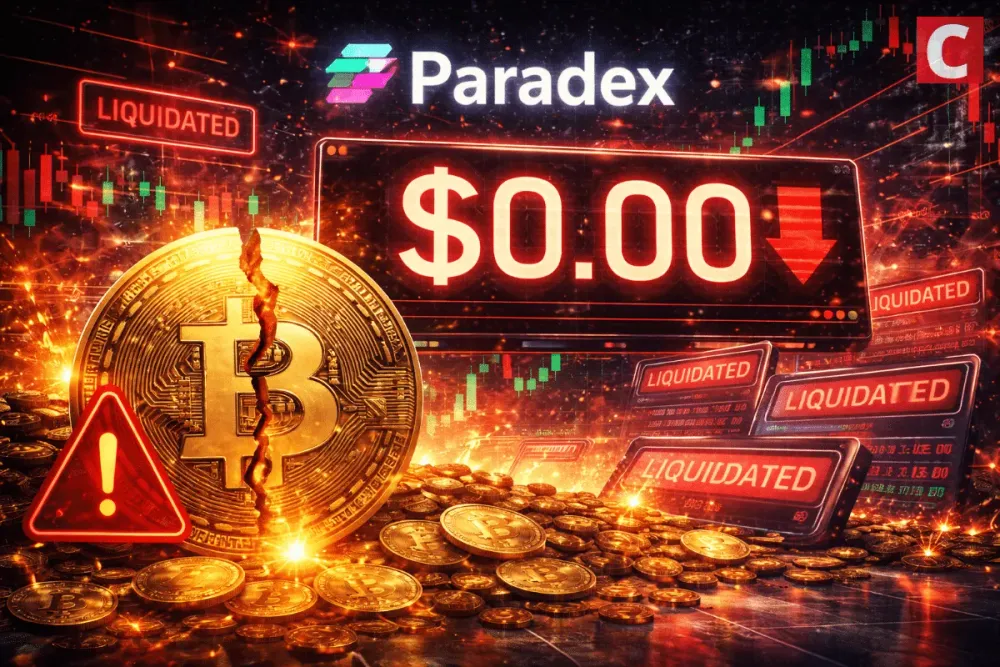
Paradex, a decentralized perpetuals exchange operating on Starknet, briefly priced
Bitcoin at $0 on January 19. The error triggered widespread liquidations and forced an unprecedented blockchain rollback to block 1,604,710. Related article: Crypto Treasuries Are Buying Bitcoin 3x Faster than It’s Mined. The incident stemmed from a faulty database migration and exposed critical vulnerabilities in the platform’s infrastructure. The exchange confirmed the issue and initiated the rollback to a state before the database maintenance, aiming to restore all user accounts and positions to their pre-maintenance status. Paradex stated, "All open orders will be forced cancelled except TPSL orders." Operations on the platform ceased for approximately eight hours, resuming trading at 12:10 UTC. Paradex assured users that "all user funds are SAFU." Starknet’s native STRK token reacted to the news, dropping 3.6% to trade at $0.081. Bitcoin trades at $92,958.36, down 2.17% over the past 24 hours. Why the Rollback Raises Institutional Red Flags A blockchain rollback, particularly on a supposedly decentralized platform, undermines the core tenet of immutability. While intended to correct a critical error and protect user funds, this action sets a troubling precedent for DeFi derivatives platforms. Traders on these venues rely on transparent, immutable transaction histories. Any capacity for a central entity to rewrite that history introduces counterparty risk akin to traditional finance, directly contradicting the trustless promise of decentralized exchanges. Expect heightened scrutiny on appchain governance and emergency protocols following this event, as market participants re-evaluate the true decentralization of such offerings. Against this backdrop, traders are increasingly concentrating risk on Hyperliquid, which now leads the perp DEX market in both volume and open interest. Its scale highlights a growing preference for platforms perceived as operationally robust, even as broader market volatility weighs on token prices. Disclaimer: Coinspeaker is committed to providing unbiased and transparent reporting. This article aims to deliver accurate and timely information but should not be taken as financial or investment advice. Since market conditions can change rapidly, we encourage you to verify information on your own and consult with a professional before making any decisions based on this content.