•
•
•
•
•
•
•
•
•
•
•
•
•
•
•
•
•
•
•
•
•
•
•
•
•
•
•
•
•
•
•
•
•


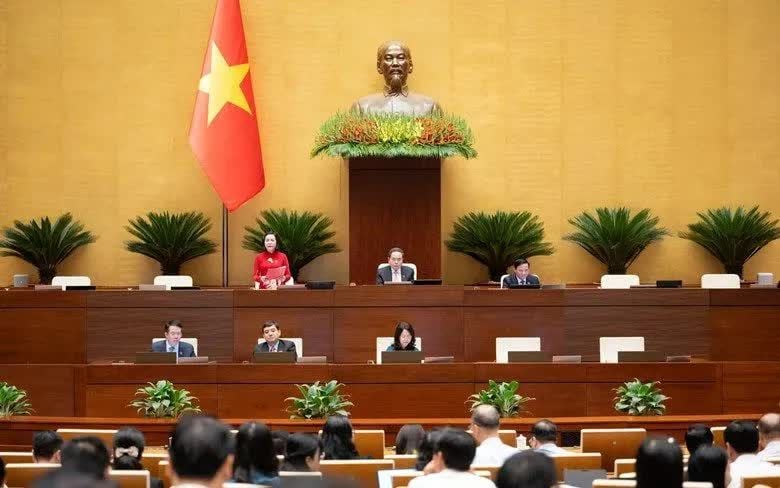
On the morning of April 23, the National Assembly discussed draft amendments and supplements to several tax laws, including the Personal Income Tax Law, the Value-Added Tax (VAT) Law, the Corporate Income Tax Law, and the Special Consumption Tax Law. Afterward, it heard a briefing on the proposed 2027 oversight program and debated its contents.
In the afternoon, the National Assembly held a plenary session in the hall and proceeded with voting procedures on a set of laws and resolutions, including:
The National Assembly also heard a consolidated report of opinions and recommendations from voters and citizens submitted to the First Session of the 16th National Assembly, as well as a report on the results of monitoring voters’ petitions submitted to the 10th session of the XV National Assembly and discussion of the monitoring results.
During the session, proposals were presented to remove the revenue threshold for tax exemption of 500 million VND per year for households and business households.
Earlier, on the afternoon of April 21, Minister of Finance Ngo Van Tuan presented the government’s draft amendments to four tax laws. He said that current rules on Personal Income Tax and VAT for households and individuals have brought positive changes. However, since the start of 2026, due to global economic conditions and rising fuel costs, input costs have increased, purchasing power has declined, and production and business activities of households and individuals have faced difficulties.
According to the minister, further study and adjustment are needed to remove:
Under the draft Law, the government proposes not to specify fixed thresholds in the Law and to delegate to the Government the task of setting these thresholds. The current threshold is 500 million VND, applicable from the beginning of this year under the Personal Income Tax Law (amended).
At the same time, amendments to the Corporate Income Tax Law propose adding non-taxable revenue exemptions for TNDN and delegating to the Government to set these thresholds, with detailed exemption provisions.
“Giving the Government authority provides a legal basis to flexibly implement fiscal policy, including tax policy,” Minister Ngo Van Tuan said.
For the Special Consumption Tax on battery-powered electric vehicles with engines under 24 seats, the draft amendments extend the current policy through 2030.
To ensure uniform tax treatment for households, individuals, and small businesses in 2026 and to facilitate tax declarations while avoiding additional administrative procedures, the government proposed that these measures take effect from January 1, 2026.
Source: PV; VTV



Premium gym chains are entering a “golden era” that is ending or already in decline, as rising operating costs collide with shifting consumer preferences toward more flexible, community-based ways to exercise. Long-term memberships are shrinking, margins are pressured by higher rents and facility expenses, and competition from smaller, more personalized…