•
•
•
•
•
•
•
•
•
•
•
•
•
•
•
•
•
•
•
•
•
•
•
•
•
•
•
•
•
•
•
•
•


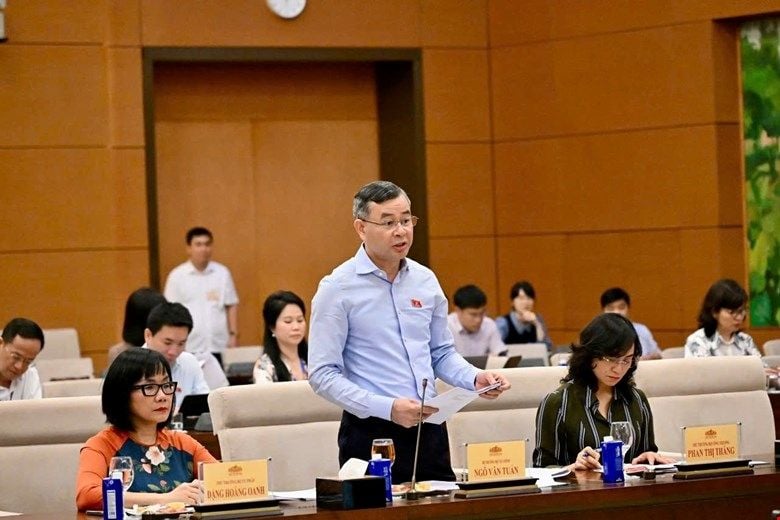
On April 20, the Standing Committee of the National Assembly gave opinions on the draft amendments to several laws, including the Personal Income Tax Law, the Value-Added Tax Law, the Corporate Income Tax Law, and the Special Consumption Tax Law. According to the government’s proposal, from the start of 2026 the domestic economy has faced pressures from global developments. Rising fuel prices have increased input costs, purchasing power has declined, and this has created difficulties for households and individual businesses in production and commerce. "In light of this reality, consideration of adjusting the threshold for personal income tax (PIT) exemption as well as the threshold for VAT exemption is aimed at supporting this group, especially those in sectors with low profit margins," said Finance Minister Ngo Van Tuan. Under the Government’s proposal, exemption thresholds will no longer be fixed in law. Currently, the PIT exemption threshold is 500 million dong per year, applicable from the start of the year under the amended PIT Law. With the new direction, determining these thresholds, including the threshold for corporate income tax exemptions, could be delegated to the Government to set flexibly over time. In examining this matter, economist Phan Van Mai, head of the Economic-Finance Committee, noted that the informal sector and small businesses not only contribute to the state budget but also play a vital role in job creation, social welfare, and maintaining the economy’s vitality. Therefore, tax policy should be designed to provide substantial support, avoiding small, piecemeal adjustments that do not reflect the spirit of promoting private sector development, he affirmed. "Earlier, the revenue threshold was 100 million dong; the draft proposed raising it to 300 million, then 500 million. However, many opinions argue this is still too low; the Small and Medium Enterprise Association has proposed up to 3 billion dong, while the reviewing body suggested considering at least around 2 billion dong to ensure humanity and practicality," he added. Hence, the committee chair expressed agreement with the amendment direction but cautioned careful consideration of the specific threshold given ongoing debates about its practicality. At the session, Finance Minister Ngo Van Tuan reiterated that delegating the threshold to the Government is necessary to ensure flexibility in policy implementation. This approach aims to support households, individuals, and small-scale enterprises, while also contributing to equity in tax policy and encouraging a transition toward corporate forms. "Initially, the drafting authorities planned to keep specific provisions in law. However, faced with unpredictable international developments, particularly energy price volatility and risks to supply chains, empowering the Government will help policies respond more quickly and suitably to reality. Without a mechanism to flexibly adjust tax and fee thresholds, it will be difficult to achieve the goals of maintaining high growth while ensuring macroeconomic stability," the Finance Minister stated. In conclusion, Vice-Chairwoman of the National Assembly Nguyen Thi Hong said the Standing Committee agrees with revising the above-mentioned tax laws. She also urged that tax policies provide appropriate support for households and small and medium-sized enterprises, enhance fairness and coherence of the tax system, and steer consumption toward environmentally friendly and sustainable development. The Standing Committee also requested the Government to continue refining the bill dossier, clarifying and strengthening the case for giving the Government authority to determine dynamic contents in line with the economic-social situation, such as PIT thresholds and VAT exemption for households and individuals, and the thresholds for corporate income tax exemptions. These issues are of particular public interest and require thorough explanation to enable MPs to consider and decide. The draft Law will be reported to the National Assembly for addition to the program of the first session of the XVIth tenure.

Premium gym chains are entering a “golden era” that is ending or already in decline, as rising operating costs collide with shifting consumer preferences toward more flexible, community-based ways to exercise. Long-term memberships are shrinking, margins are pressured by higher rents and facility expenses, and competition from smaller, more personalized…