•
•
•
•
•
•
•
•
•
•
•
•
•
•
•
•
•
•
•
•
•
•
•
•
•
•
•
•
•
•
•
•
•
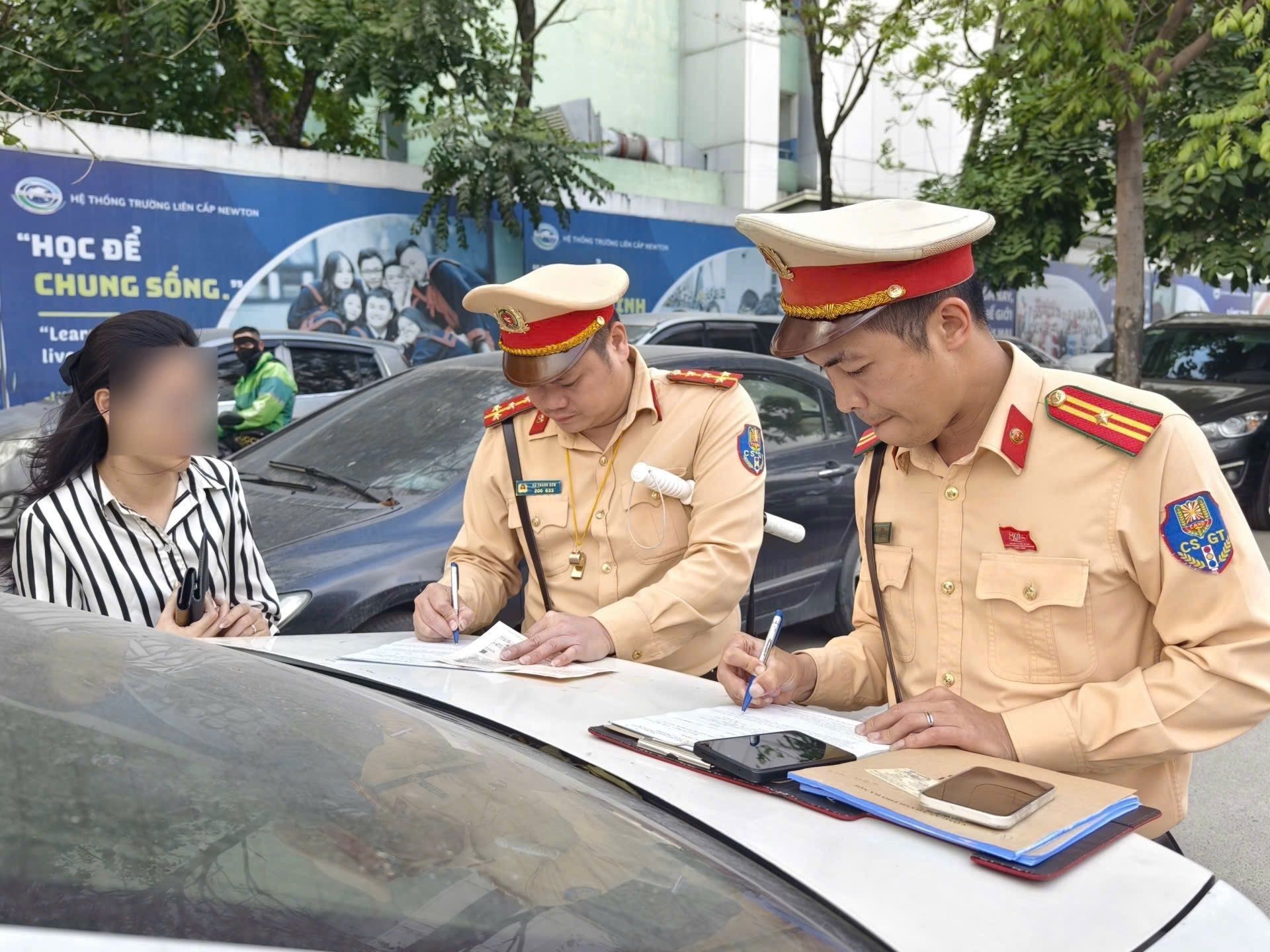
The Ministry of Public Security is seeking comments on the draft Administrative Penalties Handling Law (amendment), including a summary report and a detailed draft law. The ministry proposes raising the maximum fines that can be imposed without a written record to 1 million dong for individuals and 2 million dong for organizations. Current law specifies that one of the cases in which fines may be imposed without a written record is 'a fine of up to 500,000 dong for individuals, 1 million dong for organizations'. The ministry notes that these fines are relatively low compared with other penalty frameworks in many areas of state management today. As a result, the scope of applying non-recorded penalties is very narrow, while many common violations carry higher penalties despite not being severe and could be addressed through simpler procedures. Accordingly, the proposal would apply the non-recorded-penalty regime to violations where the maximum monetary penalty under the applicable framework for that violation, or penalties calculated as a ratio or multiple of the unlawfully obtained funds, reaches up to 1 million dong for individuals and 2 million dong for organizations. Notably, current law states that offenses detected by devices or technical instruments cannot use the non-written-record penalty procedure (a written record must be drawn). The ministry notes that many simple violations with low penalties detected via surveillance and technical devices (cameras, recording devices, etc.) already have sufficient electronic evidence to issue penalties. Requiring a written record in all such cases adds unnecessary procedures, lengthens processing time, increases costs, and is not aligned with administrative reform and digital transformation in state management. Therefore, the drafting agency proposes expanding the scope of non-written-record penalties to administrative violations detected by technical means. Additionally, the ministry proposes raising monetary penalties from 50 million to 1.5 billion dong for individuals (currently up to 1 billion), and from 100 million to 3 billion dong for organizations (currently up to 2 billion). In major urban areas, penalties may be higher, but not exceed twice the standard maximum. The ministry explains that the current maximum fines have remained unchanged since 2012. While the base salary in 2025 rose 2.2 times and per-capita income in 2024 rose 3.85 times, penalties in many fields such as environment, food safety, minerals, cybersecurity, information security, fire safety, etc., are often far higher than the maximum fines that authorities can apply. This reality shows that penalties do not deter or prevent violations effectively and are not commensurate with their danger; thus, a further increase is warranted.

Bitcoin (BTC) investors who use steady dollar-cost averaging (DCA) may be underperforming versus strategies that adjust exposure to the market’s cycle, according to new research arguing that Bitcoin’s behavior differs from traditional long-duration assets.
In a report cited by Markus Thielen of 10x Research, Bitcoin’s market…