•
•
•
•
•
•
•
•
•
•
•
•
•
•
•
•
•
•
•
•
•
•
•
•
•
•
•
•
•
•
•
•
•


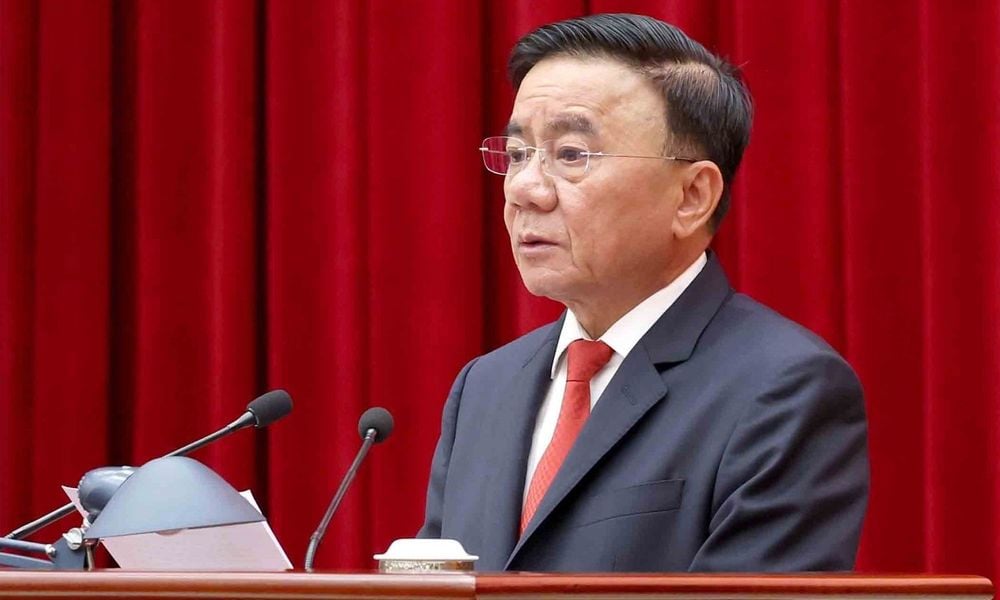
The Politburo has basically agreed with the Government’s Party Committee’s proposal on measures to continue removing difficulties and obstacles for backlog projects, while applying the principle set out in Politburo Conclusion 77/2024.
The proposal does not specify a list of projects to be considered or resolved. Instead, it focuses on backlog projects that have conclusions from the inspectorate and courts, consistent with Politburo Conclusion 77/2024.
Under the Politburo’s direction, the Government’s Party Committee is tasked with directing ministries, sectors, and localities—under the responsibility of party committees and their heads—to promptly and thoroughly review relevant projects. The review is intended to identify concrete impediments and determine the competent authority to resolve them, either by proactively resolving issues or reporting to the competent authority for resolution in accordance with Conclusion 18 of the Second Conference of the 14th Central Committee.
The Politburo also emphasized that ministries, sectors, and localities must review in order to ensure no backlog projects remain uncollected or unresolved.
The Politburo agreed in principle to establish a special mechanism to handle violations outside the scope of the mechanisms defined in Conclusion 77/2024 and Resolution 170/2024 of the National Assembly.
It assigned the Government’s Party Committee to lead, in coordination with the Party committees of the National Assembly and the judiciary, to propose specific mechanisms and policies. The committee is required to report to the National Assembly at the first session of the 16th National Assembly, in line with the Party’s policy and the state’s laws.
The Politburo’s approach is intended to ensure investors fulfill their fiscal obligations to the State, without affecting national security, and to ensure the capacity to implement projects under the law.
The Politburo agreed in principle to consider, resolve, and remove difficulties and obstacles for projects, land, and other sectors in a way that remains compatible with inspection conclusions, audit findings, and court judgments.
At the same time, the Politburo stressed that violations should not be legalized, no new violations should occur, and measures to remedy damages should be provided.
The Politburo noted the need to minimize disputes, particularly for projects with foreign elements, and to safeguard the legitimate rights of innocent third parties.
The Politburo also directed the Central Inspection Commission and party committees at all levels to strengthen scrutiny and supervision. The aim is to promptly detect and address violations before, during, and after resolving difficult and backlog projects, and to prevent new violations from arising.






Premium gym chains are entering a “golden era” that is ending or already in decline, as rising operating costs collide with shifting consumer preferences toward more flexible, community-based ways to exercise. Long-term memberships are shrinking, margins are pressured by higher rents and facility expenses, and competition from smaller, more personalized…




