•
•
•
•
•
•
•
•
•
•
•
•
•
•
•
•
•
•
•
•
•
•
•
•
•
•
•
•
•
•
•
•
•


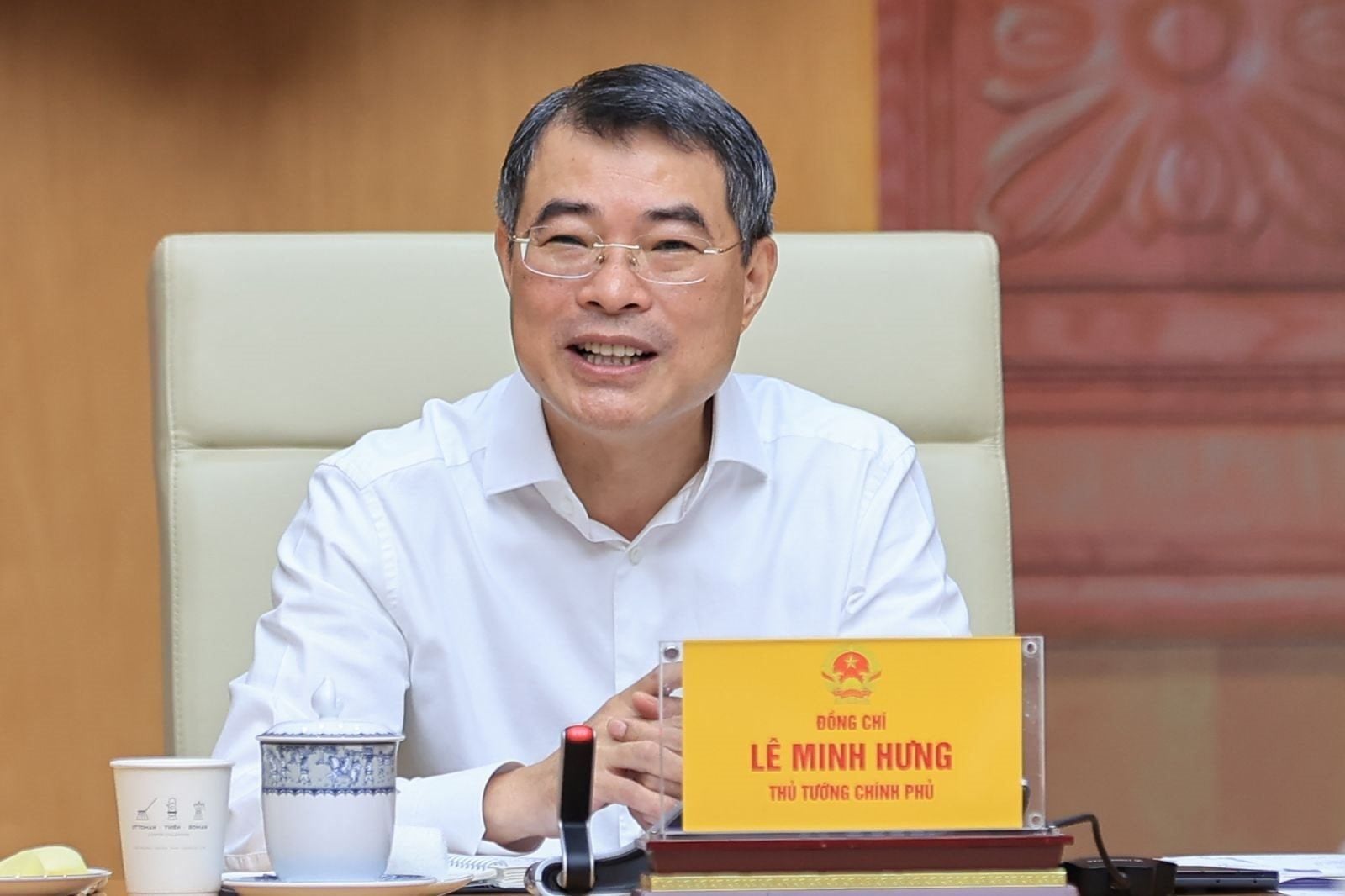
On the morning of April 22, at the Government Office, Prime Minister Lê Minh Hưng chaired a working meeting with the Ministry of Industry and Trade on the status of the 2026 tasks, the difficulties and emerging issues, and the directions and key tasks for the near future.
According to reports at the meeting, the Ministry of Industry and Trade has achieved numerous results in building and improving institutional frameworks, enhancing the effectiveness of state management, and promoting development across three pillars: industry, energy, and the market (exports and consumption).
Concluding the meeting, Prime Minister Lê Minh Hưng acknowledged the Ministry’s efforts in implementing tasks and overcoming difficulties, particularly in advising decisions related to fuels in a complex context, contributing to the country’s overall achievements.
The Prime Minister said the meeting aims to unify methods and approaches to address the issues raised, focusing on completing the Government’s Action Plan under the Government’s program implementing the XIV Congress and Conclusion 18-KL/TW, with a view to achieving double-digit growth.
The Prime Minister noted that the global and regional context continues to develop rapidly, with complexities and unpredictability, creating challenges for the energy sector. These include a global growth slowdown, trade barriers, geopolitical tensions, and the need to ensure energy security while operating within domestic economic constraints.
“Realizing the set targets, including the goal of double-digit growth, depends heavily on the quality and effectiveness of the sector’s operations. The Ministry of Industry and Trade must take the lead in addressing existing shortcomings and promoting production and business activities to meet the targets,” the Prime Minister stated.
Regarding upcoming tasks, the Prime Minister directed the Ministry to promptly formalize and implement the Government’s Action Plan, clearly assigning targets, responsibilities, and deadlines to each unit, corporation, and locality.
Specifically, the Ministry was asked to focus on completing the institutional framework and issuing guiding documents in a timely manner. The Prime Minister also requested accelerating the drafting and submission to the National Assembly of laws including the Oil Law (amended), amendments to the Electricity Law, laws related to commerce, and the Derivatives Trading Law.
The Prime Minister further urged a review and refinement of the Ministry’s functions and duties to ensure clear delineation of authority, avoid overlap, and adhere to the principle “one task – one leading agency.”
Emphasizing energy security and a just energy transition, the Prime Minister required the Ministry to “bear responsibility not to let electricity and fuel shortages occur in any situation.”
He also directed the Ministry to promptly review and update Power Plan VIII, add baseline electricity projects using new technologies, and accelerate the progress of power projects. In addition, the Ministry should coordinate with the Ministry of Agriculture and the Environment regarding the effective operation of hydroelectric reservoirs.
For the petroleum sector, the Prime Minister requested developing plans to restructure the distribution and sales system to reduce intermediary steps and costs. He also called for accelerating the creation of a national fuel reserve and promoting the use of E10 gasoline.
The Prime Minister instructed the Ministry to push industrial restructuring and increase self-reliance in production. He also called for encouraging Vietnamese enterprises to participate more deeply in global supply chains, diversifying export markets, leveraging FTAs, and preparing negotiation plans with partners.
In addition, the Ministry was tasked with digitization and modernization of the distribution system to stimulate domestic demand, improving the sector’s database and linking it with the national database, and strengthening market management while strictly addressing violations.
Premium gym chains are entering a “golden era” that is ending or already in decline, as rising operating costs collide with shifting consumer preferences toward more flexible, community-based ways to exercise. Long-term memberships are shrinking, margins are pressured by higher rents and facility expenses, and competition from smaller, more personalized…