•
•
•
•
•
•
•
•
•
•
•
•
•
•
•
•
•
•
•
•
•
•
•
•
•
•
•
•
•
•
•
•
•


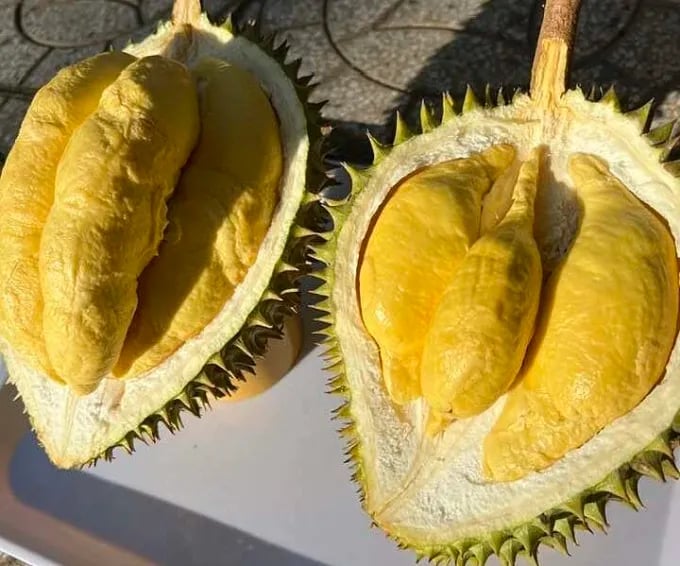
Ri6 durian prices have fallen sharply, with some orchards selling at only 20,000-35,000 dong per kilogram, as weak demand and concerns about cadmium contamination weigh on export prospects.
Since the beginning of April, durian prices have declined continuously as supply has risen quickly, pushing many varieties to the lowest levels in many years. In some orchards, Ri6 is trading at 20,000-35,000 dong per kilogram, down about half compared with the start of the year.
Musang King has also retreated to 60,000-65,000 dong per kilogram, while Monthong has fallen more modestly, fluctuating around 65,000-75,000 dong.
Similar declines are seen in warehouse purchases. Ri6 Type A (2.7 boxes) is paid about 40,000 dong per kilogram, while Type B (2.5 boxes) is around 28,000 dong.
For Musang King, Type A is currently 80,000-85,000 dong per kilogram, the lowest in two years. The sharp fall has put many orchardists under pressure, even though this year’s production is described as abundant.
In Dong Thap, Ms. Xuan in Hiep Duc commune said her family has more than 1 hectare of Ri6 ready for harvest, but the price has dropped quickly, leaving almost no profit. Traders are currently paying about 35,000 dong per kilogram for Type A and 20,000 dong for lower-grade fruit, while fertilizer and care costs have risen sharply. According to her, this is the lowest price to date.
From a market perspective, Mr. Vo Tan Loi, Chairman of the Dong Thap Durian Association, said price declines vary by variety. Monthong holds up better because Chinese consumers prefer thick meat, less fiber, and easier storage. By contrast, Ri6 and Musang King face disadvantages in preserving quality and during transport.
Dong Thap has more than 20,000 hectares of durian, with production of about 550,000 tons per year, but only about 10% is exported. Most of the area is Ri6, which is mainly consumed domestically at low prices, resulting in low added value and greater vulnerability to market fluctuations.
Technical barriers also add pressure. Mr. Loi said cadmium residue issues continue to affect output when some samples exceed allowed limits, leading enterprises to be cautious in purchases. He noted that not all growing areas are affected, but wary sentiment slows trading.
The main cause identified is the accumulation of heavy metals in soil from long-term use of phosphate fertilizer, while soil remediation takes a long time.
Mr. Dang Phuc Nguyen, Secretary General of the Vietnamese Fruit and Veg Association, said the price decline is also influenced by regional seasonal cycles. Thailand is entering a busy harvest period in April-June, and larger production there reduces prices, pulling down the general market level.
Meanwhile, domestic production remains fragmented. Control over residues is not uniform and depends on testing systems that face heavy pressure during peak season.
Despite the current weakness, the situation is expected to improve by the middle of the year. As the East and Central Highlands enter the harvest with a higher proportion of Monthong varieties—suited to export markets—prices may recover.
Official customs data show that in Q1, durian exports reached nearly US$222 million, up 128% year-on-year, continuing to be a leading growth driver for the fruit and vegetable sector. However, sustaining this momentum will require fundamental solutions on quality and production organization.




Premium gym chains are entering a “golden era” that is ending or already in decline, as rising operating costs collide with shifting consumer preferences toward more flexible, community-based ways to exercise. Long-term memberships are shrinking, margins are pressured by higher rents and facility expenses, and competition from smaller, more personalized…