•
•
•
•
•
•
•
•
•
•
•
•
•
•
•
•
•
•
•
•
•
•
•
•
•
•
•
•
•
•
•
•
•


Tesla’s rise to a market value above $1 trillion has been closely tied to the launch of two mass-market vehicles: the Model 3 and the Model Y. Tesla introduced the Model 3 in 2017, with Model Y deliveries beginning in 2020. Over that period, Tesla’s market cap grew from roughly $50 billion in 2017 to more than $600 billion by 2020, and it later surpassed $1 trillion in subsequent years.
Today, more than 90% of Tesla’s automotive sales come from the Model 3 and Model Y. The success of these models helped Tesla discontinue two legacy vehicles—Model S and Model X—after 14 years of consecutive production.
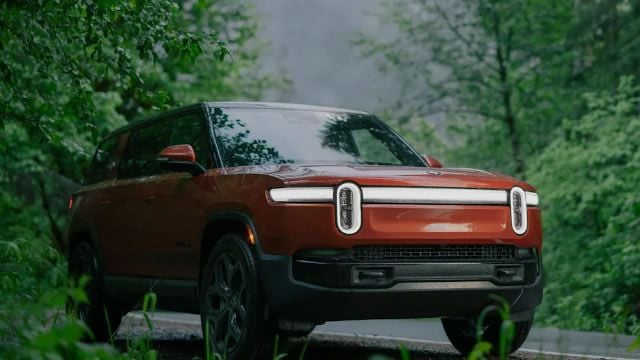
While Tesla’s valuation includes growth drivers beyond car manufacturing, the core takeaway is that launching more affordable vehicles accelerated the company’s growth. Rivian is aiming to follow a similar path with its R2 SUV, its first affordable model, which is expected to begin deliveries to customers soon.
Rivian’s R2 is priced under $50,000. The article suggests the model could eventually rival Tesla’s combined sales of the Model 3 and Model Y, particularly because SUVs are among the most popular vehicle types globally. It also notes that, in recent years, Tesla has faced limited competition from pure-play EV makers in the more affordable segment.
As with Tesla’s earlier sales ramp-up, the article says it may take several years for Rivian’s production and demand to scale. Still, it frames the potential upside as significant.
Beyond SUVs, the article highlights autonomous driving and AI as potentially even larger markets. It points to the robotaxi market as an example of how self-driving technology could create industries worth many trillions of dollars worldwide, according to some experts.
Rivian is investing heavily in AI, described as a core technology for advancing self-driving capabilities. The article states that Rivian’s level of investment has led it to push out its profitability targets.
Rivian’s AI and autonomous-driving strategy is presented as already gaining traction. Earlier this year, Uber Technologies agreed to a $1.25 billion deal with Rivian. Under the agreement, Uber will order up to 50,000 R2 SUVs to support its robotaxi division. In return, Uber will invest up to $1.25 billion in Rivian through 2031, contingent on Rivian reaching certain autonomous performance milestones.
Despite increased AI spending and early validation from Uber—described as a $150 billion business—Rivian’s stock is said to trade at 3.5 times sales. By comparison, Tesla trades at 13.5 times sales.
The article argues that Rivian’s valuation does not need to match Tesla’s to be more reasonable. It cites Tesla’s advantages in capital and production capability, as well as CEO Elon Musk’s influence as factors that could justify a premium for Tesla.
Even so, it says Rivian shares appear to be trading at a roughly 75% discount to Tesla. The article expects that discount to narrow as R2 deliveries ramp up and as Rivian’s AI ambitions demonstrate more real-world traction.







Premium gym chains are entering a “golden era” that is ending or already in decline, as rising operating costs collide with shifting consumer preferences toward more flexible, community-based ways to exercise. Long-term memberships are shrinking, margins are pressured by higher rents and facility expenses, and competition from smaller, more personalized…



