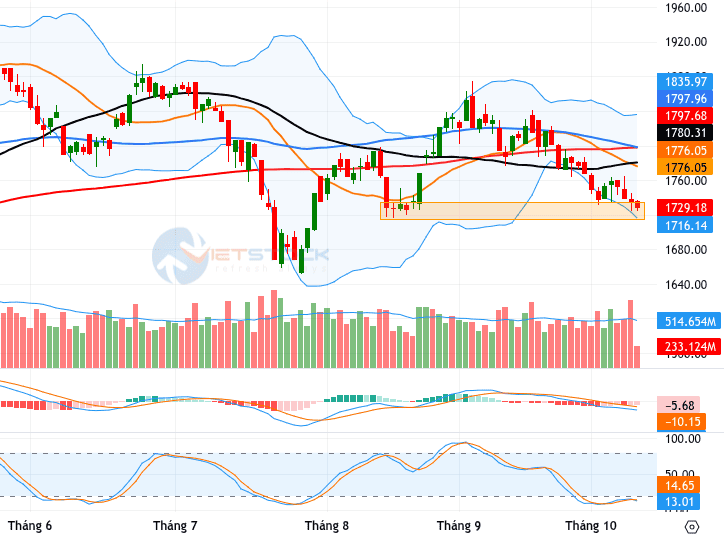
Robinhood’s stock (HOOD) has had a difficult start to 2026, with shares down roughly 37% year-to-date. The pullback follows a strong 2025 in which the stock nearly tripled, but momentum has weakened after a Q4 revenue miss and a sharp downturn in Bitcoin, which is still down by nearly 50% from 2025 peaks. The decline in crypto markets has been particularly costly for Robinhood’s transaction business, with cryptocurrency transaction revenue down 38% versus the same quarter a year earlier.
Despite the near-term volatility, the company is pursuing a strategic shift aimed at changing how investors view its business model—moving away from a “casino-style” trading reputation toward a higher-margin, more stable platform supported by recurring revenue.
Robinhood is working to build a more durable revenue base through subscription services and integrated wealth management for its large user base. The company’s recurring revenue mix has already improved: in Q4 2025, recurring revenue reached nearly 40% of total sales, up from 33% in the prior year.
Robinhood Gold is a key driver of recurring revenue. Priced at $5 per month or $50 annually, the subscription provides a baseline of income. Robinhood Gold generated around $50 million in Q4, and the article projects that this could rise to approximately $250 million in annual recurring revenue in early 2026.
Gold is positioned as a bundled membership rather than a simple add-on. Subscribers receive 5% APY on uninvested cash, a 3% IRA contribution match, and increased instant deposit limits. The membership also includes access to the Robinhood Gold Card, which offers 3% cash back across all spending categories.
The structure is designed to improve retention. To keep the 3% IRA match, users must maintain Gold status for at least one year. Combined with cash yield and card rewards, the benefits create a behavioral “lock-in” effect that encourages customers to stay within the platform’s ecosystem.
A central long-term opportunity highlighted in the article is the “Great Wealth Transfer.” Over the next two decades, about $84 trillion is expected to move from Baby Boomers to Millennials and Gen Z—demographics that align with Robinhood’s core user base.
Robinhood is aiming to capture a share of this shift by expanding beyond trading into wealth management. Through Robinhood Retirement and Robinhood Strategies, the company offers managed portfolio services intended to become a destination for inherited assets. The advisory fee is 0.25% for Gold members, applied only to the first $100,000, and waived thereafter.
The article notes that this pricing is below traditional advisory models that often charge around 1% annually. It also argues that younger investors may value intuitive digital access, transparency, and ease of use—factors that could support Robinhood’s ability to secure relationships ahead of wealth transfers.
Interest-based earnings are described as the main contributor to Robinhood’s non-transaction revenue. In Q4, interest income rose to $411 million from $296 million in the year-ago period.
While interest income can fluctuate with macro interest rates, the article emphasizes that it scales with platform assets, which exceed $320 billion. It cites four primary engines supporting this recurring income:
Overall, the article frames Robinhood’s strategy as a move toward a scalable, asset-linked revenue base supported by subscriptions and wealth management. While near-term results have been pressured by a revenue miss and weaker crypto activity, the company’s improving recurring revenue mix and the growth potential of Gold and wealth management are presented as the core reasons long-term investors may view the current weakness as an entry point.