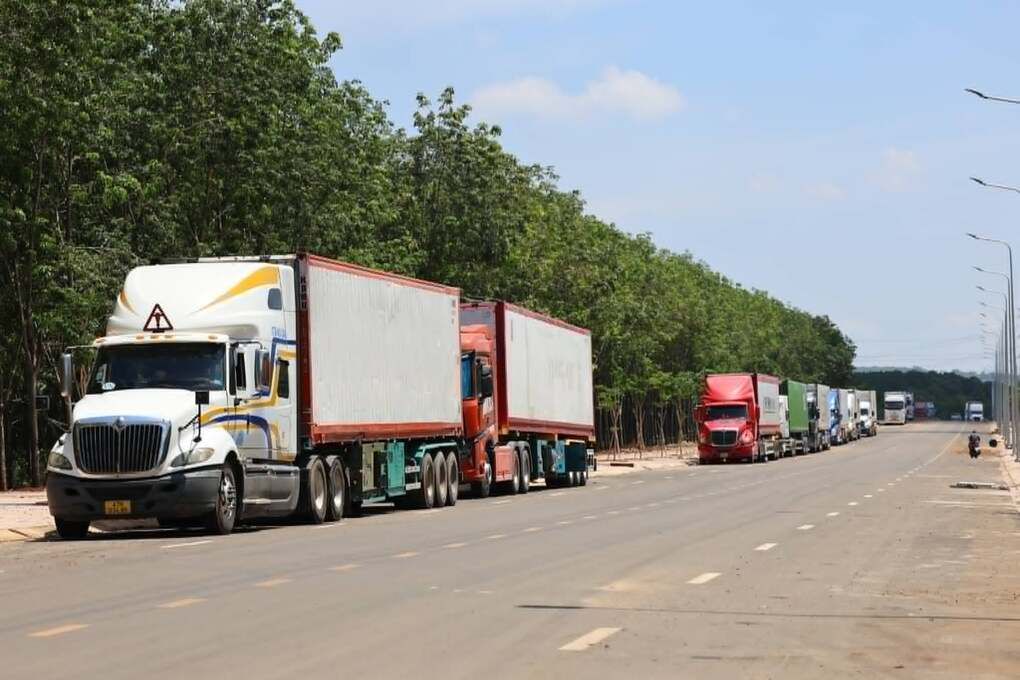
Logistics companies have raised container-driver salaries to 30-50 million dong per month (depending on position), nearly doubling from last year, but it remains difficult to hire suitable workers.
The driver shortage persists despite rising wages. Last year, some companies reported recruitment costs of about 25 million dong per month to hire a container driver; since the start of this year, many have raised salaries to 45-50 million dong and launched recruitment campaigns across multiple channels, yet attracting qualified drivers remains challenging.
“Business owners are competing for drivers,”
Industry voices point to an aging workforce and a lack of succession as underlying factors, in addition to the high risk and demanding nature of container driving.
Two drivers’ experiences illustrate the dilemma. Hoang, with 10 years as a container driver, was repeatedly invited back by his former employer, with pay rising from 30 million to 40 million dong per month, but he declined, preferring a technology-based ride-hailing platform for greater control over time and family life. He notes that driving containers is risky; a single violation can cost an entire month’s salary.
Phuong, 45, from Quang Ngai, has more than 20 years’ experience but, since April, his company no longer assigns him to drive containers because he has reached the internal age limit of 45. Although offered a transition to another role, he chose to quit.
The contrast—one driver leaving despite higher pay, another forced to quit by age limits—highlights the broader challenge of maintaining driver supply even as wages rise.
Rising salaries have not resolved the manpower problem. Many firms must scale back operations due to driver shortages, and some exporters are being drawn into the driver-shortage issue as they attempt to control logistics more tightly. The combination of aging drivers, penalty risk, and higher labor costs is putting pressure on transport, manufacturing, and export sectors.
To address the driver shortage beyond wage increases, industry stakeholders argue for faster training and testing for FC licenses to replenish manpower, along with investments in rest stops, yards, and better working conditions to reduce driver stress. They also advocate reviewing existing transport regulations to ensure safety while helping drivers stay committed to the profession. When manpower improves, companies can expand fleets, proactively transport, and gradually reduce logistics costs.