•
•
•
•
•
•
•
•
•
•
•
•
•
•
•
•
•
•
•
•
•
•
•
•
•
•
•
•
•
•
•
•
•


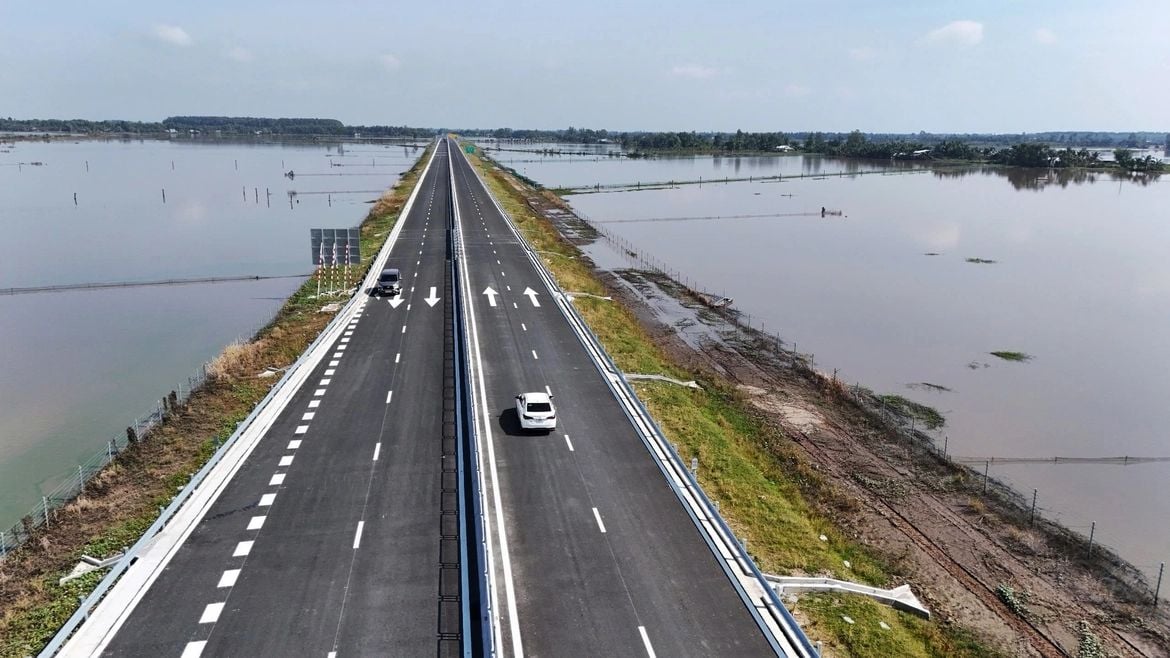
Several key expressway segments across southern, central and Mekong Delta regions were opened to traffic on 29 April for temporary operation, aiming to meet rising travel demand during the 30 April–1 May holidays and to improve connectivity while easing pressure on existing national highways.
In the south, the Bien Hoa – Vung Tau expressway was opened for temporary operation over about 37 km of components 2 and 3 from the night of 29 April.
The project has total investment of about 17,800 billion VND, spans nearly 54 km, and runs through Dong Nai and Ba Ria–Vung Tau provinces. It is divided into three components: components 1 and 2 are located within Dong Nai totaling around 34 km, while the remaining 19.5 km belong to component 3.
During the initial phase, the expressway will operate at speeds up to 80 km/h and as low as 60 km/h. Vehicles allowed are cars with under 9 seats to ensure safety while the infrastructure is not yet fully completed.
The completion timeline was adjusted from 31 March to April due to traffic organization issues and contractor difficulties. Under the proposed initial traffic plan, vehicles will access the expressway via the Binh Mon route (a local road managed by Long Thanh commune authorities) combined with the right-side service road, with an additional direct connection to the expressway.
To support temporary operations, the Bung Mon road is being repaired and repaved, with lighting and signage installed in accordance with the approved traffic organization plan. Authorities, however, warned that using the Bung Mon local road as the primary connection could lead to higher traffic volumes, possible congestion, and safety risks if not properly managed.
To mitigate these risks, the Project Management Office 85 has requested Đồng Nai Province and the Provincial Traffic Police allocate personnel to patrol, monitor and regulate traffic, focusing on proper channeling and directing vehicles on the Bung Mon segment and service roads before entering the expressway, especially during peak hours and holidays.
Also on 29 April, in the Mekong Delta, the Hau Giang – Ca Mau expressway opened for traffic from midday after completing major items and meeting safety standards.
The route is about 73 km and forms part of the East North–South expressway corridor. It will connect directly with the Can Tho – Hau Giang segment, creating a continuous transport axis intended to reduce load on National Highway 1 and shorten travel time in the region.
This section had previously opened in mid-January but was paused to complete items including drainage systems and road shoulders to meet safety requirements.
In the Central region, several expressway segments were launched on the same day.
The Quang Ngai – Hoai Nhon section began operation at 11:30 a.m. on 29 April after completing key items on the main line.
The section runs about 88 km, starting at Km1050+00 (Nghia Giang commune, Quang Ngai) and connecting with the Da Nang – Quang Ngai expressway, ending at Km1138+00 to link with the Hoai Nhon – Quy Nhon segment.
Three major mountain tunnels along the route—Tunnel 1 (Duc Pho), Tunnel 2 (Huan Phong) and Tunnel 3 (Binh De)—were completed to ensure line continuity.
In the initial phase, the line will have four lanes, a 17 m-wide road bed, and a maximum speed of 90 km/h (minimum 60 km/h). At interchanges, the maximum speed is 50 km/h or as posted.
Five interconnected interchanges—Nghia Giang, Provincial Road 624B, National Highway 24, Sa Huynh and Hoai Nhon—were placed into operation. The Duc Pho interchange will be completed and opened later.
There is no toll collection on this segment, but a temporary toll facility at Km1050+600 remains in operation to support toll collection for the Da Nang – Quang Ngai expressway connection ahead.
As some rest stops at Km1065+620 and Km1127 are still under construction, drivers are advised to check fuel levels before traveling on the route.
Authorities said they will continue remaining items such as completing the east tunnel, ITS and service roads to enable synchronized operation with a design speed up to 120 km/h.
In addition, the Project Management Board 7 announced the formal opening of 24 km of the Chi Thanh – Van Phong expressway component on 30 April at 23:00, in Package XL01.
The segment runs from Km1277+000 to Km1301+000, starting at the Chi Thanh interchange and ending at the Nguyen Huu Tho junction.
The Chi Thanh – Van Phong expressway totals over 48 km. It begins at the Chi Thanh junction (connecting to the Quy Nhon – Chi Thanh expressway) and ends at the National Highway 1 interchange near Hoa Xuan, connected to the Deo Ca pass and the Van Phong – Nha Trang route.
Amid rising travel demand during the holiday, the simultaneous opening of multiple expressway segments is expected to ease traffic on major national routes, particularly in high-traffic zones.
Premium gym chains are entering a “golden era” that is ending or already in decline, as rising operating costs collide with shifting consumer preferences toward more flexible, community-based ways to exercise. Long-term memberships are shrinking, margins are pressured by higher rents and facility expenses, and competition from smaller, more personalized…