•
•
•
•
•
•
•
•
•
•
•
•
•
•
•
•
•
•
•
•
•
•
•
•
•
•
•
•
•
•
•
•
•


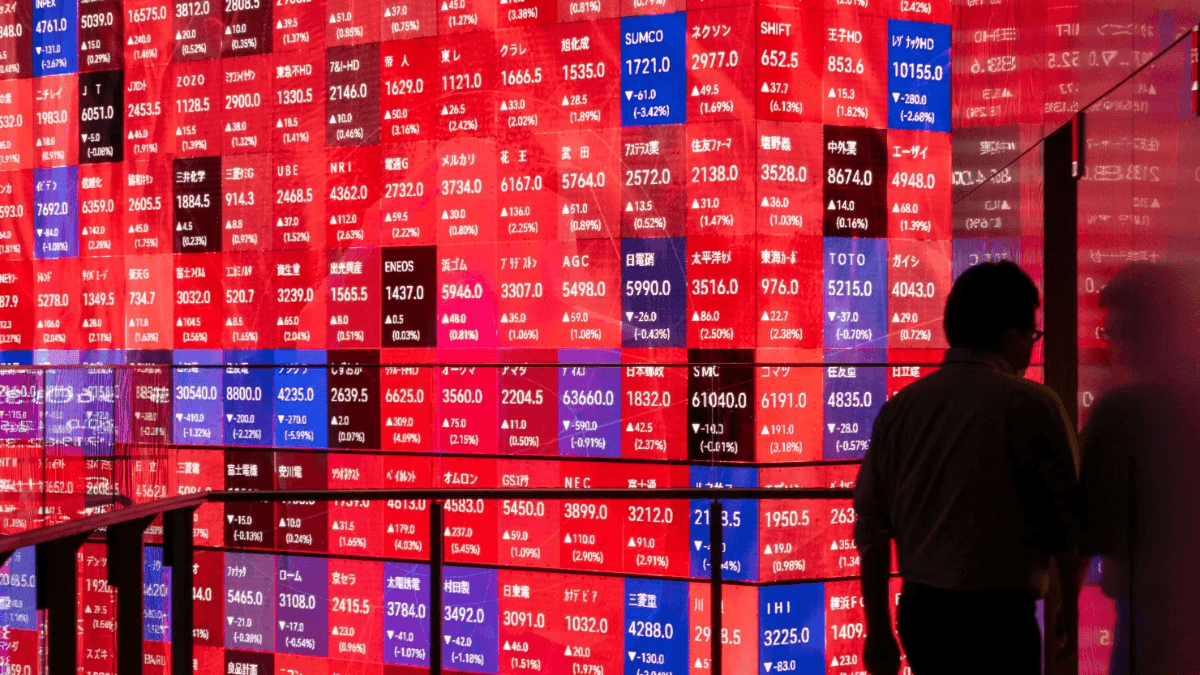
The Kospi index of South Korea’s equity market posted its strongest monthly gain since January 1998, rising nearly 31% in April as semiconductor stocks led the rally. The advance helped the Korean market hold up despite concerns about geopolitical tensions in the Middle East.
April’s rally was driven by expectations of an AI wave, with semiconductor shares becoming the focal point for capital inflows. The two top gainers were SK Hynix and Samsung Electronics, which rose about 60% and 35%, respectively, during the month.
April’s performance marked the second-strongest month in Kospi history and came after a period of gains already underway. Unlike the 1998 period, the rally did not start from a low base following a crisis. From the start of the year to date, the Kospi has risen about 57%.
Bloomberg calculations based on FactSet data put Korea’s total stock market capitalization at about $4.2 trillion, compared with $3.9 trillion for the UK market. The April surge lifted Korea’s equity market capitalization above that of the United Kingdom.
Ivo Kovachev, senior portfolio manager at JO Hambro, said Samsung Electronics and SK Hynix—two of the largest weights in the Kospi—have continued to rally due to ongoing imbalances in the memory-chip market. He noted that demand tied to the AI investment wave remains well beyond supply, and that supply tightening has extended beyond advanced memory lines into DRAM, which is used in computers, servers and many electronic devices.
Kovachev also pointed to additional growth drivers in Korea, including the government’s “Value-up” program, which aims to encourage chaebols to improve corporate governance and better protect the rights of minority shareholders.
The rally also aligns with an earlier view from Tim Moe at Goldman Sachs, who argued there was merit in overweight exposure to Korean stocks. During the sharp sell-off in early March, Moe still recommended investors increase their overweight in Korean equities, citing factors including earnings growth, corporate reforms, a trade surplus, a stronger won and investors’ positioning.
After the Iran conflict erupted in late February, Korean stocks initially faced heavy selling pressure as risk-off sentiment spread across Asia. That trend reversed in April as investors returned to semiconductor and AI stocks, with the Kospi recovering in April and offsetting much of March’s losses as prices became more attractive following the sell-off.
Last week, HSBC upgraded its outlook on Korean equities from underweight to neutral, saying foreign outflows had reduced excessive concentration in a few positions, which it said could partly lower the risk of a deep market drop if geopolitical volatility increases.
HSBC also said Korea’s rally was supported by other sectors, including energy storage, shipbuilding, defense and nuclear power. It added that last year Korean stocks posted a record gain of over 75%, driven by the strong rally in the chip sector.




Premium gym chains are entering a “golden era” that is ending or already in decline, as rising operating costs collide with shifting consumer preferences toward more flexible, community-based ways to exercise. Long-term memberships are shrinking, margins are pressured by higher rents and facility expenses, and competition from smaller, more personalized…