•
•
•
•
•
•
•
•
•
•
•
•
•
•
•
•
•
•
•
•
•
•
•
•
•
•
•
•
•
•
•
•
•


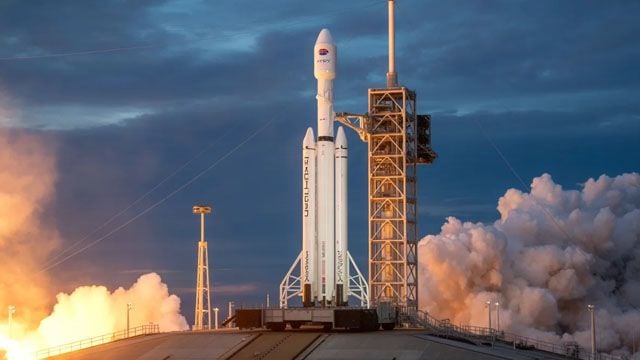
Much ado has been made about SpaceX's upcoming IPO. And much ado is warranted. Elon Musk's space technology company plans to begin trading publicly with a market cap of $1.75 trillion. To put that number in perspective, it's higher than the market cap of Musk's other public company, Tesla. It's also higher than the valuations of retail giant Walmart, Warren Buffett's Berkshire Hathaway (BRKA/BRKB), and the world's largest healthcare company, Eli Lilly. Some investors question whether SpaceX is really worth $1.75 trillion. But could that valuation actually be too low? Key Points * Traditional valuation metrics can be useless with a stock that's growing rapidly. * A case can be made that $1.75 trillion is the floor for SpaceX rather than the ceiling. * However, SpaceX's growth could be derailed. Justifying SpaceX's enormous valuation I'll admit right off the bat that SpaceX's financials don't justify a market cap of $1.75 trillion. The company reportedly generated revenue of around $18.5 billion last year. This figure puts SpaceX's price-to-sales (P/S) ratio at nearly 95. Even fast-growing AI software stock Palantir Technologies (PLTR) is cheaper (though "cheap" isn't a word often used to describe Palantir), with a price-to-sales multiple of around 87.5. But SpaceX's current P/S ratio is less than one-third that of another space stock already trading publicly, AST SpaceMobile (ASTS). More importantly, backward-looking valuation metrics are practically useless for stocks with tremendous growth prospects. I believe that SpaceX unquestionably fits the bill. The company's planned $1.75 trillion market cap is largely based on the potential for its Starlink unit. Starlink is the leader in providing satellite-based internet services. It reported over 9 million customers in more than 155 countries and markets at the end of 2025. But Starlink is growing so rapidly that the number is irrelevant now. Musk posted on X (formerly Twitter) on Feb. 13, 2026, that the business had more than 10 million customers across 160 countries and markets. I think that Starlink could realistically reach 30 to 50 million subscribers globally. Starlink's residential internet services typically range from $50 to $120 per month. Its business plans start at $65 per month but can reach $2,150 per month for maritime customers. If we assume an average blended monthly rate of $100 and 50 million subscribers, Starlink could generate annual revenue of $60 billion. Granted, $60 billion of revenue would still give SpaceX a P/S ratio of 29 with a market cap of $1.75 trillion. However, we're completely ignoring the company's other businesses. According to The Information, Starlink accounted for about 61% of SpaceX's total revenue last year. SpaceX's launch business and AI unit, xAI, also have tremendous growth opportunities. Why $1.75 trillion could be the floor, not the ceiling Would it have been shortsighted to view Amazon as only an online bookseller in 1995? Absolutely. The company quickly expanded into a full-blown e-commerce platform. It later moved into cloud services. Today, Amazon dominates both markets. SpaceX could have similar optionality. Don't focus on only Starlink and the company's current launch business. Don't dismiss SpaceX's absorption of xAI as an odd pairing. Space could be the next frontier for data centers. Access to electric power is one of the biggest constraints for data centers right now. In space, though, solar power is always available. Musk has stated, "I actually think that the cost of deploying AI in space will drop below the cost of terrestrial AI much sooner than most expect." He added, " I think it may be only two or three years." If he's right, SpaceX could have a massive moneymaker on its hands. Perhaps the biggest game changer, though, is Starship. It's SpaceX's reusable spacecraft that can transport up to 100 people. The vision for Starship is to take humans and cargo to the moon, Mars, and eventually beyond. Starship could open up multiple new markets for SpaceX. Think asteroid mining, lunar bases, orbital manufacturing, and space tourism. A price tag of $1.75 trillion may someday look like pocket change if SpaceX's spacecraft fulfills its potential. To the moon -- and beyond Could SpaceX's astronomical valuation ultimately crater? Sure. To say that there's a significant risk associated with space technology is an understatement. SpaceX also has rivals that could derail its growth, including Amazon. However, SpaceX could be the first company to commercialize space in a major way. Crypto investors often use the expression "to the moon" when referring to a cryptocurrency they're bullish about. SpaceX could literally go to the moon -- and beyond. Its valuation just might, too.
Premium gym chains are entering a “golden era” that is ending or already in decline, as rising operating costs collide with shifting consumer preferences toward more flexible, community-based ways to exercise. Long-term memberships are shrinking, margins are pressured by higher rents and facility expenses, and competition from smaller, more personalized…