•
•
•
•
•
•
•
•
•
•
•
•
•
•
•
•
•
•
•
•
•
•
•
•
•
•
•
•
•
•
•
•
•


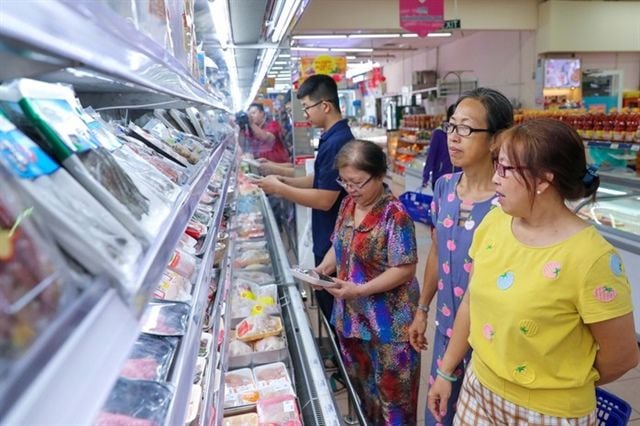
Price stabilization programs and promotions continued to be pushed by local authorities and businesses after the Tet holiday, with the Ho Chi Minh City Department of Industry and Trade reporting that the market remained stable during the Binh Ngo Tet 2026 period. The department said supply was prepared adequately, with no shortages, price spikes, or profiteering.
The total value of goods prepared by enterprises for the two Tet months was about 26,000 trillion dong. Of this, more than 9,000 trillion dong were market-stabilizing goods, accounting for 23%–43% of demand in the peak month.
Compared with last year’s Tet, the volume of goods for Tet this year through three wholesale markets in Ho Chi Minh City fell by about 11% on normal days and about 20% at peak times. Despite the lower volumes, the market did not record shortages.
The data pointed to a clearer shift in consumer structure toward modern distribution channels and e-commerce. Purchasing power in supermarkets and shopping centers rose 20%–30% compared with normal days, and total retail sales of goods in the Tet peak month were expected to increase by about 10% year-on-year.
Prices of staple foods and essential items remained basically stable within reasonable fluctuations. Some vegetables, fruits, and Tet flowers rose slightly on peak days but not dramatically. After Tet, rice prices and some staples declined slightly due to reduced demand as people had actively shopped and stocked up, while supply remained stable.
Online channels continued to expand, contributing to changing consumption habits and easing pressure on traditional distribution systems. Regional linkages and supply-demand connections were implemented to supplement specialty goods and OCOP products, supporting a smooth supply chain. The Green Tick responsible program also began to show positive effects in controlling product quality, boosting consumer confidence, and guiding more sustainable consumption.
According to the Department of Domestic Market Management and Development under the Ministry of Industry and Trade, the total value of goods stocks for Tet nationwide increased by about 10%–15% compared with normal months. At major distribution enterprises, some essential items increased stock by 20%–40%.
The price stabilization program was accelerated. In Hanoi, 19 units participated with about 10,700 points of sale. In Ho Chi Minh City, more than 89 units participated, with market-stabilizing goods accounting for 23%–43% of market share, providing capacity to regulate prices when needed. Enterprises pledged to sell below market price by 5%–10% and keep prices stable before, during, and after Tet.
MM Mega Market Vietnam said its Tet season results showed two-digit year-on-year growth, attributing performance to customer preference for trusted suppliers and the chain’s promotions. The company said it would continue pushing market-stabilization programs and the Green Tick initiative to maintain customer trust, while focusing on ensuring confidence in the origin and quality of goods and keeping prices reasonable.
MM Mega Market Vietnam also planned to coordinate with partners to implement promotional programs in early March 2026, rather than waiting until April or May as in previous years.
Saigon Co.op maintained year-start red-envelope promotions for customers until February 24 (the 8th day of Tet), offering 30,000 dong for receipts of 500,000 dong and 50,000 dong for receipts over 1 million dong. The chain also launched promotions from February 23 to March 8 to boost purchases.
WinMart representatives said the chain continued price stabilization for essential items, with produce prices kept flat compared with pre-Tet levels. Promotions included member points, buy-one-get-one offers, and discounts of up to 50% to help consumers save during the early days of the new year.
Vinh Thanh Dat Food (V.Food) reported a favorable Tet season, with strong sales near Tet and no post-Tet stockpiling. The company said orders rose sharply early in the year as outlets ran out of stock. It also noted that, at the start of the year, it worked overtime because orders were high and workers returned to near 80% production.
V.Food typically targets 15% yearly growth, but this year’s target was raised to 20%–25%. The company said the target is supported by developing new products and expanding processed egg exports to Japan to increase revenue. Domestically, it planned promotional campaigns to sustain demand and avoid a post-Tet slowdown.
The Department of Domestic Market Management and Development emphasized that strengthening inspection and timely monitoring during and after Tet remains central to ensuring market stability, protecting consumers, and maintaining commercial order from the start of 2026.
Local market management authorities were urged to intensify checks at festival venues, on e-commerce platforms, and along key transport routes. Violations related to pricing, counterfeit goods, and food safety were to be detected and addressed promptly to protect consumer rights and stabilize the market early in 2026.
By February 24, most shops in traditional markets, supermarkets, and convenience stores were open and well supplied. Demand rose slightly, mainly for vegetables and fruits, while fresh food sales were slower as some residents brought goods from rural areas back to the city.
In major distribution networks such as Saigon Co.op, Central Retail, WinMart, MM Mega Market, and Lotte Mart, goods were replenished and many promotions were launched, with prices generally not moving compared with pre-Tet levels.
WinMart reported that from February 20 onward, its supermarkets and WinMart+/WIN reopened after Tet and recorded positive demand. System-wide revenue rose over 65% year-on-year and nearly 15% above regular days. The number of receipts increased 44.5% year-on-year and nearly 19% above regular days, reflecting a strong consumer revival in the early days of the new year.
Post-Tet demand was strongest for essential goods and fresh foods for family meals, as well as beverages, as consumers restocked for daily use while life returned to normal.
Premium gym chains are entering a “golden era” that is ending or already in decline, as rising operating costs collide with shifting consumer preferences toward more flexible, community-based ways to exercise. Long-term memberships are shrinking, margins are pressured by higher rents and facility expenses, and competition from smaller, more personalized…