•
•
•
•
•
•
•
•
•
•
•
•
•
•
•
•
•
•
•
•
•
•
•
•
•
•
•
•
•
•
•
•
•

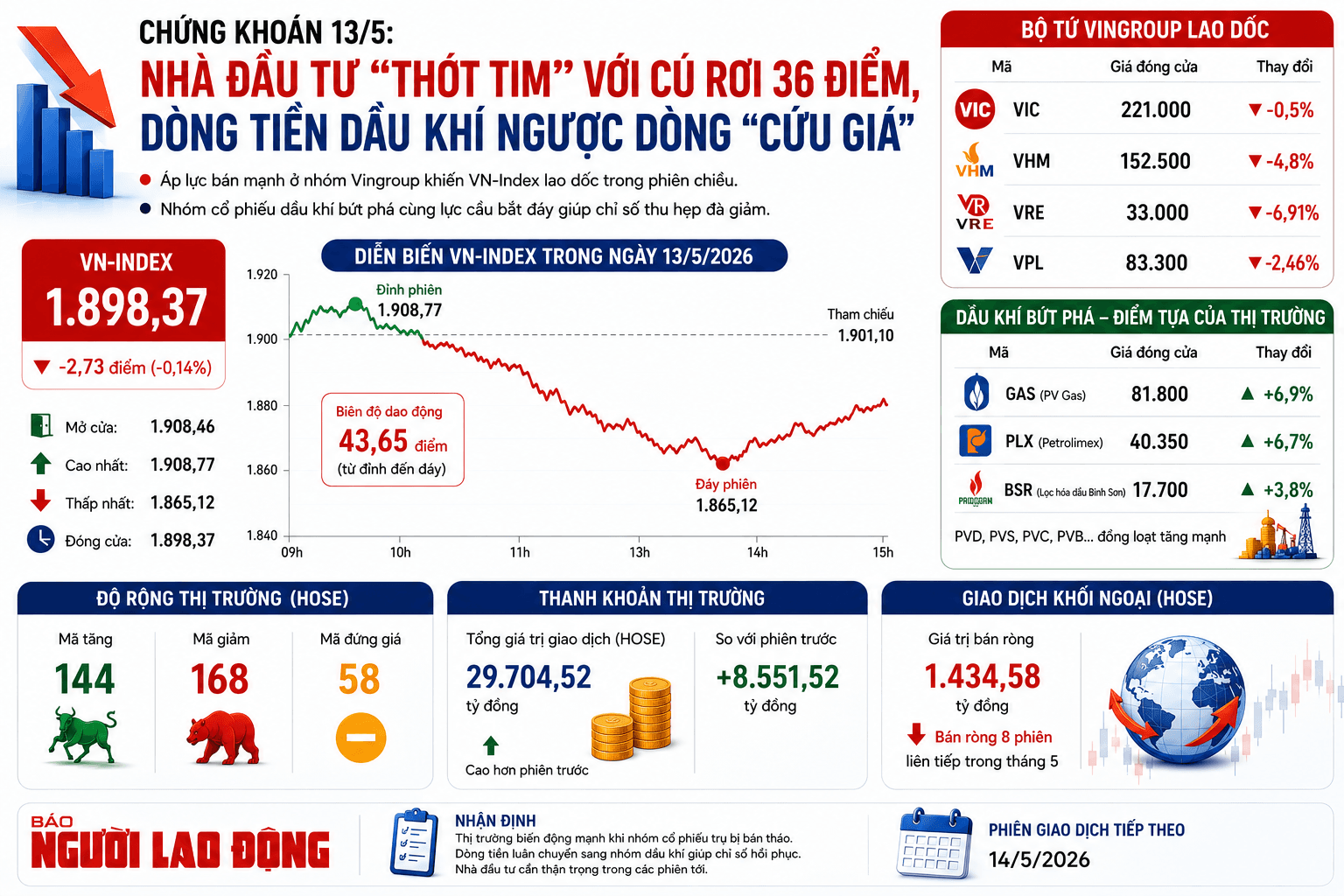
Stocks climbed to a fresh high as the VN-Index closed above 1,909 points, led by VinGroup and Vinhomes. After processing the opening price orders, the VN-Index surpassed the key psychological level of 1,900 points. However, profit-taking pressure appeared immediately, causing the HoSE index to retreat to a lower price area. Stocks fluctuated but largely held the key psychological level. After 10:30, the heavyweight group of stocks rose, helping the overall index clear 1,912 points. Near the mid-day break, the market cooled off again. In the early afternoon, stocks regained momentum. After just 15 minutes, the VN-Index surpassed the 1,918-point peak set in mid-January. At around 13:20, the index rose to above 1,924 points, the highest on record. Profit-taking pressure rose further, pulling the VN-Index back toward 1,900 points after 14:00. The market then repeated the "rise-and-fall" pattern before the ATC session. Finally, the VN-Index closed above 1,909 points, up nearly 18 points from yesterday. The level was about 7 points higher than the historical intraday high. However, market breadth did not tilt decisively to the positive side as in the previous session. In the morning, buyers held the upper hand but buying interest waned before lunch. When the afternoon session opened, the number of declining stocks outweighed advancers. The market breadth pattern of green on the outside, red inside persisted to the close. In total, HoSE recorded 191 stocks red, accounting for more than half of the total. Today, the VN-Index was mainly supported by the Vin group names VIC and VHM. The two stocks contributed nearly 17 points to the index's gain. Vingroup's stock rose 2.1% to 224,000 dong per share. Meanwhile, Vinhomes closed in the red, at 161,500 dong. Both had liquidity among the market leaders.








Premium gym chains are entering a “golden era” that is ending or already in decline, as rising operating costs collide with shifting consumer preferences toward more flexible, community-based ways to exercise. Long-term memberships are shrinking, margins are pressured by higher rents and facility expenses, and competition from smaller, more personalized…