•
•
•
•
•
•
•
•
•
•
•
•
•
•
•
•
•
•
•
•
•
•
•
•
•
•
•
•
•
•
•
•
•


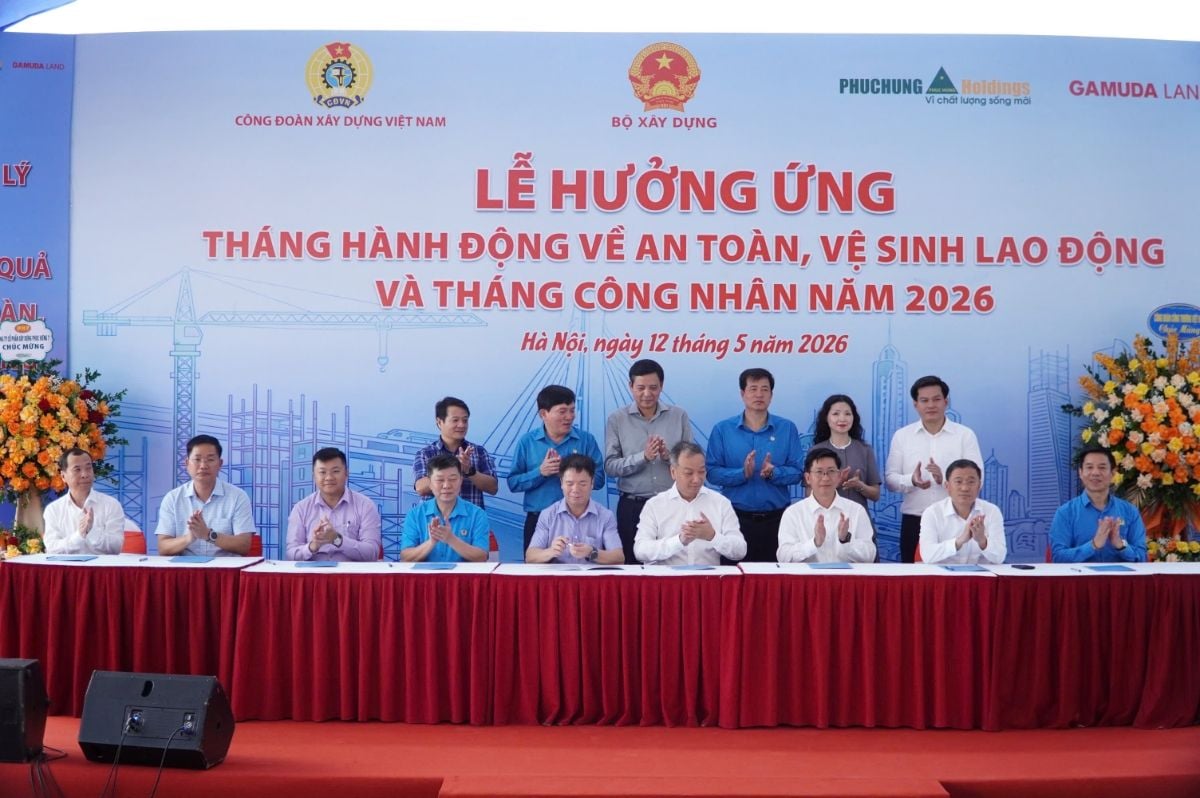
On May 12, 2026, the Ministry of Construction, in cooperation with the Vietnam Construction Trade Union, held the launching ceremony for the Action Month for Occupational Safety and the Year of the Workers’ Union in 2026, aiming to strengthen prevention measures, reduce risks, and ensure worker safety in the construction sector.
At the ceremony, Deputy Minister Bui Xuan Dung said 2026 is a “watershed year,” calling for a shift from a passive mindset to proactive risk prevention. He highlighted the Action Month theme: “Innovating management and enhancing the effectiveness of workplace safety, hygiene, and occupational health in the digital era.” The Deputy Minister noted that applying technology, using early warning systems, and increasing the responsibilities of investors and enterprises would help control safety risks more effectively. He also emphasized that each worker must improve self-protection awareness and strictly comply with safety and health regulations.
According to Hoang Hai, Director of the State Agency for Quality Assurance of Construction, safety and health management in the construction and transport sectors has been comprehensively prioritized. He cited progress including refining legal documents, issuing directives, strengthening communications, conducting inspections, and disseminating laws. Localities have also implemented practical activities to improve safety management.
The Ministry issued an Action Month plan for safety and health at work, established a Steering Committee, and coordinated with the Vietnam Construction Trade Union to organize the launching ceremony. The event included awarding 100 gifts to union members and workers. Nationwide, 73 launching ceremonies were held at facilities and construction sites, attracting nearly 15,000 participants.
To provide practical guidance, the State Agency for Quality Assurance of Construction issued two technical documents on safety when working at height and in confined spaces at construction sites, dated July 29, 2025. These documents are intended as a basis for units to study, apply, and disseminate.
Director Hoang Hai also pointed out several remaining challenges. He said the safety and health workforce at central and local levels is insufficient in number, not clearly defined, and not systematically trained. Many responsible officers hold multiple roles and have limited ongoing training. He added that funding for occupational safety and health is not clearly defined, investment levels remain low, and penalties for violations are not deterrent enough.
He further noted that regulations on risk assessment lack detailed guidance, leading to confusion among enterprises during implementation. The construction sector’s multi-stage nature, changing working conditions, diverse participants, and outdoor working environments continue to keep safety risks high. Some small enterprises and remote-site projects do not fully comply, and some investors and supervising consultants do not fulfill their responsibilities.
In addition, governance in some localities has not treated occupational safety and health as a core task, while inspection and guidance are constrained by limited manpower and frequency. The adoption of science and technology in occupational safety and health management has not kept pace with practical needs, underscoring the need for continued robust reform.
Pham Hoai Phuong, Chairman of the Vietnam Construction Trade Union, said worker safety is a fundamental right. He stated that the Union will continue to innovate its activities, promote the safety and hygiene network, advance the “Green – Clean – Beautiful” movement, and prevent any loss of life or health among workers.
Dang Trong Duc, General Director of Phuc Hung Holdings, said occupational safety and health is both a legal requirement and a voluntary commitment by enterprises. He argued that a safe working environment helps create motivation to improve productivity and supports sustainable development and brand reputation.
Mr. Duc also said the 2026 Action Month for Occupational Safety and the Workers’ Month have practical significance amid digital transformation and a shortage of skilled labor. He emphasized that the construction sector needs to reform management, improve efficiency, and raise productivity.
At the ceremony, nine sector units signed commitments to implement occupational safety and health.
The launch, organizers said, is not only an annual event but also a continued push to reform management, enhance the effectiveness of risk prevention, and build a safe, modern, and sustainable working environment in the construction sector.

Premium gym chains are entering a “golden era” that is ending or already in decline, as rising operating costs collide with shifting consumer preferences toward more flexible, community-based ways to exercise. Long-term memberships are shrinking, margins are pressured by higher rents and facility expenses, and competition from smaller, more personalized…