•
•
•
•
•
•
•
•
•
•
•
•
•
•
•
•
•
•
•
•
•
•
•
•
•
•
•
•
•
•
•
•
•


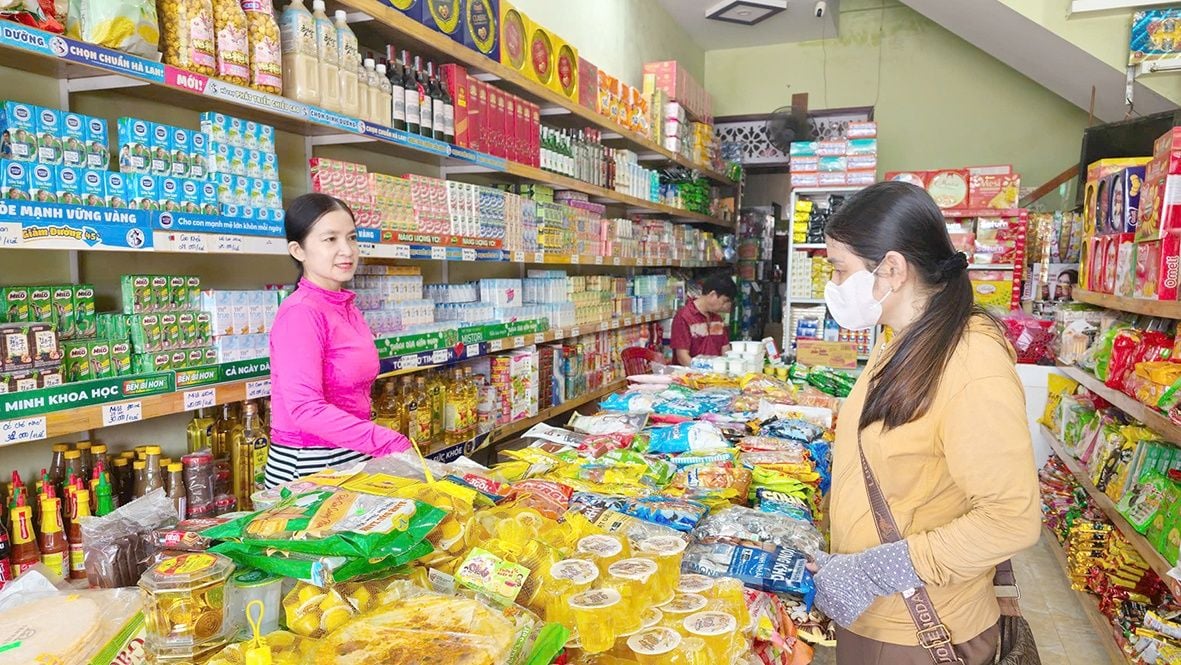
Along with new policies on tax administration and payment accounts, access to bank credit for household businesses in Vietnam is gradually changing. Greater cash-flow transparency and standardized tax obligations are helping household businesses comply with the law while also serving as a gateway to formal financing at lower costs.
According to statistics from the General Statistics Office, Vietnam has more than 5 million household businesses, contributing about 30% of GDP and employing tens of millions of workers. Each year, tens of thousands of households convert to corporate forms, but most remain in the micro-enterprise group, typically with thin capital, incomplete accounting systems, and limited collateral.
In practice, many household businesses have operated largely in cash, using manual records and sometimes without complete accounting books. This has made it difficult for banks to assess business scale, revenue, and debt-repayment capacity accurately. As a result, even when business activity was productive, some loan applications were rejected due to insufficient evidence of cash flow.
Improving transparency of cash flows and tax obligations supports compliance and can also help household businesses access formal funding at lower costs.
The shift is driven by the combination of new management policies and proactive bank support. Under Circular 25/2025/TT-NHNN (amending Circular 17/2024/TT-NHNN), payment accounts must be verified and managed under a legitimate identification profile. For household businesses, accounts used for business activities must be in the name exactly as shown on the business registration certificate, creating a basis to separate business cash flow from personal cash flow.
In addition, Decree 68/2026/ND-CP, effective from 5 March 2026, states that households with annual revenue up to 500 million dong are not subject to value-added tax and personal income tax. Households with revenue above the threshold will declare taxes based on actual revenue. The measure is intended to promote transparency in business operations.
At ACB, household businesses are allowed to use the business account in the name of the business to connect with eTax Mobile, declare and pay taxes online through the General Department of Taxation’s platform. The approach is designed to enable tax payments anytime and anywhere, reduce errors, and support compliance with the new rules.
ACB is also offering financial incentives. From now until 30/6/2026, households linking with eTax Mobile will receive an additional 0.1% per year reduction in loan interest for the first period on manufacturing and business loans. Customers maintaining larger balances in their accounts may also see interest reductions of up to 2% per year, based on an interest-rate mechanism linked to non-term deposit balances (CASA).
Anh Nguyen Van Hung, owner of a hardware store in Hanoi, said he previously sold mostly in cash and kept notes without a systematic approach. When he sought a loan to expand storage, the bank required proof of revenue and cash flow that he could not provide, leading to rejection. He also noted that banks lacked reliable data to make credit decisions and that household businesses were not yet accustomed to standardizing financial operations and fully fulfilling tax obligations.
Tran Thi Lan, owner of a grocery store in Ho Chi Minh City, said that previously each tax period required visiting the tax office, which was time-consuming and prone to errors. After linking the household business account with eTax Mobile, she can declare and pay taxes on her phone. She added that transparent cash flow helps her access credit more easily, and lower interest rates provide an incentive to comply.
According to Ms. Dinh Thi Thu Thao, Deputy Director of the Personal Banking Division at ACB, when sales are conducted through bank accounts, lenders gain more data to assess business size, cash cycles, and repayment capacity. This provides a basis to set appropriate credit limits for household businesses.
VPBank has signed a cooperation with the Tax Department and deployed an all-in-one digital solution for more than 5.4 million household businesses. The system integrates revenue management, electronic invoices, digital signatures, and tax declaration and payment to help households comply with new regulations and create clearer financial data for access to formal financial services.
Meanwhile, MB (Military Bank) has developed the MB Seller ecosystem, enabling 100% online opening of household-business accounts. The system separates cash flows and integrates QR, POS, and sales management software. It also supports tax declaration and e-invoicing, and offers credit packages up to 5 billion dong with simple procedures.
Representatives from banks said that supporting household businesses through this transition is not only about compliance, but also about building habits of financial governance. With clearer financial records and standardized operations, household businesses can improve access to capital and support sustainable growth.
Overall, tax transparency is increasingly viewed as more than a mandatory obligation: it is becoming a competitive advantage. When cash flows are recorded clearly and financial operations are standardized, household businesses may find it easier to access bank funding at lower costs.






Premium gym chains are entering a “golden era” that is ending or already in decline, as rising operating costs collide with shifting consumer preferences toward more flexible, community-based ways to exercise. Long-term memberships are shrinking, margins are pressured by higher rents and facility expenses, and competition from smaller, more personalized…




