•
•
•
•
•
•
•
•
•
•
•
•
•
•
•
•
•
•
•
•
•
•
•
•
•
•
•
•
•
•
•
•
•


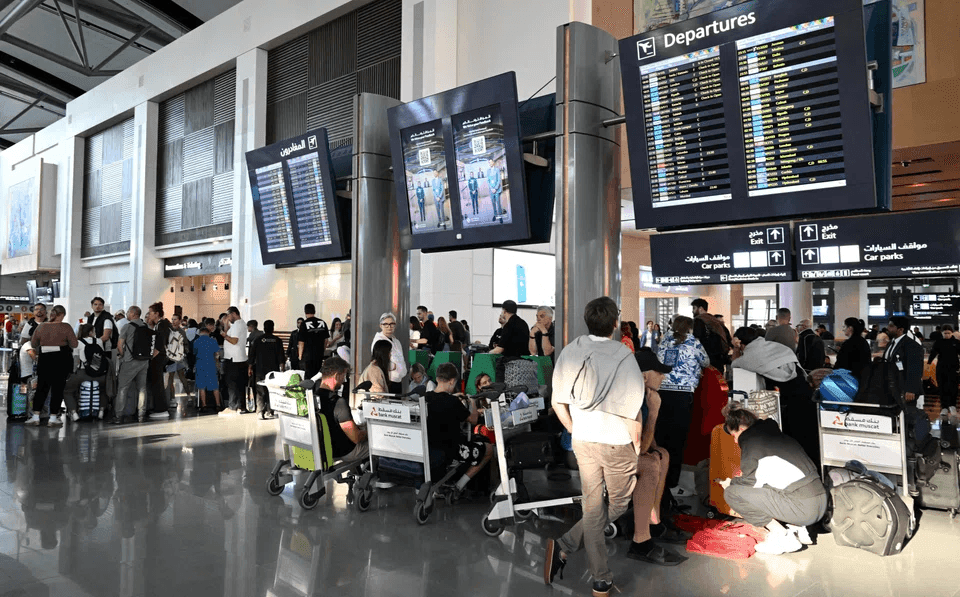
More than 50,000 flights have been canceled due to the Iran conflict, leaving tens of thousands of passengers stranded as they try to return home amid surging airfares.
Retired photographer Bernard Kuhn and his wife were stranded in Sri Lanka after Qatar Airways canceled their flight to London. After days of unsuccessful attempts to reach the airline, the couple flew to Bangkok, waiting another 10 days before buying new tickets. The detour added about 5,000 pounds (roughly 6,700 USD) to their costs and forced them to cancel vacation plans for the following year.
Kuhn said airlines were “overwhelmed” and provided little communication, with no follow-up after repeated dropped calls.
The broader disruption reflects a cascade of last-minute cancellations on some of the world’s busiest long-haul routes, driven by airspace closures. About one-third of flights between Europe and Asia pass through Gulf hubs, so even short closures can create global knock-on effects. Recovery is also slowed when crew and aircraft are not positioned correctly, limiting the ability to support passengers.
Many travelers say they have not been rebooked, and some report receiving no assistance. Others describe repeated cancellation notices with limited explanation, long waits to reach customer service, or automatic refunds without replacement options. Some passengers also say airlines continued to sell seats on remaining flights, leaving stranded travelers to purchase expensive alternatives.
BEUC lawyer Steven Berger said there is “still no global framework to protect passenger rights,” according to Bloomberg, adding that many passengers must pay for hotels and other incidental costs themselves. Travel insurance is of limited use because most policies exclude disruptions related to conflict.
On social channels, passengers have posted requests for help with rebooking on Qatar Airways, Etihad and Emirates. Many say they are offered refunds rather than new itineraries, forcing them to buy replacement tickets at much higher prices.
Bruno Lopes said he and his wife were stranded in Bali after their flight back to Brazil was canceled. He reported that the system still showed seats for sale but did not provide replacement arrangements.
Diane Clement said Etihad canceled her Phuket–Atlanta flight and that when she tried to rebook, the same itinerary was priced above USD 4,000—nearly four times what she initially paid.
Alton Aviation estimates that on some popular routes between Southeast Asia, Australia and Europe, March airfares rose 2× to 5× versus February. It also estimates that June fares are 40% to 110% higher than a year earlier, while October fares are up 15% to 30%.
While some European and Asian carriers have added direct flights to avoid the Gulf, Alton Aviation said the added capacity has not been enough to clear the backlog. “Seat capacity additions are not enough to offset the shortfall. Demand remains strong, keeping fares high on some legs,” said Bryan Terry, CEO of Alton Aviation.
The disruption, alongside higher fuel costs, is expected to pressure the summer travel season, particularly on long-haul routes. Cirium data show Europe–US summer bookings down 15% year-on-year, while Asia–Europe bookings are down 4.4%, reflecting the heavy dependence on Gulf hubs.
Terry said that for summer 2026, fares are expected to be higher and affordable Gulf-based layovers scarcer than before.
Cirium data show about 90,000 transit passengers daily through major Gulf hubs served by Emirates, Qatar and Etihad. The pressure is concentrated on routes relying on these hubs as some airlines have cut services amid security concerns, including a recent drone incident near Dubai International Airport.
Carriers including British Airways, Virgin Atlantic and Cathay Pacific have also paused several key routes, tightening supply.
Kate Moore, a UK travel agent, said she paid 2,500 pounds for a layover via Hong Kong after Etihad canceled her trip from Thailand home and offered only refunds. After receiving little information from the airline, she posted updates on Instagram and connected with more than 400 passengers in similar situations, many of whom could not afford replacement tickets. Some reports say flights were canceled up to five times, leaving many feeling abandoned.
Moore said stranded travelers “have lost trust in airlines” and feel “abandoned and unsupported,” with many asking her to help arrange replacement itineraries that avoid the Gulf.
Cirium also highlighted the broader travel ecosystem impact, noting Middle East tourism losses of USD 600 million per day due to the Iran conflict.








Premium gym chains are entering a “golden era” that is ending or already in decline, as rising operating costs collide with shifting consumer preferences toward more flexible, community-based ways to exercise. Long-term memberships are shrinking, margins are pressured by higher rents and facility expenses, and competition from smaller, more personalized…



