•
•
•
•
•
•
•
•
•
•
•
•
•
•
•
•
•
•
•
•
•
•
•
•
•
•
•
•
•
•
•
•
•


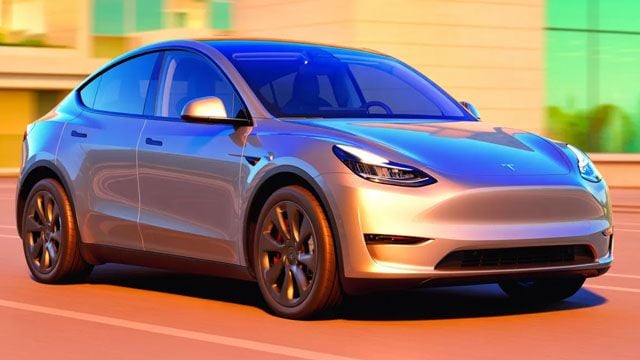
Based on recent headlines, it would be easy to be bullish on beaten-down Tesla shares. The stock had fallen 30% from its December peak largely because it lost its global lead to battery-powered electric vehicle (BEV) rival BYD Company. Now Tesla has reclaimed that lead.
After several months of trailing BYD’s total production of battery-only electric vehicles, Tesla is back on top. Tesla delivered 358,023 EVs during the first quarter of this year, compared with BYD’s 310,389 battery-powered electric vehicles sold.
For existing Tesla shareholders, the result is encouraging. However, it is not the full story.
One important footnote is that Tesla’s figure fell short of analysts’ expectations for 365,645 vehicles in the quarter. BYD’s 310,389 figure is also battery-powered, and therefore does not include the 378,604 hybrid vehicles it sold last quarter. Tesla does not manufacture hybrid vehicles.
Even with the BEV delivery lead, Tesla is still losing total market share, both globally and in Europe, where it is losing share to BYD.
Losing share in an expanding EV market is not necessarily disastrous, but it does point to a problem investors are less accustomed to: Tesla’s waning pricing power amid new competition. The company’s adjusted EBITDA margins have slipped from nearly 24% at the 2022 peak to less than 16% last year. Investors are still working out how to value Tesla shares under this new competitive and margin environment.
The article also highlights a strategic concern. Rather than addressing the challenge of building more price-competitive, higher-margin vehicles and generating demand, Tesla CEO Elon Musk appears to be prioritizing the development of autonomous humanoid robots intended for household chores and other menial labor.
Musk has said these AI androids would cost less than $30,000 each and enter commercial production sometime before the end of next year. The timeline, however, is questioned given Musk’s history of overpromising, underdelivering, and overspending.
Uncertainty also surrounds Tesla’s so-called Cybercab, which is expected to be priced similarly to the planned robot and to launch around the same time.
Never say never. Tesla could still change the world with successful launches of an AI-powered robot and a cost-effective self-driving robotaxi. Its electric vehicle business might hold its market share and potentially widen profit margins again.
However, the article argues that investors will need more proof than a positive EV quarter alone. Other electric vehicle manufacturers are not going away; they are expected to improve and become more competitive with both Tesla and BYD.
The stakes are high because BEVs are still Tesla’s “bread-winning” business. The article states that this is likely to remain the case for at least the next couple of years, and possibly longer.




Premium gym chains are entering a “golden era” that is ending or already in decline, as rising operating costs collide with shifting consumer preferences toward more flexible, community-based ways to exercise. Long-term memberships are shrinking, margins are pressured by higher rents and facility expenses, and competition from smaller, more personalized…




