•
•
•
•
•
•
•
•
•
•
•
•
•
•
•
•
•
•
•
•
•
•
•
•
•
•
•
•
•
•
•
•
•


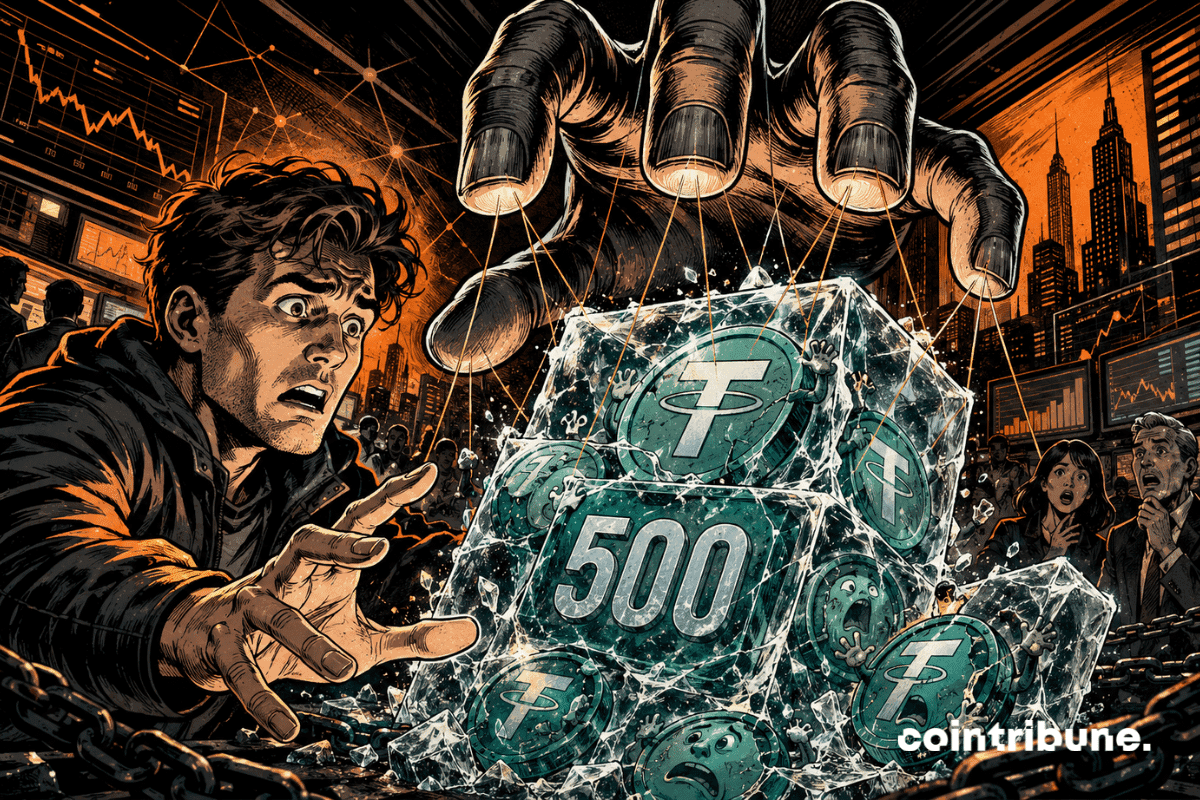
Tether has frozen more than $514 million worth of USDT over the past 30 days on roughly 370 addresses across Ethereum and Tron, according to BlockSec data. The latest action highlights a key feature of stablecoins: while USDT can move quickly, it can also be immobilized abruptly.
In the last month, Tether froze USDT on around 370 addresses, totaling more than $514 million. BlockSec characterizes this as part of a broader hardening against tokens associated with illicit activity, even as USDT remains central to global crypto payments.
Most of the frozen amount is concentrated on Tron. BlockSec data indicates that more than $505 million in USDT was frozen on Tron, compared with about $8.7 million on Ethereum. The imbalance reflects how heavily USDT is used on Tron, where fees are low and transfers are fast.
The dominance of Tron in recent freezes also underscores how controls can follow where stablecoin activity is most concentrated. With volumes shifting to a particular network, monitoring and enforcement can intensify there.
The current wave aligns with activity already visible in 2025. BlockSec reports that Tether blacklisted more than 4,100 unique addresses on Ethereum and Tron during the year, with the total amount frozen reaching nearly $1.26 billion in USDT.
BlockSec also notes that more than half of the funds frozen in 2025 were later destroyed through a dedicated contract function. That detail suggests freezes are not always temporary, and in some cases can become a permanent cut when funds are tied to advanced investigations.
Tether has also cited larger figures. In February, the company said it had frozen about $4.2 billion in tokens linked to illicit activities, including $3.5 billion since 2023.
Supporters of the approach argue that freezes help prevent USDT from being used by scammers, sanctioned networks, or criminal groups, and that centralized stablecoins can coordinate quickly with authorities. Critics, however, point to the same mechanism as a centralization risk: while users hold their wallets, the issuer retains the technical ability to blacklist addresses and immobilize funds.
Overall, the data reinforces the idea that Tether’s role extends beyond issuing a digital dollar for trading. By freezing funds, Tether effectively becomes a checkpoint in investigations involving fraud, sanctions, or other suspicious flows.
At the same time, the recurring scale of freezes keeps the market focused on a trade-off: USDT’s speed and liquidity come with a control capacity that few users can ignore. Even when USDT remains resilient relative to a weaker crypto market, its strength is tied to the ability to block funds when needed.
Premium gym chains are entering a “golden era” that is ending or already in decline, as rising operating costs collide with shifting consumer preferences toward more flexible, community-based ways to exercise. Long-term memberships are shrinking, margins are pressured by higher rents and facility expenses, and competition from smaller, more personalized…