•
•
•
•
•
•
•
•
•
•
•
•
•
•
•
•
•
•
•
•
•
•
•
•
•
•
•
•
•
•
•
•
•


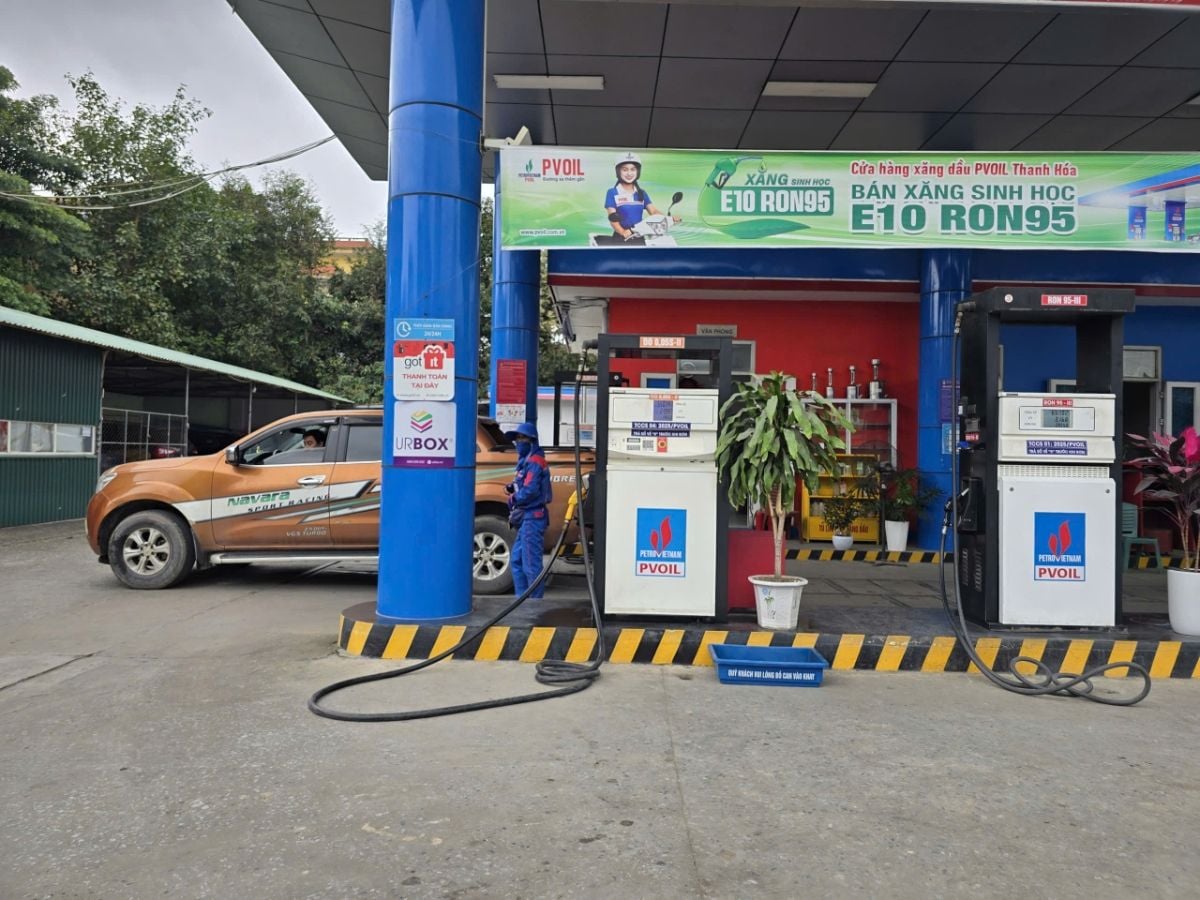
Domestic fuel prices rose sharply within a short period, pushing up living costs and increasing operating expenses for production and transport. In response, management agencies and key fuel suppliers are implementing measures to ensure supply, stabilize the market, and support business operations.
Under Decree 80/2023/ND-CP, the price adjustment cycle for gasoline and oil is seven days, with adjustments typically made on Thursdays. However, due to sharp fluctuations in world oil prices, the Ministry of Industry and Trade and the Ministry of Finance decided to adjust fuel prices only two days after the most recent adjustment on March 5.
Accordingly, from 15:00 on March 7, domestic retail prices for gasoline and diesel increased by 3,777 to 8,490 VND per liter/kg.
In Thanh Hóa—region 2 in the fuel price region—RON95-III gasoline is sold at 27,580 VND per liter, E5 RON92 at 25,720 VND per liter, Diesel 0.001S-V at 31,140 VND per liter, and Diesel 0.05S at 30,830 VND per liter.
The increase was described as high compared with many prior adjustments, raising fuel costs and adding pressure to household spending and to production and transportation activities.
A resident of Dong Son Ward, Ms. Pham Mai Hoa, said the rapid price increases have clearly raised her family’s travel costs. She noted that when gasoline fluctuated by more than 20,000 VND per liter previously, travel was less burdensome, but now the family must reconsider many expenses.
Delivery workers also reported higher daily costs. Tran Trong Tuan, a shipper for J&T Express in Ha Thanh Ward, said daily fuel expenses increased by about 15,000 to 18,000 VND compared with before. After accounting for other cost increases, he said his real income fell by about 30% to 40%.
For transport companies, fuel represents a large share of operating costs. A representative of 36 Travel Joint Stock Company, operating Thanh Hóa–Hanoi routes, said that within a short period fuel prices rose about 66%, increasing fuel costs. To maintain operations, the company increased ticket prices by about 20% and continued a policy offering 50% discounts for patients with serious illnesses.
Mai Thanh, Deputy Director of Petrolimex Thanh Hóa, said PVN (Vietnam National Petroleum Group) remains capable of meeting 100% of market demand in the short term. The unit has reported consumption needs to the group to regulate supply and seek additional import sources when necessary.
During sales, fuel stations tightened controls, including not selling to buyers who purchase multiple times in a day with signs of stockpiling aimed at speculation.
Market management forces also conducted inspections and supervision of fuel products, including checks carried out in Thanh Hóa on the afternoon of March 9, 2026.
Beyond domestic fuel costs, some exporters in Nghệ An Province are facing difficulties due to higher sea freight costs and booking challenges with shipping lines, partly linked to the Middle East conflict.
Companies including Nafoods Group, Thanh Dat Tea, and Mega Plastic Additives reportedly have export orders to the Middle East that must be temporarily stored at Ho Chi Minh City port while awaiting shipping schedules.
Customs authorities implemented measures to support businesses. The XI Customs Sub-Department promoted electronic clearance, reformed administrative procedures, and shortened clearance times to reduce costs for enterprises.
On March 9, the government issued Decree 72/2026/ND-CP, reducing MFN tariffs on certain fuel items and feedstocks for gasoline. The decree provides MFN tariff reductions from 10% to 0% for lead-free motor gasoline (HS 2710.12.21, 2710.12.22, 2710.12.24, 2710.12.25) and related feedstocks such as naptha and reformate (HS 2710.12.80). It also reduces tariffs from 7% to 0% for diesel, fuel oil, aviation fuel, and kerosene, and lowers petrochemical inputs such as xylenes and condensate (including p-xylenes) from 3% to 0%, and other saturated hydrocarbons from 2% to 0%.
The decree takes effect from March 9, 2026 to April 30, 2026.
The Ministry of Industry and Trade called on traders to avoid hoarding and not to delay price movements.
Hanoi also announced steps to ensure fuel supply and prevent disruptions in the distribution chain. In parallel, efforts to promote blending and the use of biofuels are being advanced as part of the energy transition.








Premium gym chains are entering a “golden era” that is ending or already in decline, as rising operating costs collide with shifting consumer preferences toward more flexible, community-based ways to exercise. Long-term memberships are shrinking, margins are pressured by higher rents and facility expenses, and competition from smaller, more personalized…




